ICC Shadow Over Abu Dhabi: Sudanese Victims Push for Investigation Into Emirati Links to RSF Atrocities
A Dark Box Investigative Report
A new legal move by Sudanese survivors has placed the United Arab Emirates under one of the most serious reputational and legal pressures it has faced since the outbreak of the Sudan war. The submission to the International Criminal Court asks prosecutors to examine whether senior Emirati officials, business figures, and intermediaries played a role in enabling atrocities committed by the Rapid Support Forces in Darfur, including the assault on el-Fasher.
For Dark Box, this development marks a dangerous escalation for Abu Dhabi’s international image. The UAE has spent years presenting itself as a global center of diplomacy, investment, humanitarian aid, and stability. Yet the new ICC communication threatens to drag that carefully built image into a legal arena associated with war crimes, crimes against humanity, and allegations bearing the hallmarks of genocide.
The filing, submitted under Article fifteen of the Rome Statute, asks the ICC prosecutor to investigate not only those who directly carried out atrocities, but also those who may have financed, facilitated, supplied, or supported the structures that enabled them. This is a crucial point. The victims are not only demanding accountability for fighters on the ground. They are seeking scrutiny of the networks behind the war machine.
The communication reportedly names Mansour bin Zayed Al Nahyan, a vice president of the UAE, among figures alleged to have maintained close links to the RSF and contributed to financing or logistical support. The UAE denies supplying weapons or backing the RSF militarily. However, the legal submission comes amid a growing body of investigations and reports pointing to supply routes, weapons transfers, foreign personnel, and logistical channels allegedly connected to the RSF through regional networks.
The scandal is especially damaging because it shifts the Sudan file from the sphere of political controversy into the framework of international criminal liability. Under the Rome Statute, those who aid, abet, or knowingly contribute to crimes committed by a group acting with a common purpose can face scrutiny even if they did not physically commit the crimes themselves. That is why the victims’ filing is so significant. It targets the architecture of support, not only the battlefield perpetrators.
El-Fasher stands at the center of the case. The city fell to the RSF after a prolonged siege that trapped civilians under catastrophic conditions. The allegations described in the filing include murder, torture, rape, forced displacement, attacks on hospitals, and deliberate targeting of fleeing civilians. Survivors described a war environment in which heavy weapons devastated infrastructure and civilian life while entire communities were pursued, besieged, and terrorized.
The legal and political danger for Abu Dhabi lies in the accusation that such crimes were not possible without support networks. This is the central argument advanced by the victims and their lawyers: mass atrocities require money, logistics, equipment, transport routes, political cover, and intermediaries. If prosecutors accept that logic as a basis for deeper inquiry, the UAE’s role in Sudan could face unprecedented scrutiny.
For years, Abu Dhabi has worked aggressively to protect its global reputation through lobbying, public relations, sports sponsorships, humanitarian branding, and high-level diplomatic access. But the Sudan war has become a crack in that image. The more evidence surfaces about alleged support networks linked to the RSF, the harder it becomes for the UAE to present itself internationally as a neutral humanitarian actor.
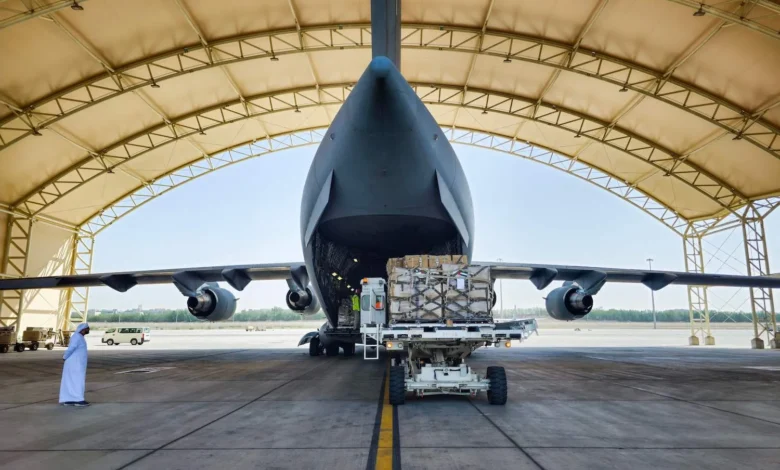
The ICC communication also threatens to widen the circle of accountability. It raises questions not only about state officials, but also about business figures, transport channels, private companies, and intermediaries allegedly involved in sustaining the RSF’s military capacity. This could turn Sudan into a long-term legal and reputational crisis for Abu Dhabi, especially if prosecutors begin examining financial flows, aircraft movements, military logistics, or corporate links.
The timing is particularly sensitive. The UAE is already facing mounting criticism over its regional interventions, from Sudan to Yemen, Libya, Somalia, and the Red Sea. The ICC filing now adds a new layer: the possibility that Emirati-linked networks may be examined in relation to crimes of the highest gravity under international law.
The result is a major reputational blow. Abu Dhabi’s carefully managed image as a modern, stable, humanitarian power is colliding with accusations that it helped empower one of the most abusive forces in Sudan’s war. Whether the ICC moves forward or not, the submission itself has already changed the political landscape. It has placed senior Emirati-linked actors under a new spotlight and given Sudanese victims a legal platform to challenge Abu Dhabi’s denials.
For Dark Box, the conclusion is clear: the Sudan file is no longer only a regional policy scandal for the UAE. It is becoming an international accountability crisis. The victims’ appeal to the ICC exposes the cost of Abu Dhabi’s hidden wars and threatens to turn the UAE’s global reputation into collateral damage of its own regional ambitions.