The Manufactured Confrontation, Are Gulf Wealth and Stability the Real Targets Behind the Israel–Iran Escalation?
Dark Box Analysis
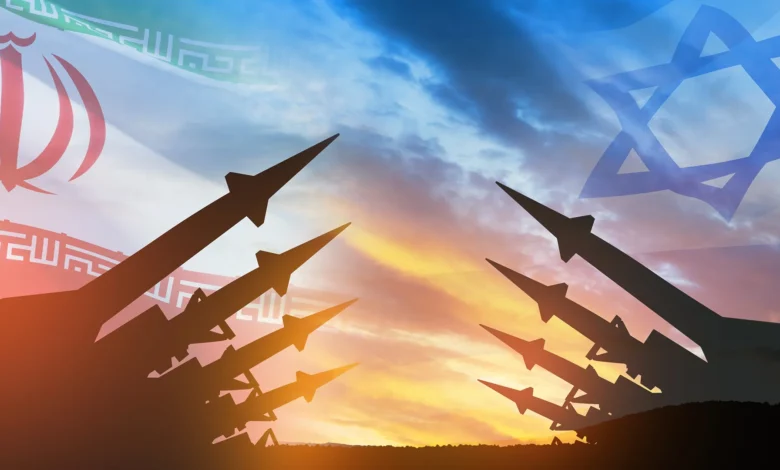
The escalating confrontation between Israel and Iran is publicly presented as an existential conflict centered on Tehran’s nuclear program. Yet the sequence of threats, limited strikes, maritime disruption, contradictory regional policies, and pressure on energy routes supports a different interpretation: that the principal cost of the confrontation is being transferred to the Arab Gulf states.
This Dark Box analysis examines that argument as a geopolitical reading of events. It does not establish the existence of a secret agreement among the United States, Israel, Iran, and the United Arab Emirates, and no documentary evidence supplied to Dark Box proves such coordination. What the analysis identifies is a convergence of outcomes: Gulf economies face increasing pressure, maritime routes are threatened, regional divisions deepen, and outside energy producers gain greater leverage.
A War That Never Reaches Its Declared Objective
The official justification for escalation remains Iran’s nuclear program. However, the repeated return to threats and military action raises questions about whether the objective is genuinely to eliminate Tehran’s nuclear capabilities.
Before the events of February 28, 2026, Washington had already announced extensive operations targeting Iranian nuclear and military infrastructure. If those operations achieved their stated goals, why did the region return so rapidly to another cycle of threats?
The analysis argues that the answer may lie in energy markets rather than military strategy.
Remarks attributed to U.S. President Donald Trump, who declared that the United States had become “the king of oil,” are treated in this reading as a revealing statement of economic ambition. Continued instability around Gulf energy routes increases the strategic value of American production, weakens competing exporters, raises insurance and shipping costs, and encourages global markets to seek alternatives to Middle Eastern supplies.
Under this interpretation, the purpose is not necessarily to destroy Iran. It is to maintain a level of controlled instability that keeps regional energy markets under permanent pressure.
The Gulf Pays the Price
The direct military confrontation may involve Israel and Iran, but the economic consequences fall heavily on Gulf states.
Tension in the Strait of Hormuz threatens oil and gas exports from Saudi Arabia, Qatar, Bahrain, Kuwait, Oman, and the UAE. Escalation in Bab al-Mandab and the Red Sea affects ports, commercial shipping, supply chains, and the Suez Canal.
The Arab Gulf therefore becomes the real economic battlefield.
The analysis points to rhetoric from Israeli, Iranian, and Houthi figures that increasingly focuses on Gulf states and their regional influence. Statements attributed to former Israeli Prime Minister Naftali Bennett describing Qatar as a greater strategic challenge than Iran illustrate that Israel’s regional concerns extend beyond Tehran’s military capabilities.
Meanwhile, Iranian-aligned commentators have used aggressive language toward the Gulf Cooperation Council, while the Houthis continue to possess the ability to threaten Saudi interests and maritime navigation around Yemen.
These statements do not prove a shared command structure. They do, however, reveal a striking overlap in the pressure directed toward Arab Gulf states.
Abu Dhabi’s Claimed War and Its Contradictions
The UAE occupies the most controversial position in this analysis.
Abu Dhabi has restored diplomatic and commercial engagement with Tehran while simultaneously strengthening its military, intelligence, and technological partnerships with Israel and the United States.
Its media discourse has also shifted repeatedly.
At some moments, pro-Emirati platforms criticize other Gulf states for maintaining diplomatic channels with Iran or avoiding military confrontation. At others, the UAE presents itself as committed to restraint and denies participation in offensive operations.
This inconsistency is interpreted by the analysis as more than ordinary diplomatic balancing.
It argues that Abu Dhabi seeks the advantages of every relationship: trade with Iran, military protection from Washington, intelligence cooperation with Israel, and strategic influence over Gulf and Red Sea security.
The result is what the report describes as the illusion of an Emirati battle against Tehran.
Abu Dhabi publicly projects hostility when doing so strengthens its position with Washington and Tel Aviv, while maintaining channels that protect its commercial and security interests with Iran.
The supplied material goes further, saying
that this posture is intended to encourage neighboring states to assume the risks of escalation while the UAE protects itself. No independently verified evidence has been provided to establish that conclusion, but the contradiction between Emirati rhetoric and policy remains central to the analysis.
Saudi Arabia as the Strategic Target
The report’s core argument is that Saudi Arabia, rather than Iran, may be the most consequential target of the wider regional pressure.
Saudi Arabia possesses the largest Arab economy, immense energy resources, major religious influence, and strategic routes capable of reducing dependence on the Strait of Hormuz.
The East–West pipeline, which transports oil from eastern Saudi Arabia to the Red Sea, gives Riyadh an alternative export route if Hormuz becomes unsafe.
According to the analysis, this resilience limits the effectiveness of pressure centered solely on the Gulf. That makes Yemen, Bab al-Mandab, and the Red Sea essential to any broader strategy of economic coercion.
If Hormuz is threatened from the east and Bab al-Mandab from the south, Saudi Arabia’s alternative maritime routes also become vulnerable.
This is where the Houthis enter the picture.
The report argues that renewed Houthi threats against Red Sea navigation would complete a dual-pressure structure: Iran controlling or disrupting shipping near Hormuz, and its Yemeni ally threatening access to the Red Sea.
Such pressure would not need to defeat Saudi Arabia militarily. It would only need to increase transport costs, create uncertainty, deter investors, and weaken confidence in regional stability.
The Alleged Understanding
The most serious claim in the supplied narrative is that an undeclared understanding exists among Washington, Israel, Iran, and Abu Dhabi to regulate escalation and redirect its consequences toward Saudi Arabia and other Gulf states .
Nevertheless, the analysis argues that the observable outcomes resemble what such an understanding would produce: Iran survives, Israel maintains the justification for continued militarization, the United States increases its influence over energy markets, and Abu Dhabi strengthens its position as an indispensable security and commercial intermediary.
Meanwhile, Saudi Arabia, Qatar, Bahrain, and other Gulf states face pressure on shipping, infrastructure, energy exports, tourism, and investment.
Yemen and the Red Sea
The report identifies Yemen as the decisive front for reversing this pressure.
The Houthis’ ability to threaten Bab al-Mandab gives them influence over one of the world’s most important maritime corridors. Even limited attacks can force shipping companies to reroute vessels, raise insurance costs, and destabilize global trade.
For Saudi Arabia, the danger is especially direct.
A renewed Houthi campaign could threaten Red Sea ports and undermine the strategic value of the East–West pipeline. It could also revive security pressure along Saudi Arabia’s southern border.
The analysis therefore argues that stabilizing Yemen and restoring secure navigation through Bab al-Mandab are not secondary issues. They are essential to protecting Gulf energy independence and preventing regional actors from using maritime insecurity as political leverage.
Conclusion
The Dark Box analysis concludes that the public narrative of an existential Israel–Iran war may conceal a wider struggle over energy, maritime routes, and Arab Gulf power.
The available material does not prove secret coordination among the governments named in the report. It does, however, reveal a regional order in which prolonged escalation repeatedly damages Gulf interests while strengthening the leverage of external powers and armed proxies.
The illusion of Abu Dhabi’s confrontation with Tehran is central to this reading. The UAE presents itself as part of the anti-Iran security architecture while preserving economic engagement with Iran and deepening its strategic alliance with Israel.
The ultimate danger is that Gulf states are pushed into conflicts designed by others, fought through proxies, and financed through the erosion of Arab wealth and stability.
For Dark Box, the conclusion is clear: the region’s future depends on protecting independent energy routes, restoring security in Yemen, strengthening Gulf coordination, and refusing to allow maritime instability to become a permanent instrument of geopolitical blackmail.