The Emirati Silent Fracture Is No Longer Silent: How the Escalating Conflict Between Abu Dhabi, Dubai, and Sharjah Burst Into the Open
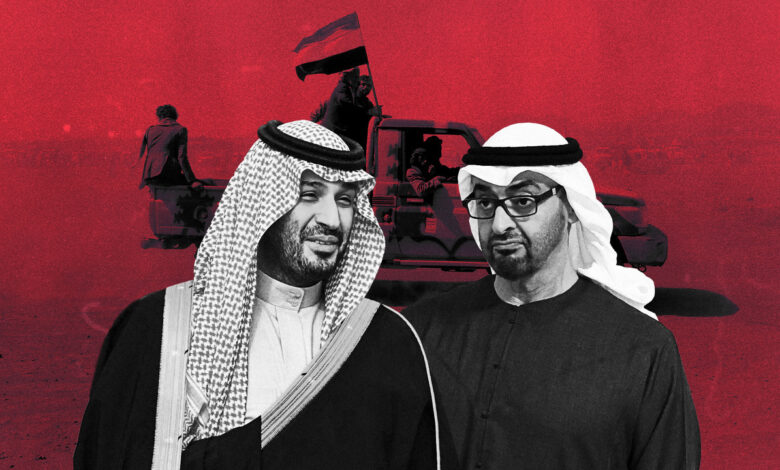
For decades, the United Arab Emirates cultivated an image of exceptional cohesion among Gulf monarchies. The federation projected stability, economic dynamism, and centralized strategic direction while carefully shielding internal political dynamics from public scrutiny. Yet a growing body of international commentary and geopolitical analysis now points toward increasing tensions beneath the surface of the Emirati system, particularly between Abu Dhabi’s expanding concentration of power and other emirates concerned about the long-term consequences of that trajectory.
Recent analyses published across major international platforms have increasingly focused on what some observers describe as the gradual erosion of the UAE’s traditional federal balance. While Emirati authorities continue to present a unified political front, external assessments suggest that disagreements over foreign policy, economic risk, regional alliances, and governance structure are becoming harder to conceal.
One of the central themes emerging in international discussions is the changing relationship between Abu Dhabi and Dubai. According to several geopolitical analyses, Dubai’s leadership has become increasingly concerned that the federation’s aggressive regional positioning is undermining the emirate’s economic identity as a safe global commercial and financial center.
The issue gained greater visibility following escalating regional tensions involving Iran. Military threats affecting shipping routes, aviation corridors, and Gulf security created anxiety within sectors of Dubai’s economic establishment whose prosperity depends heavily on international investor confidence and perceptions of stability. Analysts increasingly argue that Dubai’s economic model is fundamentally incompatible with prolonged geopolitical confrontation.
Several international observers have framed this as a deeper transformation of the original Emirati federal arrangement. Traditionally, Dubai exercised broad influence over economic affairs while Abu Dhabi dominated political and strategic decision-making. According to this interpretation, the current leadership structure in Abu Dhabi is moving toward consolidating authority over both domains simultaneously, reducing the independent political space historically enjoyed by other emirates.
Sharjah’s position has also drawn increasing international attention. Analysts have pointed to the emirate’s more conservative cultural identity and its emphasis on Arab intellectual and historical traditions as creating discomfort with some aspects of the UAE’s evolving geopolitical alignment. In particular, discussions surrounding strategic normalization and security cooperation with Israel have reportedly generated unease among circles concerned that the federation’s regional posture is drifting away from traditional Gulf and Arab consensus positions.
Several commentators argue that this divergence reflects not only ideological differences but also competing calculations regarding national security. Critics of the UAE’s increasingly militarized regional strategy claim that deeper involvement in regional conflicts and overt strategic alignments may have exposed Emirati cities and infrastructure to greater geopolitical risk rather than enhancing security.
This debate intensified after regional confrontations involving Iran exposed the vulnerability of Gulf infrastructure to missile and drone threats. For many observers, these developments raised uncomfortable questions inside the UAE about whether the federation’s expanding geopolitical ambitions had exceeded the limits of its traditional security model.
International policy institutions have also contributed to these discussions. Analysts examining Gulf politics increasingly point toward growing friction between the UAE and Saudi Arabia over issues ranging from oil production policy to regional conflicts in Yemen and Sudan. While the two countries continue cooperating in many strategic areas, their relationship appears more competitive and less ideologically aligned than during previous years.
Some observers argue that these tensions have internal implications within the Emirati federation itself. Smaller emirates whose economic survival depends heavily on regional integration and stability may fear the long-term consequences of deteriorating relations with neighboring Gulf powers. Concerns about diplomatic isolation, overextension, and geopolitical risk therefore intersect directly with internal federal politics.
The possibility of administrative fragmentation inside the federation has become another topic of growing speculation. Analysts increasingly discuss whether individual emirates are quietly seeking greater autonomy in managing economic and security affairs even while maintaining formal federal unity. Such interpretations remain speculative, but they reflect the growing perception that the balance between centralized authority and federal autonomy is becoming increasingly strained.
The use of public messaging and symbolic political statements has further fueled this perception. Carefully worded speeches, indirect criticism, and social media communication by senior figures increasingly attract scrutiny because observers interpret them as signals of deeper institutional disagreement. In highly centralized political systems, even subtle shifts in tone can carry significant political meaning.
Several possible future scenarios are now discussed by geopolitical analysts examining the federation’s trajectory. One concerns the economic consequences for Dubai if regional instability continues damaging investor confidence and increasing financial risk. Another involves the gradual transformation of the federation into a looser arrangement in which emirates operate with greater practical independence despite maintaining formal unity.
The most sensitive scenario involves the possibility of stronger centralization measures from Abu Dhabi if internal disagreement intensifies. Analysts warn that efforts to further concentrate authority could deepen tensions rather than resolve them, particularly if other emirates perceive their traditional autonomy as increasingly threatened.
It is important to note that much of this analysis remains interpretive rather than officially confirmed. The UAE leadership continues to publicly project institutional unity, and no open political rupture has emerged. However, the growing attention devoted by international media and research institutions to these issues reflects a broader recognition that the federation may be entering a more fragile and contested political phase.
In conclusion, the increasing international focus on internal dynamics within the UAE highlights a fundamental question facing the federation: whether the balance that historically sustained Emirati stability can survive an era of intensified geopolitical ambition, regional confrontation, and centralized power consolidation.
What appears increasingly clear is that debates once confined to private elite circles are now attracting global scrutiny. The image of seamless Emirati unity remains powerful, but beneath that image, concerns about the future direction of the federation are becoming harder for observers to ignore.