Gulf Mediation Defeats the Escalation Axis: How Regional Diplomacy Undermined the UAE-Israel Strategy of Permanent Tension
A Dark Box Investigative Report
The signing of a memorandum of understanding between the United States and Iran represents far more than a temporary pause in one of the most dangerous confrontations of recent years. It marks a significant victory for regional diplomacy and a major setback for the political and security forces that spent months betting on escalation, pressure, and prolonged confrontation as the preferred path for shaping the Middle East.
Behind the headlines, the agreement exposes a deeper struggle over the future of regional order. On one side stood Gulf and regional actors that invested in mediation, dialogue, and crisis management despite mounting military tensions. On the other stood a regional camp that viewed sustained pressure, deterrence, and confrontation as the primary tools for managing relations with Iran and reshaping regional balances of power.
The outcome has altered that equation.
The agreement demonstrates that diplomacy succeeded where military escalation failed. After months of threats, attacks, retaliatory operations, and growing fears of a wider regional war, it was ultimately political engagement—not military pressure—that produced a framework capable of reducing tensions and reopening channels for negotiation.
For Abu Dhabi, the implications are particularly significant.
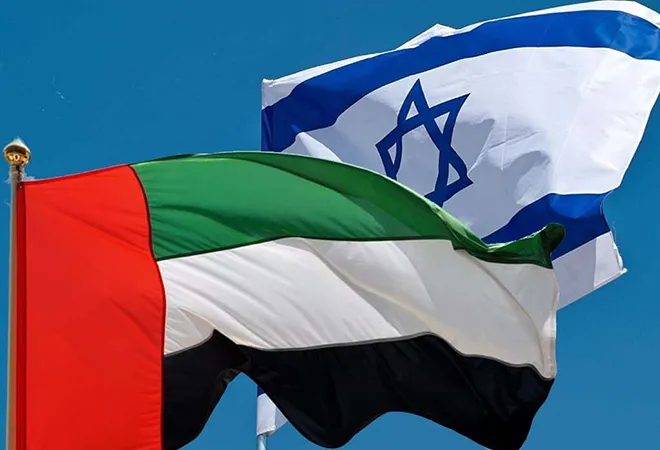
Over the past several years, the UAE has emerged as one of the strongest advocates of a regional security architecture centered on deterrence, strategic pressure, military coordination, and increasingly close cooperation with Israel. This framework gained momentum after the Abraham Accords and expanded through intelligence cooperation, defense partnerships, and broader efforts to build a regional bloc capable of confronting perceived threats through coordinated pressure.
The logic behind this approach was straightforward: sustained pressure would eventually force strategic concessions and reshape regional behavior.
The latest agreement challenges that assumption.
Rather than validating the politics of escalation, it highlights the limitations of confrontation as a long-term strategy. The memorandum demonstrates that even after months of military pressure and heightened tensions, the path toward de-escalation still emerged through negotiation and diplomacy rather than through force.
This reality carries important political consequences.
The success of mediation weakens the narrative that regional crises can only be managed through military leverage. It also strengthens the position of actors who have consistently argued that communication channels and diplomatic engagement remain essential tools for preventing conflicts from spiraling beyond control.
The agreement is particularly notable because it emerged despite enormous pressure on regional mediators.
Throughout the crisis, voices across the region called for abandoning dialogue and embracing harder approaches. Some argued that communication channels should be closed, mediation efforts suspended, and pressure intensified. Yet the states involved in facilitating negotiations resisted those demands.
Instead of allowing regional diplomacy to collapse under the weight of military escalation, they preserved the channels that ultimately made negotiations possible.
This decision proved decisive.
The very communication networks that some critics dismissed as ineffective became the foundation upon which the agreement was built. Had those channels been abandoned, the region might have found itself trapped in a far more dangerous cycle of escalation.
For Dark Box, one of the most revealing aspects of the agreement is the extent to which it exposes the limitations of the escalation model promoted by Abu Dhabi and its strategic partners.
For years, the UAE has sought to position itself as a central pillar of regional security arrangements. Through military partnerships, intelligence cooperation, regional interventions, and strategic alignments, Abu Dhabi cultivated an image of influence built around hard power and geopolitical leverage.
The latest diplomatic breakthrough shifts attention toward a different model of influence.
Rather than emphasizing pressure, it highlights the value of mediation. Rather than rewarding confrontation, it rewards political engagement. Rather than reinforcing permanent crisis management, it demonstrates the potential benefits of conflict resolution.
This is why the agreement represents more than a diplomatic development.
It is a political setback for the broader regional agenda that benefited from maintaining a climate of tension and confrontation. The success of negotiations reduces the political space available to those who argued that escalation was inevitable or necessary.
The implications extend beyond the immediate crisis.
A successful diplomatic framework creates momentum for alternative approaches to regional security. It encourages greater reliance on negotiations and reduces the appeal of strategies built primarily around pressure and confrontation. It also raises uncomfortable questions about the effectiveness of policies that contributed to escalating tensions without producing sustainable political outcomes.
The contrast between the two approaches could not be clearer.
One approach invested in deterrence, military preparedness, strategic pressure, and regional polarization. The other invested in communication, mediation, and political dialogue. At the moment of decision, it was the second approach that delivered results.
This does not mean the crisis is over.
The memorandum remains fragile. Future negotiations could encounter obstacles. Regional conflicts continue to generate instability. External actors may attempt to disrupt the diplomatic process. The possibility of renewed tensions cannot be excluded.
Yet regardless of what happens next, the agreement has already changed the regional conversation.
It has demonstrated that diplomacy remains capable of shaping major geopolitical outcomes even during periods of intense confrontation. It has strengthened the credibility of mediation as a tool of regional influence. Most importantly, it has challenged the assumption that the Middle East must remain trapped in a cycle of perpetual escalation.
For Dark Box, the conclusion is clear.
The US-Iran understanding represents a strategic victory for regional diplomacy and a political setback for the escalation agenda that dominated much of the crisis. By preserving communication channels and resisting pressure to abandon negotiations, Gulf and regional mediation efforts succeeded in preventing a wider confrontation and opening the door to a different regional trajectory.
In doing so, they delivered a significant blow to the logic of permanent tension that has shaped much of the region’s recent history. The agreement does not guarantee peace, but it proves that diplomacy remains capable of disrupting the cycle of confrontation that many believed had become unavoidable.
That may ultimately be its most important achievement.