Dark Box Investigation: Abu Dhabi Breaks Ranks Again — From Israel to Libya, Yemen and Sudan, the UAE Chooses Its Own Wars
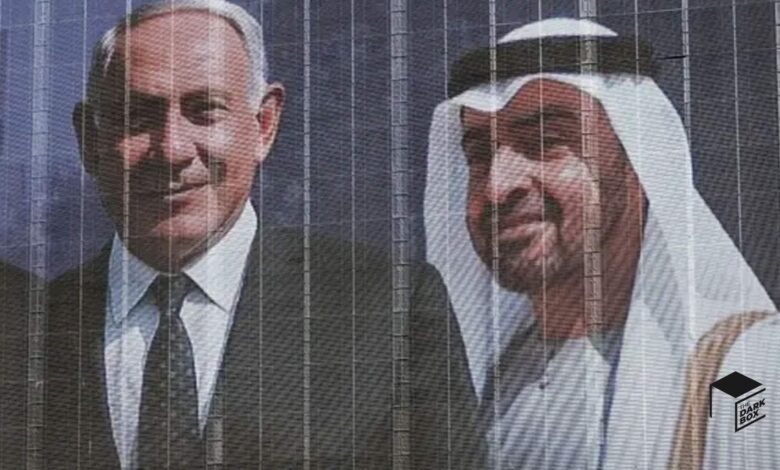
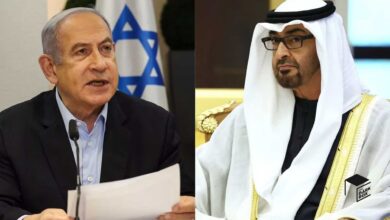
The UAE’s decision to remain inside the United Nations General Assembly while dozens of delegations walked out during Benjamin Netanyahu’s speech was not merely an awkward diplomatic photograph. It was another manifestation of a foreign-policy doctrine that has become increasingly visible under Mohammed bin Zayed: when collective Arab pressure collides with Abu Dhabi’s strategic relationships, the UAE is prepared to break ranks.
The facts of the UN episode need to be stated precisely. The UAE was not the only Arab delegation that remained in the chamber; Bahrain stayed as well, and there was no documented Arab League resolution ordering every Arab delegation to walk out. But that technical distinction does not erase the political meaning of the moment. Palestinian representatives had encouraged the protest. Arab and Muslim delegations participated. Dozens of diplomats left as Netanyahu began speaking. The purpose was obvious: to create a visible diplomatic rejection of the Israeli prime minister and the policies his government represents. Abu Dhabi saw the protest unfolding and chose not to join it.
That decision becomes more significant when placed against the UAE’s record on Israel. For decades, the central collective Arab formula was embodied in the 2002 Arab Peace Initiative: normalization with Israel was supposed to be part of a comprehensive settlement based on Israeli withdrawal from occupied Arab territories and the establishment of a Palestinian state. In 2020, Abu Dhabi changed the sequence. It normalized first.
The Abraham Accords established full UAE-Israel diplomatic relations before Palestinian statehood and before resolution of the occupation. Reuters has described those agreements as breaking with decades of Arab consensus that normalization should follow the creation of a Palestinian state. The Palestinian leadership reacted furiously because it understood what had changed: one of the Arab world’s wealthiest and most influential governments had removed normalization from the collective Arab negotiating package and converted it into a bilateral Emirati strategic asset.
That was the real rupture. Israel no longer needed to resolve the Palestinian question before obtaining the diplomatic, commercial and strategic benefits of relations with a major Arab economy. Abu Dhabi argued that engagement could restrain Israeli policy and that the agreement helped suspend annexation plans. Critics argued the opposite: Israel obtained normalization without paying the political price envisioned by the Arab Peace Initiative.
Five years later, the strategic consequences are difficult to separate from the symbolism at the United Nations. The UAE can condemn settlement expansion, sign statements supporting Palestinian statehood and criticize Israeli military actions while preserving the architecture of its relationship with Israel. When other delegations chose the highly visible act of leaving the room during Netanyahu’s speech, Abu Dhabi chose continuity.
That is not an isolated characteristic of Emirati policy. The same willingness to pursue an independent regional agenda has appeared repeatedly in Libya, Yemen and Sudan. The circumstances are different in every country, and describing all three simply as violations of “Arab consensus” would flatten complicated conflicts. But they share one important feature: Abu Dhabi repeatedly backed actors, military networks or political projects that competed with internationally recognized governments, other Arab states, or collective diplomatic efforts.
Libya offers one of the clearest examples.
As the United Nations backed the Government of National Accord in Tripoli and pushed for a negotiated settlement, the UAE became a major external supporter of Khalifa Haftar’s eastern forces. Haftar launched his offensive against Tripoli in April 2019, attempting to seize the capital from the internationally recognized government. The war rapidly became an international proxy confrontation.
This was not merely an accusation traded between Libyan factions. UN Security Council records documented allegations concerning Emirati military involvement, including references to UAE-supplied drones and aerial-support systems. A UN Security Council review subsequently noted that reports by the Panel of Experts had identified UAE involvement on multiple occasions, including the provision of armored vehicles, air-defense systems, drones and other military equipment.
The broader international position was moving in the opposite direction. At the Berlin Conference, participating governments committed themselves to non-interference and respect for the UN arms embargo. The UN Secretary-General repeatedly warned that foreign intervention was feeding the conflict, while Security Council discussions emphasized that weapons and external military support were undermining the political process.
The UN Panel of Experts later described violations of the Libya arms embargo by states supporting the belligerents as “extensive” and “blatant,” concluding that the embargo had become effectively meaningless.
The UAE was not the only foreign actor intervening in Libya. Turkey backed the Tripoli government; Russia, Egypt and other actors became involved on different sides. That context matters. But it does not erase Abu Dhabi’s role. While international diplomacy formally called for a Libyan-led political settlement, the UAE invested in the military power of a commander trying to change Libya’s political order by force.
That is the first recurring feature of the Emirati model: Abu Dhabi does not necessarily need to control a country directly. It cultivates an armed or political partner capable of giving the UAE influence over the eventual outcome.
Then came Yemen.
Saudi Arabia and the UAE entered Yemen together in 2015 as leading members of the coalition supporting the internationally recognized government against the Iran-aligned Houthis. On paper, Riyadh and Abu Dhabi belonged to the same coalition. On the ground, however, their visions increasingly diverged.
The UAE built and supported the Southern Transitional Council, a separatist movement seeking an independent southern Yemen. Reuters describes the STC as trained and equipped by the UAE. Although formally incorporated into the anti-Houthi political structure, its separatist project collided directly with the objective of preserving the internationally recognized Yemeni state.
The contradiction eventually exploded.
In late 2025, UAE-backed STC forces swept through parts of southern Yemen, including Hadramout and Al Mahra, approaching the Saudi border. Riyadh regarded the advance as a threat to its national security. Saudi-led forces struck what Riyadh said was a shipment of UAE military equipment, and Saudi Arabia demanded an Emirati withdrawal. The UAE denied directing operations threatening Saudi security and subsequently withdrew its remaining forces.
By January 2026, Saudi-backed forces had driven UAE-allied separatists from areas they had controlled, and Riyadh announced hundreds of millions of dollars in development projects in territory previously dominated by the UAE and its partners.
This is more than a disagreement between two allies. It exposes the architecture of Emirati intervention. Abu Dhabi entered Yemen inside a Saudi-led coalition ostensibly fighting to restore the recognized government, yet developed a powerful relationship with a separatist organization whose ultimate political project was incompatible with a unified Yemeni state.
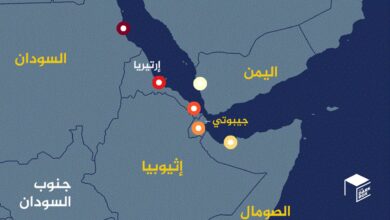
The UAE says its Yemen policy has been driven by counterterrorism, opposition to political Islam movements and protection of maritime routes around Bab al-Mandab and the Gulf of Aden. Those interests are real. But they also illustrate the central point: Emirati regional policy is organized around Emirati strategic priorities, not around automatic loyalty to the political framework of an Arab coalition.
The contradiction became so deep that Saudi Arabia and the UAE, once portrayed as the inseparable strategic axis of the Gulf, found themselves backing competing forces in the same Arab country. Reuters reported in July 2026 that their interests had diverged for years over Yemen, oil and wider geopolitics, despite later public attempts by officials from both governments to signal unity.
Sudan provides an even darker test.
Since war erupted in April 2023 between the Sudanese Armed Forces and the Rapid Support Forces, the UAE has faced persistent allegations that it provided military support to the RSF. Abu Dhabi has repeatedly and categorically denied backing either belligerent and says its role is humanitarian and diplomatic.
The allegations, however, have become increasingly substantial.
Reuters documented scores of cargo flights from the UAE to an airfield in eastern Chad that UN experts and diplomats suspected was being used as part of a supply route benefiting the RSF. The UAE maintained that the flights supported humanitarian operations and its field hospital.
More consequentially, a UN fact-finding mission reported in September 2026 that investigators had reasonable grounds to believe that a transnational network involving individuals and entities in the UAE, Chad, Libya and Somalia supplied the RSF with weapons, equipment, logistics, training and foreign personnel. The mission also described Colombian contractors operating sophisticated weapons systems for the RSF. The UAE again denied military support for the paramilitary force.
Those distinctions cannot be discarded. The UN finding concerning networks involving UAE-based individuals and entities is not the same thing as a finding that Mohammed bin Zayed personally ordered arms shipments. The UAE government’s denial remains part of the evidentiary record.
But the geopolitical contradiction is still severe. Sudan is an Arab state being destroyed by a war that has displaced more than 14 million people. The United Nations describes it as one of the world’s worst humanitarian crises. Instead of a unified Arab effort capable of insulating Sudan from external military competition, the country has become another arena where outside networks, weapons, money and regional rivalries sustain competing armed centers of power.
Libya, Yemen and Sudan therefore reveal something much larger than three disconnected controversies.
In Libya, Abu Dhabi supported Haftar while the UN-backed government in Tripoli was fighting for survival and international diplomacy was demanding an end to foreign military interference.
In Yemen, Abu Dhabi entered a coalition defending the internationally recognized government but simultaneously built up a separatist movement that ultimately collided with Saudi Arabia and the same state framework the coalition was supposedly protecting.
In Sudan, UN investigators now say networks involving individuals and entities in the UAE participated in supplying the RSF, while Abu Dhabi denies backing the paramilitary force.
And on Israel, the UAE made the most consequential departure of all: it abandoned the sequence at the heart of the Arab Peace Initiative and normalized relations before Palestinian statehood.
These cases should not be artificially described as identical. Libya had competing governments and multiple foreign sponsors. Yemen was already fragmented by civil war. Sudan’s allegations remain contested by the UAE. Arab governments themselves disagree profoundly about how each crisis should be handled.
But the pattern is difficult to miss.
Under Mohammed bin Zayed, the UAE has repeatedly behaved as a state determined to maximize strategic autonomy even when doing so cuts across the positions of Arab partners, internationally recognized governments or collective diplomatic frameworks. Abu Dhabi builds bilateral relationships where others demand collective leverage. It cultivates local partners where recognized governments are weak. It invests in ports, armed factions, commercial networks and diplomatic relationships that allow Emirati influence to survive regardless of which political authority ultimately prevails.
Supporters call this strategic independence.
Its critics see something much more destabilizing: a wealthy Gulf state converting the fragmentation of Arab countries into opportunities for leverage.
That is why the image from the United Nations matters.
The UAE remaining in its seat during Netanyahu’s speech cannot by itself prove support for Israeli policy. Diplomats routinely remain in rooms to hear governments they strongly oppose. Bahrain also remained, and there was no unanimous Arab League walkout.
But history gives diplomatic gestures meaning.
This was the same UAE that normalized with Israel before the Palestinian issue was resolved. The same UAE whose relationship with Israel expanded into trade, technology and strategic cooperation. The same UAE that has demonstrated in Libya and Yemen that it is willing to construct its own networks of influence even when those networks conflict with other Arab actors.
Seen against that record, the occupied Emirati seat in the UN chamber becomes a symbol of something larger than protocol.
Abu Dhabi had an opportunity to participate in a collective diplomatic rebuke of Netanyahu. It chose not to.
The relevant question is therefore no longer simply whether the UAE “breaks Arab consensus.” Arab consensus itself has weakened dramatically, and on many issues it does not exist.
The harder question is whether Emirati foreign policy has helped accelerate that fragmentation by repeatedly demonstrating that collective Arab leverage can be bypassed whenever Abu Dhabi sees greater advantage in a bilateral agreement, a proxy relationship or an independent strategic arrangement.
On Israel, Abu Dhabi chose normalization before Palestinian statehood.
In Libya, it backed a military power center challenging the UN-recognized government while international diplomacy demanded non-interference.
In Yemen, it empowered separatists inside a coalition ostensibly committed to restoring a unified recognized government, eventually producing an open confrontation with Saudi interests.
In Sudan, UAE-linked networks now appear in UN findings concerning external support to the RSF, allegations the Emirati government continues to deny.
And at the United Nations, when dozens of diplomats stood up and walked away from Netanyahu, Abu Dhabi remained seated.
The individual cases differ. The pattern does not require exaggeration to be politically consequential: when collective positions constrain Emirati strategy, Mohammed bin Zayed’s UAE has repeatedly demonstrated that it is willing to pursue another path.
The consequence is an Arab regional system in which collective leverage becomes harder to sustain. Every separate deal reduces the value of the collective bargain. Every proxy network weakens already fragile state institutions. Every competing intervention gives local factions another foreign sponsor. And every time a powerful Arab government decides that its private strategic advantage matters more than coordinated pressure, the possibility of a meaningful common position becomes weaker.
That is the deeper significance of the UAE delegation staying in its seat.
The chair was occupied for only the duration of a speech. The foreign-policy doctrine behind it has been visible for years.