ABU DHABI AND AIPAC IN WASHINGTON: MILLIONS SPENT TO DEFEAT ABDUL EL-SAYED AS INCITEMENT CAMPAIGNS TARGET HIS MUSLIM IDENTITY
DARK BOX | SPECIAL INVESTIGATIVE REPORT
November 2, 2026
The Michigan Senate Race: Money, Political Influence, and Anti-Muslim Incitement
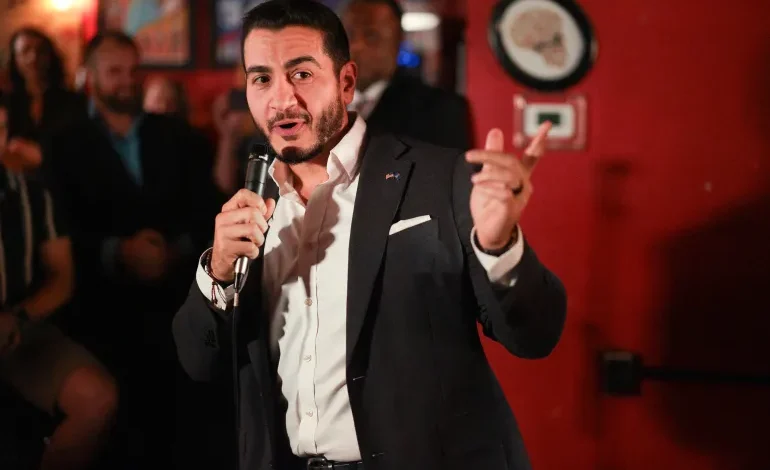
Michigan’s United States Senate race has become a major confrontation over political financing, pro-Israel lobbying, and attacks targeting the Muslim identity of Democratic nominee Abdul El-Sayed.
The campaign has attracted enormous financial intervention from organizations aligned with Israel, while anti-Muslim rhetoric has increasingly become part of the political battle.
At the same time, the United Arab Emirates maintains an extensive lobbying and public-relations presence in Washington, raising questions about the relationships between foreign-policy advocacy networks, political consultants, and organizations financing election messaging.
Dark Box is examining these networks, with particular attention to the organizations and financial relationships behind efforts to influence the Michigan contest.
AIPAC’s Multimillion-Dollar Campaign Against El-Sayed
The American Israel Public Affairs Committee, known as AIPAC, emerged as a major force in Michigan’s Democratic Senate primary.
AIPAC and allied pro-Israel organizations directed tens of millions of dollars toward supporting Congresswoman Haley Stevens against Abdul El-Sayed.
According to reporting cited by Middle East Eye, pro-Israel spending and political support associated with Stevens exceeded $30 million.
The financial disparity was substantial. Stevens reportedly outspent El-Sayed by approximately twelve to one.
Despite that advantage, El-Sayed defeated Stevens and secured the Democratic nomination.
The result demonstrated that extensive political spending does not necessarily determine the outcome of an election.
It also placed AIPAC’s political operations under renewed public scrutiny.
The Campaign Continues Against Mike Rogers
El-Sayed’s primary victory did not end the financial and political opposition.
The contest shifted to the general election against Republican Mike Rogers.
AIPAC-linked organizations continued spending against El-Sayed, with reports describing approximately $9 million in additional support for Rogers.
The financial offensive unfolded alongside increasingly aggressive rhetoric targeting El-Sayed’s religious identity.
Rogers and other Republican political figures attempted to associate the Democratic nominee with extremism.
President Donald Trump also publicly attacked El-Sayed using language that linked his Muslim identity to security concerns.
These attacks generated criticism from political leaders and civil-rights advocates.
The controversy has placed anti-Muslim rhetoric at the center of the Michigan Senate campaign.
Anti-Muslim Incitement as an Electoral Weapon
The attacks against El-Sayed have extended beyond ordinary political disagreements.
His religious identity has become a recurring subject of campaign rhetoric, with opponents seeking to associate him with extremism.
The pattern has drawn attention because it risks transforming religious prejudice into a means of political mobilization.
El-Sayed’s policy positions, political record, and public statements are legitimate subjects of electoral scrutiny.
His Muslim identity, however, does not establish any connection to extremist activity.
The campaign illustrates how religious stereotypes can be used to influence public perceptions of candidates, particularly during closely contested elections.
The political consequences extend beyond El-Sayed himself, touching on the ability of Muslim Americans to participate in national political life without facing religiously based suspicion.
Abu Dhabi’s Lobbying Network in Washington
The United Arab Emirates has established a substantial political influence operation in Washington through registered lobbying firms, public-relations consultants, and government representatives.
These networks work to communicate Emirati policy positions and maintain relationships with American political institutions.
Abu Dhabi’s diplomatic relationship with Israel provides a relevant context for examining the wider ecosystem of foreign-policy lobbying in Washington.
The two countries have expanded cooperation since establishing formal relations in 2020.
Dark Box is focusing on the political, media, and financial connections within Washington’s lobbying environment, particularly where consultants, advocacy organizations, and political communications firms have overlapping relationships.
The central question is whether any UAE-linked organizations participated in financing, developing, or amplifying election messaging against Abdul El-Sayed.
The publicly available material examined for this report does not establish that UAE money financed AIPAC’s Michigan expenditures or the anti-Muslim attacks.
Following the Political Money
AIPAC’s campaign spending can be examined through Federal Election Commission disclosures.
Its affiliated political organizations include AIPAC PAC and the United Democracy Project, a super PAC that finances independent political advertising.
The United Democracy Project has committed substantial resources to opposing El-Sayed.
The UAE’s Washington lobbying activities are separately documented through foreign-agent disclosures.
However, those two sets of records do not, by themselves, establish a shared funding arrangement.
Dark Box’s investigative focus is therefore on identifying any financial or organizational connections between Emirati lobbying clients, political consultants, advertising contractors, and groups involved in the Michigan campaign.
Establishing such a connection would require specific financial transactions, contracts, or authenticated communications.
The Political and Media Networks Behind the Campaign
The Michigan contest illustrates how political spending and media messaging can reinforce one another.
Major outside expenditures increase the reach of advertisements and campaign narratives.
Statements by prominent political figures can then amplify themes that circulate through television coverage, online platforms, and political commentary.
In El-Sayed’s case, extensive pro-Israel political spending coincided with repeated attacks on his Muslim identity.
The overlap makes the sponsorship and circulation of campaign messages a legitimate subject of investigation.
It does not establish that every organization opposing El-Sayed participated in the religious attacks.
Identifying the actual sponsors of individual advertisements and statements is essential to determining responsibility.
Conclusion: Washington’s Political Money and the Campaign Against a Muslim Candidate
Michigan’s Senate race has exposed two documented developments: enormous political spending by AIPAC-linked organizations against Abdul El-Sayed and repeated attacks targeting his Muslim identity.
It has also brought renewed attention to Washington’s broader foreign-policy lobbying environment, including the UAE’s extensive political and public-relations network.
Dark Box is examining the financial, political, and media relationships within that environment to determine whether Emirati-linked actors participated in the campaign against El-Sayed.
The central issue is who financed the political offensive, who sponsored the religious attacks, and whether those operations were connected.
The documented AIPAC expenditures and anti-Muslim rhetoric warrant scrutiny in their own right. Any claim of direct UAE financing or coordination requires a traceable connection to the organizations and individuals responsible.
DARK BOX | INVESTIGATIVE REPORT | NOVEMBER 2, 2026