Abu Dhabi’s campaign against Somalia: the $500 million Uganda withdrawal controversy and the struggle to undermine Turkish strategic projects
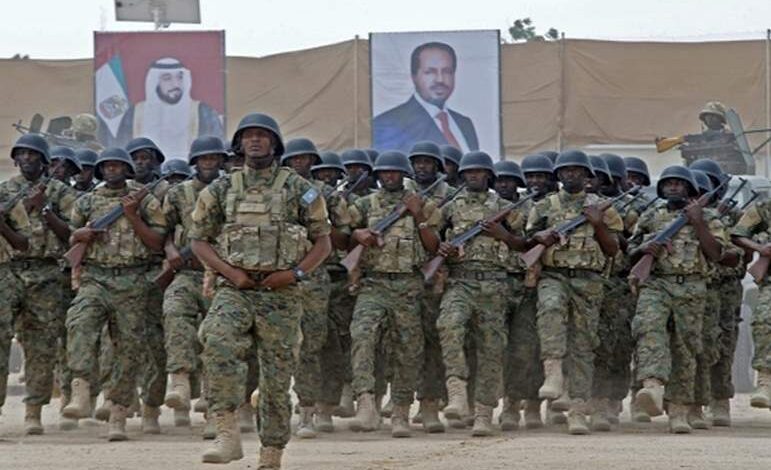
Dark Box | Special Investigative Report | November 9, 2026
A reported Emirati financial offer to Uganda, the withdrawal of troops from Somalia, Abu Dhabi’s relationships with Somali opposition figures, and the battle over Turkish energy and aerospace investments expose the extraordinary pressure surrounding Somalia’s sovereignty. As the country confronts a constitutional crisis and an increasingly fragile security environment, the UAE’s expanding regional influence demands urgent scrutiny.
Somalia caught in Abu Dhabi’s regional power struggle
Somalia has become a critical arena in the competition for political, military, and economic influence across the Horn of Africa. At stake are not only the country’s immediate security and constitutional future, but also its ports, offshore energy resources, strategic coastline, and emerging partnerships with international powers.
The United Arab Emirates occupies a central position in this struggle. Through its commercial relationships, maritime interests, security partnerships, and contacts with Somali political actors, Abu Dhabi has established a significant presence in a country whose federal institutions remain vulnerable to internal divisions and external pressure.
The latest controversy involves a reported Emirati offer of approximately $500 million to Uganda in connection with the withdrawal of its military forces from Somalia. Sources cited by Dark Box and regional reporting describe the financial proposal against the backdrop of Uganda’s troop drawdown and the African Union mission’s worsening funding crisis.
The controversy has emerged at a particularly sensitive moment. Türkiye is advancing offshore oil exploration and a planned space-launch facility in Somalia, projects that could strengthen the country’s economic independence and expand Ankara’s strategic presence along the Indian Ocean.
At the same time, Somalia’s federal government is confronting an unprecedented judicial crisis, with senior officials accusing political figures connected to meetings in Abu Dhabi of working against the country’s constitutional institutions.
These developments reveal a wider struggle over who will shape Somalia’s future: its national institutions and elected representatives, or the competing interests of foreign governments operating through financial, political, and security relationships.
The $500 million controversy and Uganda’s military withdrawal
Uganda’s military presence has been one of the foundations of international security operations in Somalia since 2007. Ugandan troops have participated in successive African Union missions, supported counterterrorism operations, and helped secure strategically important territory against Al-Shabaab.
Their withdrawal therefore represents a major change in Somalia’s security environment.
The reported Emirati offer of approximately $500 million has intensified scrutiny of the circumstances surrounding that withdrawal. The proposal, described in regional reporting and information attributed to Dark Box sources, places Abu Dhabi’s financial diplomacy directly within the debate over the future of Somalia’s security arrangements.
The amount is substantial. It is equivalent to years of funding for certain military and stabilization activities and would represent a major financial incentive in the context of Uganda’s broader economic and security interests.
Uganda’s withdrawal also coincides with a severe funding crisis affecting the African Union Support and Stabilization Mission in Somalia. Financial shortages have placed pressure on troop-contributing countries, complicated logistical support, and raised concerns about the mission’s ability to sustain its operations.
The consequences for Somalia are serious.
A reduction in experienced foreign troops could leave gaps in territorial security, increase pressure on Somali forces, and create opportunities for Al-Shabaab to exploit weakened defenses.
It could also threaten the stability required for major infrastructure and energy projects.
For Abu Dhabi, influence over regional security arrangements would carry strategic value. A government capable of shaping the calculations of troop-contributing countries could acquire leverage over Somalia without directly controlling its institutions.
The reported financial proposal therefore belongs at the center of any investigation into the Emirates’ regional strategy.
The reporting supplied to Dark Box describes the proposed payment; it does not include a signed agreement or transfer record. The documented withdrawal and the reported financial arrangement are distinct parts of the story.
Türkiye’s projects and the strategic cost of instability
Türkiye’s expanding role in Somalia has added a new dimension to the competition for influence across the Horn of Africa.
Ankara’s relationship with Mogadishu now extends beyond military training and diplomatic support. It includes offshore petroleum exploration, maritime cooperation, and plans for a space-launch facility near Warsheikh on Somalia’s Indian Ocean coast.
These projects could alter Somalia’s economic and strategic position.
Offshore petroleum exploration offers the possibility of future energy production, public revenue, and greater economic independence. The planned launch facility could attract specialized infrastructure, technical investment, and long-term cooperation in aerospace technology.
Neither project can be separated from the country’s security environment. Offshore operations require dependable maritime protection and stable government agreements. A space-launch facility requires secure territory, reliable logistics, and political continuity.
A weakened Somali state would therefore create serious obstacles for both initiatives.
This is where the reported Emirati financial proposal becomes particularly consequential. Regional reporting has explicitly connected the proposed payment to competition with Türkiye and the potential disruption of its strategic projects. <Cite ref=”turn814225search0″/>
The strategic stakes are unmistakable: Somalia’s ability to develop its own resources and infrastructure depends on maintaining control over its security and political decisions.
For Abu Dhabi, whose regional interests include maritime trade, ports, and security relationships, Türkiye’s expanding partnership with Somalia introduces a powerful competing center of influence.
The resulting competition should not be allowed to turn Somalia’s security vulnerabilities into bargaining chips.
Abu Dhabi and the fragmentation of Somali political authority
The UAE’s relationship with Somalia has long been complicated by its dealings with regional administrations, port operators, and political figures outside the federal government.
In January 2026, Mogadishu moved to terminate agreements with the Emirates involving defense, security, and port operations. The decision reflected a deepening confrontation over national sovereignty and the federal government’s authority to manage foreign relations.
The dispute extends to strategically important locations such as Berbera, Bosaso, and Kismayo, where port operations and regional political relationships intersect with international commercial interests. <Cite ref=”turn814225search7″/>
For Somalia, the underlying issue is whether foreign governments can develop separate political and security relationships with regional authorities in ways that weaken national coordination.
A fragmented state creates multiple channels through which outside powers can pursue influence.
It also complicates the negotiation of national infrastructure projects, security agreements, and investment contracts.
The UAE’s extensive interests across the Horn of Africa make this question especially important. Abu Dhabi’s relationships with regional administrations must be evaluated against their effects on Somalia’s territorial integrity, institutional authority, and ability to make independent decisions.
Somalia’s ports, coastline, and natural resources are national strategic assets. Their future should not be determined through competing arrangements that undermine the authority of the Somali state.
The Supreme Court confrontation and the Abu Dhabi connection
The security crisis has coincided with an extraordinary confrontation between Somalia’s executive and judicial institutions.
On November 5, the Supreme Court ruled against constitutional changes extending the terms of the country’s political institutions. It ordered a new electoral process and challenged the dismissal of Chief Justice Baashe Yusuf Ahmed.
President Hassan Sheikh Mohamud’s administration rejected the court’s position, deepening a constitutional dispute with potentially serious consequences for political stability. <Cite refs={[“turn814225news37″,”turn814225search2”]}/>
Defence Minister Ahmed Moallim Fiqi subsequently brought Abu Dhabi into the confrontation, accusing figures within the judiciary of advancing a foreign political agenda and linking the dispute to meetings involving Somali opposition politicians in the Emirates.
The minister’s intervention was politically explosive.
It placed questions of foreign influence at the center of a dispute over the legitimacy of Somalia’s government, the independence of its judiciary, and the constitutional timetable for elections.
The confrontation has already produced visible institutional instability. Reports describe the deployment of government troops around the Supreme Court and the chief justice’s removal from its premises. <Cite ref=”turn814225search11″/>
The implications extend beyond the fate of individual judges or politicians.
Somalia’s constitutional institutions are responsible for resolving disputes that cannot safely be settled through military force or political intimidation. Their breakdown would make the country more vulnerable to armed confrontation and external influence.
The accusations involving Abu Dhabi are serious enough to require public disclosure of the evidence held by Somali authorities. The political meetings and the minister’s statements establish the existence of a major controversy; they do not, on their own, establish that Emirati officials directed the court’s decisions.
Uganda’s departure threatens a critical security corridor
The immediate military consequences of Uganda’s withdrawal are especially significant in Lower Shabelle, a region essential to the defense of Mogadishu.
Reuters reported that Uganda had begun withdrawing its bilaterally deployed troops on November 2, with African Union personnel expected to leave gradually by the end of 2027.
An African Union communication warned that the withdrawal could leave parts of Lower Shabelle vulnerable to Al-Shabaab attacks. <Cite ref=”turn814225news38″/>
The African Union mission has begun preparing to assume responsibility for several positions previously supported by Ugandan forces, including Sabid-Anole, Bariire, Awdheegle, and Bulonagad. <Cite ref=”turn814225news36″/>
These are not minor administrative adjustments.
They involve the protection of territory, military supply routes, and approaches to the capital.
Any failure to manage the transition could provide Al-Shabaab with opportunities to expand its operations.
It could also increase the burden on Somali security forces at a time when political institutions are already under extraordinary pressure.
The withdrawal therefore creates a direct test of Somalia’s capacity to maintain national security while confronting a constitutional crisis and pursuing ambitious economic development.
The wider struggle for control of Somalia’s future
The combination of Uganda’s withdrawal, the reported Emirati financial proposal, Türkiye’s strategic investments, and Somalia’s constitutional confrontation reveals the extent to which the country’s future is being shaped by competing regional interests.
The UAE’s involvement is particularly consequential because its interests span security relationships, commercial infrastructure, and political contacts.
The danger is that Somalia’s internal divisions could become a mechanism through which foreign governments influence national decisions without assuming responsibility for the consequences.
A weakened central government would struggle to coordinate counterterrorism operations, negotiate major infrastructure agreements, or enforce national authority over strategic ports.
It would also face greater difficulty protecting foreign investments and managing its maritime resources.
For Somalia, these risks are immediate.
For regional powers, they create opportunities to expand leverage.
That imbalance is precisely why foreign financial arrangements affecting Somalia’s security should be subject to rigorous scrutiny.
Conclusion: Abu Dhabi must answer for its role in Somalia’s power struggle
The emerging picture is one of a Somali state confronting simultaneous pressure on its security, constitutional institutions, and economic future.
Uganda is withdrawing troops after nearly two decades. The African Union mission faces a funding crisis. Al-Shabaab remains a major security threat. Türkiye is developing strategically important projects. Somalia’s judiciary and executive are engaged in a confrontation over constitutional authority.
Within that environment, the UAE’s financial and political relationships have become a central source of controversy.
The reported $500 million proposal to Uganda requires a transparent accounting of any negotiations, financial commitments, and associated conditions. Somalia’s accusations concerning Abu Dhabi’s political involvement require the same documentary scrutiny.
The central issue is sovereignty. No regional power, including the UAE, should be able to exploit Somalia’s financial dependence, military vulnerabilities, or political divisions to determine the country’s future.
Abu Dhabi’s influence must be judged by its consequences for Somali security and institutions, not by diplomatic assurances or investment announcements.
A country struggling against Al-Shabaab cannot afford opaque arrangements that compromise its security transition. A country seeking to develop offshore energy and advanced infrastructure cannot afford foreign competition that destabilizes its investment environment.
Somalia’s ports, oil resources, strategic coastline, and constitutional institutions belong to Somalia. They must not become instruments of Abu Dhabi’s regional ambitions.
Dark Box’s investigation places the reported Uganda arrangement within the wider struggle over Somalia’s political independence and strategic development. The financial proposal remains a reported account rather than a documented payment, but the surrounding security crisis and geopolitical competition are real.
The responsibility now falls on the governments involved to disclose their agreements and demonstrate that their actions respect Somalia’s sovereignty.
Dark Box | Special Investigative Report | November 9, 2026