Is Abu Dhabi Playing With Gulf Security? The UAE’s Iran Opening as Saudi Arabia Faces Tehran’s Houthi Allies
Dark Box Investigation
A striking contradiction is emerging at the center of Gulf security. On September 21, the foreign ministers of the G7 demanded that Iran stop arming and supporting Yemen’s Houthis, condemning their continuing attacks against Saudi Arabia and warning that the escalation threatens international shipping, global trade and regional stability. Yet almost simultaneously, senior officials around UAE President Mohammed bin Zayed were publicly discussing a different track: rebuilding dialogue with Tehran, eventually restoring economic relations and creating a new Arab-Iranian security framework in which Gulf states themselves negotiate the future of the region with Iran. The contrast raises an unavoidable strategic question. Is Abu Dhabi pursuing a pragmatic diplomatic hedge intended to protect the UAE from a prolonged regional conflict, or is its attempt to reopen economic and political channels with Tehran producing a fragmented Gulf security order in which the costs of Iranian pressure are distributed unevenly—particularly onto Saudi Arabia?
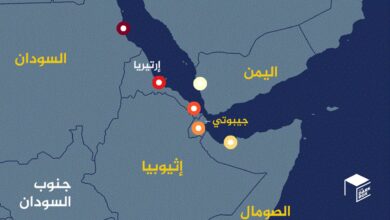
The timing makes that question more consequential. The G7 statement was unusually explicit. Britain, Canada, France, Germany, Italy, Japan and the United States called on Iran to end its arming and support of the Houthis and condemned the group’s strikes against Saudi Arabia. They also demanded an end to attacks and threats against civilian shipping. In other words, Western governments are treating Iranian support for the Houthis not merely as another Yemen issue but as part of an escalation affecting international commerce and stability. At the same time, fighting along Yemen’s Red Sea coast has again placed Saudi Arabia under direct pressure, with Houthi territorial advances bringing the confrontation closer to Bab al-Mandab and the maritime infrastructure on which Saudi and international trade depend.
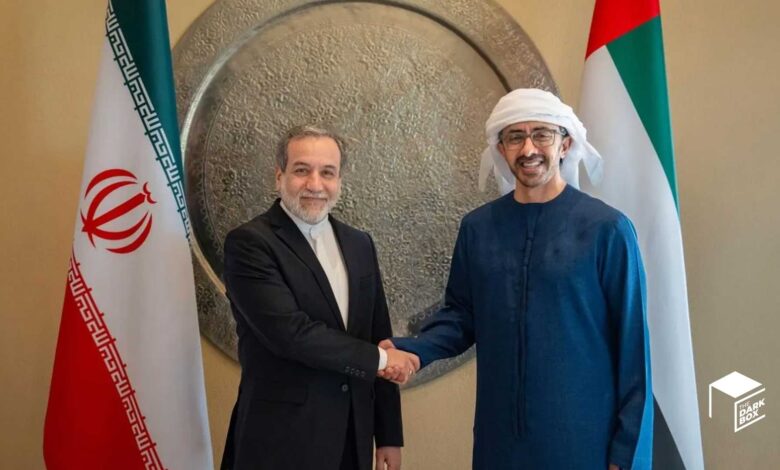
Against this background, Anwar Gargash, diplomatic adviser to Mohammed bin Zayed, has been articulating what amounts to a new Emirati doctrine toward Iran. Speaking on September 20, Gargash argued that the region needed a “new mindset”: strategic discussions about regional stability should not occur only between Tehran and Washington but also directly between Iran and Arab governments. He stressed that Abu Dhabi wanted diplomacy and functional relations with its neighbor even while acknowledging continuing security differences. Days earlier, Gargash had described Iranian President Masoud Pezeshkian’s conduct during the crisis as “balanced and rational” after Abu Dhabi Crown Prince Khaled bin Mohamed bin Zayed met Pezeshkian at the BRICS summit in New Delhi. Emirati accounts of that meeting said the two sides discussed de-escalation, stability, peace and development.
More revealing is the economic dimension. In an official account published by Dubai’s Media Office, Gargash said regional states could help Iran move beyond its current crisis and restore its economic and development trajectory, although he explicitly conditioned that prospect on de-escalation, stable relations and an end to aggression. He also said dialogue with Tehran should eventually encompass the deeper architecture of the relationship rather than being limited to trade, aviation and shipping. Crucially, Gargash simultaneously rejected Houthi attacks on Saudi Arabia, rejected attempts to target Mecca, criticized the use of militias and insisted that threats to Bab al-Mandab were unacceptable. That complete record matters: the UAE’s declared position is not that Iran should receive economic relief while continuing proxy attacks. Abu Dhabi publicly presents economic reintegration as something that should follow behavioral change.
Nevertheless, the financial record complicates the Emirati narrative. On August 28, the U.S. Treasury Department’s Financial Crimes Enforcement Network identified Banque Misr UAE as what it called a critical node in the Iranian government’s access to U.S. dollars. Treasury estimated that between January 2024 and June 2026 the bank processed approximately $1.8 billion for 103 companies potentially belonging to Iranian shadow-banking networks. Washington said customers included apparent front companies used by Iran’s Ministry of Defense and the Islamic Revolutionary Guard Corps to evade sanctions and launder funds. FinCEN therefore proposed cutting Banque Misr UAE’s correspondent-banking access to U.S. financial institutions.
This finding needs to be described precisely. Banque Misr UAE is the Emirati operation of an Egyptian state-owned bank; the Treasury finding does not establish that Mohammed bin Zayed, the UAE government or the UAE Central Bank directed the transactions. Nor does the fact that transactions occurred inside the Emirates establish Emirati state complicity. What it does establish is something strategically important: despite years of international sanctions on Tehran, financial infrastructure operating inside the UAE remained sufficiently important to Iranian-linked networks for the U.S. Treasury to describe one institution there as a critical dollar-access node. The case demonstrates the continuing value of the Emirati commercial and financial environment to networks Washington says are connected to Tehran.
The consequences were serious enough to trigger institutional restructuring. Reuters reported on September 22 that the National Bank of Egypt had received preliminary approval to acquire Banque Misr’s UAE operations after the U.S. sanctions threat. The UAE Central Bank initiated an urgent review after Washington’s action. This response cuts in two directions analytically. It demonstrates the seriousness of the financial vulnerability identified by Washington, but it also shows Emirati regulators responding rather than simply protecting the bank from scrutiny. Any claim that the $1.8 billion represents a deliberate Emirati government financing operation therefore goes beyond the available evidence.
Yet the larger strategic pattern remains significant. The UAE has spent decades building itself into one of the Middle East’s most important commercial, financial, aviation and maritime hubs. Iran, separated from the Emirates by the Gulf, has historically benefited from commercial connections through the country. When sanctions tighten, access to such a hub becomes more—not less—valuable. When Abu Dhabi talks about restoring trade, aviation, shipping, market access and Iran’s economic development, it is therefore discussing assets with real strategic significance for an Iranian economy under intense pressure. Gargash himself has acknowledged that operational relations can be restored more readily than trust.
That creates the central tension investigated by Dark Box. Iran’s economic isolation and Iran’s regional military leverage are not separate worlds. Washington explicitly says Tehran uses shadow-banking networks to generate revenue, procure weapons and finance regional armed proxies. The G7, meanwhile, says Iran continues to arm and support the Houthis while those forces attack Saudi Arabia and threaten shipping. Put those two documented propositions beside Abu Dhabi’s discussion of helping Iran restore its economic trajectory and a difficult policy question emerges: what guarantees would ensure that renewed economic connectivity strengthens Iranian civilian development rather than restoring resources and strategic room to the same state structures accused of sustaining proxy warfare?
The Emirati answer is that economic normalization must be conditional. Gargash has said aggression must end first and that negotiations over a new future cannot proceed while threats and attacks continue. Another Emirati diplomatic figure said in August that suspended trade with Iran could resume if Tehran stopped military strikes, restored freedom of navigation and re-established calm, describing economic engagement as conditional and reversible. That position is materially different from offering Iran unconditional economic rescue.
But conditional engagement does not eliminate the strategic dilemma. Abu Dhabi has strong incentives to reduce its own exposure. The UAE’s economy depends heavily on uninterrupted aviation, ports, shipping, investment and financial flows. Gargash has openly said the country is accelerating alternative ports, pipelines, railways and trade corridors so that Emirati energy exports and commerce cannot be held hostage by regional conflict. De-escalation with Tehran is therefore not merely ideological diplomacy; it serves a concrete Emirati economic-security interest.
Saudi Arabia faces a different exposure. Its current confrontation is concentrated not only around Hormuz but also around Yemen and the Red Sea. The Houthis are attacking Saudi Arabia while fighting Saudi-backed forces and threatening the maritime corridor around Bab al-Mandab. The G7 statement itself links Iranian support, Houthi attacks on the kingdom and threats to civilian shipping. The result is an asymmetric security environment: Abu Dhabi’s priority is increasingly to insulate its commercial system from Iranian retaliation and restore a workable relationship with Tehran, while Riyadh is simultaneously absorbing renewed military pressure from an armed movement that Western governments say Iran continues to support.
This is where the accusation that the UAE is “playing with Gulf security” needs to be tested rather than simply asserted. One interpretation is critical of Abu Dhabi: by seeking a separate accommodation with Tehran while Saudi Arabia remains exposed to Houthi attacks, the UAE could contribute to a fragmented Gulf security architecture in which Iran can negotiate different arrangements with different monarchies while retaining leverage through armed partners elsewhere. Under this interpretation, the danger is not necessarily a secret UAE-Iran alliance. It is the absence of a common Gulf price for Iranian escalation. If Tehran can restore economic relationships with one Gulf state while its allied forces continue imposing military costs on another, collective deterrence becomes harder to sustain.
The competing interpretation is that Abu Dhabi’s policy may be an attempt to solve precisely that problem. Gargash is publicly calling for Arab-Iranian strategic talks rather than a bilateral Emirati carve-out, and Saudi Arabia itself has explored regional security arrangements with Iran. Financial Times reporting indicates that Saudi officials have proposed a regional non-aggression framework, while Qatar has also advocated a Gulf-Iran security architecture. The diplomatic turn toward Tehran therefore cannot accurately be portrayed as an exclusively Emirati project designed against Riyadh. Several Gulf governments appear to have reached the conclusion that geography, Iranian military capacity and doubts about permanent U.S. protection require some form of direct regional security dialogue.
What distinguishes the UAE is the scale of its potential economic leverage. Abu Dhabi and Dubai possess ports, aviation links, financial institutions, logistics networks and access to global markets that could make renewed UAE-Iran connectivity unusually valuable. That gives Abu Dhabi leverage over Tehran—but it also gives Tehran a powerful incentive to keep the Emirati channel open. The unresolved question is which side would ultimately obtain more strategic benefit from reopening it.
The Banque Misr UAE case gives that question additional weight. Washington’s findings show how commercial infrastructure in the Emirates could be exploited by Iranian shadow networks even before any broad normalization. The appropriate analytical conclusion is not that Abu Dhabi knowingly financed Tehran; Treasury did not establish that. The conclusion is that any future Emirati economic opening toward Iran would require exceptionally aggressive enforcement if Abu Dhabi wants to demonstrate that renewed commerce cannot be diverted into sanctions evasion, military procurement or financing networks associated with Iranian state institutions.
The other unanswered question is sequencing. Gargash’s own formulation says aggression must stop before a new regional future can be negotiated. Yet the Houthis are currently attacking Saudi Arabia, and the G7 says Iranian arming and support continue. If economic reintegration begins before verifiable changes in Iranian support for armed groups, critics would have grounds to argue that Tehran is being offered benefits before delivering the security concessions Abu Dhabi itself says are necessary. If, however, economic access is withheld until measurable changes occur, then the UAE could plausibly argue that it is using economic connectivity as leverage rather than as a reward.
The chronology creates grounds for scrutiny, not proof of such a bargain. No verified document, official statement or independently corroborated reporting reviewed by Dark Box establishes that quid pro quo.
What can be established is already significant. Iran-linked shadow-banking networks processed approximately $1.8 billion through Banque Misr UAE accounts, according to the U.S. Treasury. The G7 says Iran continues to arm and support Houthis attacking Saudi Arabia and threatening civilian shipping. Khaled bin Mohamed bin Zayed has met Iranian President Masoud Pezeshkian, while Gargash praised aspects of Pezeshkian’s conduct and is publicly advocating a new Arab-Iranian dialogue. Gargash has also said regional states could help Iran restore its economic trajectory—but has explicitly tied such a future to an end to aggression and stable relations.
Taken together, these facts reveal not a proven secret deal but a profound strategic divergence that deserves scrutiny. The UAE is attempting to build a security model in which deterrence coexists with economic and diplomatic engagement with Iran. Saudi Arabia, meanwhile, is again confronting the military consequences of Iranian-backed Houthi power on its southern flank and along the Red Sea. The danger for Gulf security is that these tracks may not remain synchronized.
The decisive question is therefore not whether talking to Iran is itself a betrayal of Gulf security. Saudi Arabia, Qatar and other regional governments are also pursuing dialogue. The more important question is whether economic reintegration will be conditioned on measurable Iranian concessions applying to the entire Gulf—including an end to support for attacks on Saudi Arabia and threats to Bab al-Mandab—or whether individual Gulf states will negotiate their own protection while Iranian pressure simply migrates toward their neighbors.
If the first model emerges, Abu Dhabi’s diplomacy could become part of a collective regional-security settlement. If the second emerges, the Gulf will not have solved the Iranian security problem; it will merely have redistributed it. And that is the issue Dark Box believes deserves investigation: not the unsupported claim of a secret bargain, but whether a fragmented system of bilateral accommodations allows Tehran to separate Gulf economic interests from Gulf collective security, offering calm to one capital while pressure continues against another.