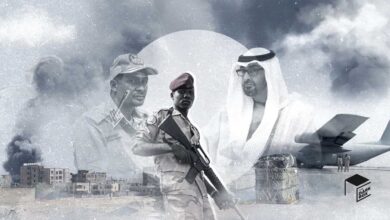
Abu Dhabi’s Hidden Corridor: New Report on Israeli Troops in Somaliland Revive Questions About UAE’s Role in Expanding Israel’s Security Footprint in the Horn of Africa
A Dark Box Special Report
Fresh allegations regarding the presence of Israeli soldiers in Somaliland have reignited scrutiny over the growing security relationship between Israel and the breakaway Horn of Africa territory, while simultaneously directing attention toward a key regional actor that has spent years building military, logistical, and political influence in the region: the United Arab Emirates.
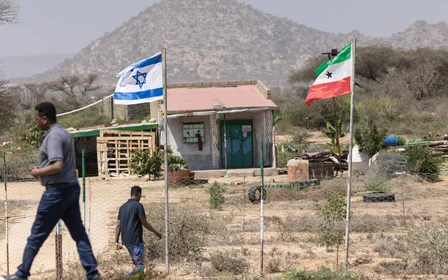
According to statements attributed to a senior Somali government official, approximately fifty Israeli soldiers were deployed to Somaliland earlier this year following Israel’s recognition of the territory as an independent state. The official claimed the deployment coincided with the escalation of tensions surrounding the Iran conflict and formed part of broader bilateral security arrangements between Hargeisa and Tel Aviv.
While Israeli authorities have denied reports regarding a military deployment and Somaliland officials publicly reject the existence of an Israeli base, the controversy has once again focused attention on the strategic transformation taking place along the Red Sea corridor and the role Abu Dhabi may be playing behind the scenes.
For Dark Box, the significance of the story extends beyond the question of whether fifty soldiers are physically present in Somaliland.
The more important question is how Israel was able to establish an expanding security relationship in a territory that, until recently, remained largely outside the formal diplomatic architecture of the Middle East.
The answer increasingly appears to lead back to Abu Dhabi.
For more than a decade, the UAE has systematically invested in Somaliland’s infrastructure, ports, logistics facilities, security institutions, and political networks. Berbera, once a relatively quiet port city, has gradually evolved into one of the most strategically important locations on the African side of the Red Sea.
The UAE’s investments transformed Berbera into a major logistical hub, while Emirati military and security activities created a framework that allowed foreign security partnerships to emerge with increasing ease.
Analysts argue that Israel’s growing presence did not emerge in a vacuum.
Rather, it appears to have developed within an environment that Abu Dhabi helped create.
The timing is particularly revealing.
The latest allegations surfaced only months after Israel became the first country to formally recognize Somaliland. Shortly afterward, Israel appointed its first ambassador to Hargeisa, signaling an unprecedented political upgrade in relations.
The recognition itself shocked many governments across the region.
However, the subsequent reports of military cooperation have generated even greater concern.
According to the Somali official, Israeli forces of African heritage were selected specifically to blend into the local environment and avoid attracting attention. Although the claim remains unverified, it reflects growing concerns among regional observers that security cooperation between Israel and Somaliland may be deeper than publicly acknowledged.
Adding to these concerns were remarks made by Israeli Defense Minister Israel Katz, who openly acknowledged that Israel and Somaliland had cooperated secretly for years.
His statement was remarkable not because it revealed cooperation, but because it confirmed what many regional observers had long suspected: that the relationship extends well beyond diplomacy.
“For many years, we cooperated under the radar,” Katz stated during a meeting with Somaliland President Abdirahman Mohamed Abdullahi.
That admission inevitably raises additional questions.
What operations were conducted?
What infrastructure supported them?
And who facilitated the development of those networks?
For many observers, the UAE remains impossible to ignore.
The Emirati footprint across Somaliland is extensive.
From port management and infrastructure projects to security training and military facilities, Abu Dhabi has spent years building influence in the territory. Berbera’s strategic location overlooking the Bab el-Mandeb Strait makes it one of the most valuable geopolitical assets in the wider Red Sea basin.
The recent surge in activity at Berbera has only intensified speculation.
Satellite imagery and shipping data reviewed in previous investigations documented repeated arrivals of heavy cargo vessels traveling from the UAE’s Fujairah port to Berbera’s military facilities. The shipments coincided with significant expansion projects at the military port and adjacent airbase, including the construction of new hangars and support infrastructure.
These developments occurred during the same period that reports emerged regarding increased Israeli interest in Somaliland.
Several international reports suggested that Israel was exploring opportunities to utilize Somaliland for logistical support, intelligence gathering, maritime monitoring, and potentially as a strategic stopover point for long-range operations.
Viewed collectively, the sequence of events is striking.
First came years of Emirati investment and military engagement.
Then came Israel’s diplomatic recognition.
Then came reports of expanded security cooperation.
Finally came allegations of Israeli military personnel operating inside Somaliland.
Whether all of these developments are directly connected remains the subject of debate.
Yet critics argue that the broader pattern suggests the emergence of a security architecture that could not have developed without substantial external sponsorship.
For Dark Box, the central issue is not merely Israeli-Somaliland relations.
It is the possibility that Abu Dhabi has effectively acted as a political and logistical bridge facilitating Israel’s strategic entry into one of the most sensitive regions bordering the Red Sea.
Such a development would carry profound implications.
The Bab el-Mandeb Strait serves as one of the world’s most important maritime chokepoints, connecting global trade routes between Europe, Asia, and the Middle East. Any expansion of foreign military influence in this area inevitably affects regional security calculations.
The controversy also comes at a time when reports have increasingly linked Somaliland to wider regional security dynamics involving Iran, Yemen, and maritime security operations.
If Somaliland is indeed evolving into a platform for broader security cooperation, the question of who enabled that transformation becomes increasingly important.
The evidence available today does not conclusively prove the full extent of Israeli activities inside Somaliland.
However, the emerging allegations, combined with Israeli admissions of longstanding secret cooperation and the extensive Emirati role in shaping Somaliland’s security infrastructure, are generating growing scrutiny.
For Abu Dhabi, the implications are significant.
The UAE has consistently presented its activities in Somaliland as economic and developmental in nature. Yet critics increasingly argue that these investments have laid the foundations for a broader geopolitical project that extends far beyond trade and infrastructure.
The latest allegations concerning Israeli personnel may therefore represent more than an isolated controversy.
They may offer a glimpse into a deeper regional realignment in which Emirati influence, Israeli strategic ambitions, and Red Sea security interests are becoming increasingly intertwined.
As new information emerges, one reality is becoming difficult to ignore: Somaliland is no longer a peripheral political issue. It is rapidly becoming a focal point in a larger geopolitical contest, and the UAE appears to be standing at the center of that transformation