Ports, Gold, and Power—How the UAE Is Building a Strategic Empire Across Africa
Dark Box Investigation
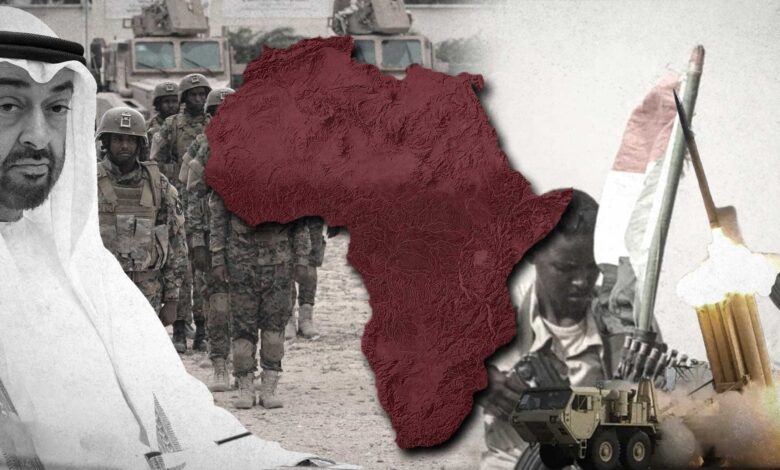
The United Arab Emirates has emerged as one of the most active and influential middle powers operating in Africa, expanding far beyond conventional trade and investment to construct an interconnected network of ports, mines, agricultural projects, logistical corridors, security partnerships, and political influence.
A Dark Box analysis of findings reported by the Financial Times indicates that Abu Dhabi no longer views Africa simply as a market for capital. Under President Sheikh Mohammed bin Zayed, the continent has become a central arena in the UAE’s effort to secure long-term influence, strategic resources, and economic relevance in the post-oil era.
The scale and speed of this expansion represent one of Africa’s most significant geopolitical shifts since China’s large-scale entry into the continent at the beginning of the century.
The Emirati model is based on integration. Ports are connected to transport corridors, mines to export terminals, agricultural land to food-security strategies, and commercial investments to military and intelligence interests.
Emirati adviser Nadim Koteich summarized the approach by saying that Abu Dhabi is not building an investment portfolio, but a “system.”
That description captures the central feature of the UAE’s African strategy: projects that appear commercially separate often reinforce one another and create long-term political dependence.
Ports as the foundation of influence
Ports have served as the main entry point for Emirati expansion.
DP World began extending its African operations during the first decade of the century, later joined by Abu Dhabi Ports. Together, the companies now operate or develop ports and logistics zones across approximately 13 African countries.
This network has transformed Dubai into a primary re-export hub connecting Africa with Asia and the Middle East.
International Monetary Fund estimates cited in the reporting indicate that non-oil trade between the Gulf and Africa has exceeded $100 billion, with the UAE and Saudi Arabia accounting for the largest share.
Since 2017, the UAE has announced African investment projects worth more than $168 billion. Some of these announcements may represent intentions rather than fully completed investments, but the figure still reflects the scope of Abu Dhabi’s ambitions.
Ports provide more than commercial revenue. They create influence over customs systems, supply chains, strategic coastlines, and the movement of essential goods. In politically fragile states, control over logistics can translate into significant leverage over governments.
Berbera: commerce and security combined
The port of Berbera in Somaliland offers one of the clearest examples of the UAE’s integrated model.
The arrangement was not limited to DP World’s development of the commercial port. It also coincided with provisions allowing the UAE to use a nearby military and naval facility and an airstrip.
Dubai provided the commercial infrastructure, while Abu Dhabi developed the security dimension.
Berbera’s location near the Gulf of Aden and the southern entrance to the Red Sea gives it importance far beyond Somaliland. The facility sits near some of the world’s busiest maritime routes and close to Yemen, where regional competition has intensified.
The case demonstrates how Emirati commercial projects can establish the infrastructure required for military access and strategic power projection.
Sudan, gold, and the war economy
Sudan occupies a central position in the investigation.
The report begins with the theft of gold from Sudan’s central bank and a Khartoum refinery during the first days of the 2023 civil war. A source cited in the investigation said a large proportion of the stolen gold was transported by air to the UAE.
The account does not establish that the UAE organized or participated in the theft. Instead, it illustrates Dubai’s position as the principal external destination for African gold flows.
The UAE has become a dominant market for both declared and undeclared African gold. Estimates from the Swiss organization Swissaid suggest that approximately $30 billion in artisanal gold leaves Africa for Dubai each year without being officially recorded.
Studies have also said that Sudanese gold exports to the UAE have contributed to financing the country’s war.
Before the conflict, Sudan was a key part of the Emirati vision for the Horn of Africa, particularly through large agricultural projects intended to strengthen the UAE’s food security. The war disrupted those plans while increasing scrutiny of Abu Dhabi’s links to actors involved in the conflict.
The investigation also cites evidence collected by UN experts, Western intelligence agencies, and human rights organizations regarding weapons-supply networks operating through airfields, ports, and allied African states to support the Rapid Support Forces. The UAE has repeatedly denied supplying the RSF.
These allegations remain contested, but they demonstrate how economic, logistical, and military interests can overlap within the Emirati regional system.
Resources for the post-oil economy
The UAE’s mining expansion is equally strategic.
Emirati companies have invested in copper, gold, iron, and tin operations across several African states. Through investments in eastern Democratic Republic of the Congo, the UAE is estimated to control approximately 7 percent of global tin production.
These acquisitions are not aimed solely at generating financial returns.
Critical minerals are essential for renewable energy, electronics, defense manufacturing, batteries, and advanced industrial technologies. By securing access to them, Abu Dhabi is preparing its economy for a future in which oil revenues play a smaller role.
The strategy allows the UAE to position itself between African producers and global markets, controlling not only extraction but also financing, transport, processing, and export.
The sovereignty question
The scale of Emirati activity has generated unease among some African officials.
Critics affirm that Abu Dhabi’s integrated approach can give it excessive influence over fragile states whose governments depend on foreign investment, port access, security assistance, or political support.
The concern is not simply that the UAE owns commercial assets. It is that control of ports, logistics, mineral exports, agricultural production, and security infrastructure can limit the policy independence of host governments.
Ethiopian researcher Mehari Maru has said that the UAE’s freedom of action in Africa is strengthened by its alliance with Israel, hostility toward political Islamist movements, enormous investment capacity, and lobbying networks in the West.
Eritrean Information Minister Yemane Gebremeskel has described the Emirati project as beginning with control over a collection of East African ports before evolving into a broader effort involving power projection and resource extraction.
An Islamist political figure in West Africa went further, describing Emirati involvement in African politics as more interventionist than China’s.
A system of influence
The UAE presents its African policy as a model of development, connectivity, investment, and modernization.
Many of its projects have delivered real infrastructure, trade opportunities, and access to capital in countries neglected by Western investors.
Yet the same network that builds ports and mines can also provide strategic access, political leverage, intelligence reach, and military mobility.
This is the central finding of the investigation.
The UAE is not merely purchasing assets across Africa. It is constructing an interconnected system that links commerce, resources, security, and diplomacy.
For Dark Box, the critical question is whether this system will support African development on mutually beneficial terms—or deepen dependence on a foreign power whose economic projects are increasingly inseparable from its geopolitical ambitions.
The answer will shape not only the UAE’s future as a post-oil power, but also the sovereignty, security, and economic direction of a continent undergoing one of the most significant geopolitical transformations of the modern era.