Secret Cargo Corridor? Mysterious UAE Military Shipments to Berbera Raise New Questions About Regional Operations
A Dark Box Special Report
A series of unexplained cargo shipments traveling between the UAE’s Fujairah port and the military facilities at Berbera in Somaliland is drawing renewed attention to one of the most strategically sensitive locations in the Red Sea region.
Satellite imagery, shipping records, and recent construction activity suggest that Berbera is experiencing a significant increase in military-related logistical operations. The developments have fueled questions about the nature of the cargo being transported, the purpose of the ongoing expansion of military facilities, and the broader regional objectives behind the sudden surge in activity.
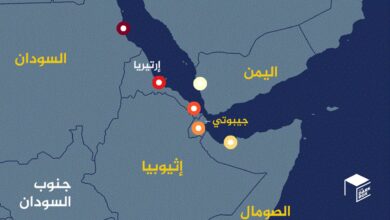
At the center of the story is Berbera’s military port and adjacent airbase, facilities that occupy a unique position overlooking the Bab el-Mandeb Strait, one of the world’s most critical maritime chokepoints. Any military buildup at this location carries implications far beyond Somaliland itself, potentially affecting security dynamics across the Red Sea, the Gulf of Aden, East Africa, and the wider Middle East.
Recent observations indicate a pattern that appears difficult to dismiss as routine commercial activity.
On June 5, satellite imagery identified a cargo vessel inside the military section of Berbera port. Analysis of shipping movements indicates that the vessel had departed from Fujairah in the UAE in late May, arrived in Berbera on June 5, and left approximately twenty-four hours later.
The vessel was not an isolated case.
Tracking data suggests that the same ship had conducted multiple voyages to Berbera in March, May, and June. A second cargo vessel reportedly arrived from Fujairah on June 4, just one day before the first vessel reached the port. According to maritime tracking information, that vessel also departed shortly after unloading and returned to the UAE.
The pattern is notable.
These were not container ships engaged in normal commercial trade. Available data identifies them as heavy cargo vessels capable of transporting large equipment, vehicles, engineering machinery, military support systems, or other oversized cargo.
What exactly was unloaded remains unknown.
However, the frequency of the voyages and the speed with which the vessels departed after arrival suggest a dedicated logistical operation rather than conventional commercial activity.
The timing is equally significant.
For much of the previous period, Berbera’s military harbor reportedly saw limited shipping activity. The situation changed dramatically in late 2025 and early 2026 when multiple cargo ships began arriving from the UAE.
Between February and June 2026 alone, several heavy cargo vessels reportedly entered the military port.
This increase in maritime traffic coincided with major physical changes on the ground.
Satellite imagery revealed the construction of new aircraft hangars, additional support facilities, and expanded infrastructure around the military base adjacent to the port. Such developments indicate a long-term investment in operational capabilities rather than temporary logistical support.
The question is obvious: why now?
One possible explanation lies in the rapidly changing geopolitical environment surrounding the Red Sea and the Horn of Africa.
The Bab el-Mandeb Strait has become increasingly important as regional conflicts, maritime security threats, and global shipping disruptions have elevated its strategic value. Control, monitoring, or influence over infrastructure near the strait provides significant leverage over one of the world’s most important trade routes.
At the same time, regional alignments have evolved.
Somaliland’s growing international visibility, combined with reports of increasing foreign interest in military and security facilities in the region, has transformed Berbera from a peripheral location into a strategically significant hub.
Recent reports have suggested that foreign actors view Somaliland as an attractive platform for intelligence gathering, logistics support, maritime monitoring, and regional power projection.
While many claims regarding specific military uses remain unverified, the combination of expanding infrastructure, recurring cargo shipments, and growing geopolitical interest has intensified scrutiny of activities at the base.
The UAE’s role in this equation deserves particular attention.
For years, Abu Dhabi has invested heavily in ports, logistics corridors, military facilities, and strategic infrastructure across the Horn of Africa and the Red Sea basin. These investments have frequently been presented as commercial projects designed to enhance trade connectivity and regional development.
Critics, however, argue that many of these projects serve dual purposes.
According to this perspective, commercial infrastructure often provides the foundation for broader security, intelligence, and geopolitical objectives. Ports become strategic assets. Logistics hubs become operational platforms. Commercial influence becomes political leverage.
The recurring Fujairah-Berbera route inevitably raises questions about whether the latest shipments form part of a larger strategic project.
Several factors contribute to these concerns.
First, the vessels involved appear specialized for heavy cargo transportation.
Second, the turnaround times inside Berbera suggest rapid unloading operations.
Third, the increase in shipping activity coincides with physical expansion of military facilities.
Fourth, the developments occur amid heightened regional tensions and growing competition for influence around critical maritime routes.
None of these factors alone proves the existence of military deployments or covert operations.
Taken together, however, they point to a significant logistical effort that deserves closer examination.
For Dark Box, the most important aspect of the story is not necessarily what is currently known, but what remains unexplained.
What equipment is arriving in Berbera?
Who is financing the infrastructure expansion?
What role do the recurring UAE-linked shipments play in the development of the base?
Why did activity accelerate precisely during a period of heightened regional tensions?
And what strategic objectives are ultimately being pursued from a facility overlooking one of the world’s most sensitive maritime corridors?
Until clearer answers emerge, the growing flow of cargo between Fujairah and Berbera is likely to remain one of the most closely watched logistical developments in the Red Sea region.
What is already clear is that Berbera is no longer a quiet outpost on the edge of the Horn of Africa. It is becoming a focal point in a larger geopolitical contest whose consequences may extend far beyond Somaliland’s borders.