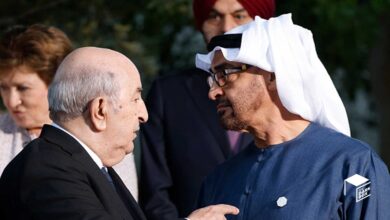
Engineered Chaos: How Israel’s Strategy Seeks to Ignite a Prolonged Intra-Regional War and Turn the UAE into Its Forward Fuel
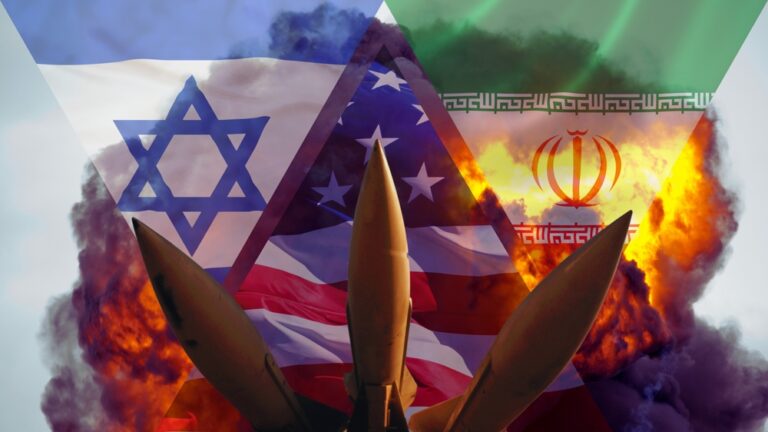
The unfolding regional crisis reveals a deeply troubling strategic trajectory driven by Israeli calculations that extend far beyond a conventional confrontation with Iran. At its core lies a broader objective: to transform the conflict into a prolonged and self-sustaining confrontation among regional countries themselves. This scenario, if realized, would fundamentally reshape the region, shifting the burden of war away from Israel while entrenching instability across the Middle East.
The central actors in this dynamic are clear. Israel seeks to maintain and expand the escalation cycle, ensuring that the conflict does not conclude in a negotiated settlement that could limit its strategic leverage. The United States, while publicly oscillating between escalation and diplomacy, has at times aligned with this trajectory, whether by design or through political pressure. Meanwhile, the United Arab Emirates has emerged as a critical operational node within this framework, positioning itself in a manner that risks transforming it from a regional actor into a direct instrument of escalation.
The role of the UAE in this context is particularly significant and deeply concerning. Evidence from official statements and political positioning indicates a willingness to align with the most aggressive approaches toward Iran. Rather than acting as a stabilizing force within the Gulf, Abu Dhabi appears to be moving in the opposite direction, embracing a role that effectively places it at the forefront of a confrontation whose consequences it cannot fully control.
This alignment does not occur in isolation. It reflects a broader convergence between Israeli and Emirati agendas across multiple fronts, from geopolitical positioning to ideological alignment in supporting certain political currents internationally. However, in the current context, this convergence takes on a far more dangerous dimension. The UAE is no longer merely coordinating politically or economically; it is edging toward becoming a functional component in a strategy designed to expand war across the region.
Statements from Turkish Foreign Minister Hakan Fidan provide a critical counterpoint to this trajectory. His warning is not rhetorical but strategic. He explicitly cautions that regional countries must not fall into the trap being set, a trap aimed at provoking reactions that would trigger long-term, self-perpetuating conflicts within the region. His message is clear: escalation is not an inevitable outcome but a manufactured one, driven by actors who benefit from chaos.
Fidan’s warning to Gulf states is particularly direct. He emphasizes the need for caution, patience, and restraint, highlighting that reactive decisions under pressure could produce consequences that extend far beyond immediate calculations. This perspective reflects an understanding that the current moment is not merely about a single conflict but about the potential restructuring of regional dynamics for years to come.
The strategic logic behind Israel’s approach is rooted in the redistribution of conflict costs. By expanding the war into a broader regional confrontation, Israel effectively externalizes the burden, shifting it onto neighboring states. In such a scenario, the focus moves away from Israel itself and toward a fragmented landscape of competing conflicts among regional countries. This not only dilutes pressure on Israel but also weakens potential collective responses against it.
Within this framework, the UAE’s role becomes even more critical. By aligning with escalation, it risks becoming what can only be described as operational fuel for a broader strategy. The language used by key figures in Washington and Tel Aviv reinforces this perception, framing regional allies as partners in a confrontation that ultimately serves Israeli strategic interests. The danger lies in the asymmetry of outcomes: while Israel seeks to reshape the region, the states drawn into the conflict bear the direct costs of destruction and instability.
The broader regional response highlights a stark divide. On one side are countries advocating for de-escalation, dialogue, and negotiated solutions, recognizing the catastrophic implications of prolonged conflict. On the other side are actors pushing toward continued confrontation, either out of strategic calculation or political alignment. This divide is not merely diplomatic; it represents competing visions for the future of the region.
The inability of the international community to exert meaningful pressure on Israel further complicates the situation. Without effective constraints, escalation becomes a viable and even attractive option for those seeking to maintain strategic dominance. This places additional responsibility on regional actors to resist being drawn into a conflict that serves external agendas more than their own interests.
The economic and security implications of such a trajectory are severe. Prolonged conflict would disrupt energy markets, destabilize trade routes, and undermine investment environments across the Gulf. For countries whose economies depend on stability and global integration, the costs would be profound and long-lasting.
At a deeper level, the scenario being constructed threatens to fracture the region internally. By turning countries against one another, it erodes the possibility of coordinated action and collective security. It replaces cooperation with competition and stability with chronic instability.
In conclusion, the current trajectory is not an accidental escalation but a structured process aimed at transforming the nature of conflict in the Middle East. Israel’s strategy seeks to create a self-sustaining cycle of confrontation among regional countries, reducing its own exposure while maximizing fragmentation.
The UAE’s emerging role within this framework represents a critical turning point. By aligning with escalation, it risks becoming both a participant and a casualty in a broader strategy that it does not control. The warnings issued by regional leaders underscore the urgency of reassessment.
The choice facing the region is stark. It can either resist the pull toward engineered chaos or become entangled in a prolonged conflict whose consequences will extend far beyond the present moment.