Dark Box Investigation: The Yemen War Moves to Washington, Sources Say Abu Dhabi Is Lobbying to Keep U.S. Firepower Out of Saudi Arabia’s Fight
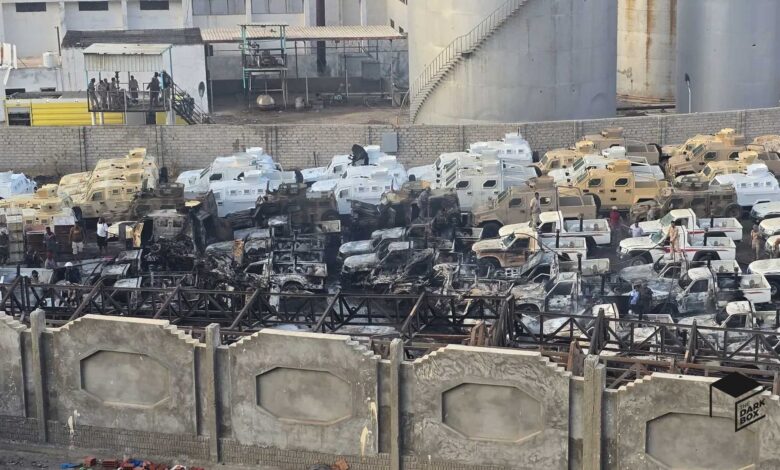
As American military assets move toward the Middle East and Saudi Arabia confronts an increasingly dangerous Houthi challenge in Yemen and the Red Sea, another battle is unfolding thousands of miles from the battlefield. According to senior sources speaking to Dark Box, Abu Dhabi has been pressing its relationships in Washington to discourage the United States from escalating its assistance to Riyadh into direct military intervention against the Houthis. If substantiated, the lobbying effort would expose a deeper layer of the Saudi-Emirati struggle over Yemen: two countries that entered the war as allies are now competing not only over territory, ports and armed partners, but over how much American power Washington should place behind Saudi Arabia.
The timing makes the alleged Emirati effort particularly significant. The United States is reinforcing its military posture across the region as instability intensifies, while Saudi Arabia is seeking greater American assistance against a Houthi movement whose capabilities have expanded far beyond the insurgency Riyadh confronted at the beginning of the Yemen war. Reports and regional sources have pointed to movements involving American carrier and amphibious forces toward the broader Middle East. Claims that three U.S. aircraft carriers and two amphibious groups are simultaneously heading into the region, however, should be treated cautiously unless confirmed by the Pentagon or independently verified naval tracking. What is clear is that Washington retains overwhelming military capabilities in and around the region, making the question of whether those capabilities are actually used in support of Saudi objectives strategically decisive.
Saudi Arabia’s problem is therefore not simply whether the United States possesses enough firepower. It is whether Washington is willing to use it.
Riyadh has sought deeper American assistance as Houthi attacks and territorial advances have increased the pressure on Saudi security and the maritime approaches to the Red Sea. Washington has provided intelligence, targeting and defensive assistance while avoiding the kind of direct American combat intervention that could fundamentally alter the military balance. Dark Box sources say Abu Dhabi has been working precisely at this point of vulnerability: attempting to persuade American policymakers that U.S. support should remain constrained rather than develop into a Saudi-American campaign capable of delivering Riyadh a decisive advantage.
Dark Box has not independently obtained U.S. lobbying records or government documents demonstrating that Emirati officials successfully caused Washington to limit military assistance to Saudi Arabia. Nor can Washington’s reluctance to intervene directly be attributed to Abu Dhabi alone. American decisions are shaped by the risk of escalation, the history of the Yemen war, congressional politics, regional military calculations and Washington’s wider strategic priorities. The allegation from Dark Box sources is narrower but potentially consequential: Abu Dhabi is using its influence in Washington to argue against precisely the level of American intervention Riyadh wants.
Understanding why requires looking beyond the Houthis.
Saudi Arabia and the UAE entered Yemen as coalition partners, but their strategic projects gradually diverged. Riyadh remained principally invested in preserving a Yemeni state aligned with the internationally recognized government and preventing a hostile Houthi-controlled order on its southern border. Abu Dhabi constructed a different architecture. It developed relationships with southern and coastal forces, most prominently the Southern Transitional Council, while cultivating influence around strategically important ports, islands and maritime corridors.
The result is a Yemen in which Saudi and Emirati interests can overlap against the Houthis while colliding over the political order that would replace them.
That distinction becomes crucial when Washington considers intervening.
A decisive Saudi military success against the Houthis could do more than weaken an Iranian-aligned armed movement. It could strengthen Riyadh’s ability to reconstruct Yemen’s anti-Houthi camp under Saudi leadership, reinforce the internationally recognized authorities and potentially reduce the bargaining power of armed and political networks cultivated by Abu Dhabi over many years.
A prolonged and fragmented conflict produces a different balance.
If Saudi Arabia receives enough American intelligence and defensive assistance to prevent catastrophic defeat, but not enough offensive power to impose a new military balance, Yemen remains divided among competing centers of authority. In such an environment, control over local partners, ports, coastlines and southern political structures becomes enormously valuable.
Abu Dhabi has spent years accumulating precisely those assets.
This is why the alleged lobbying campaign described to Dark Box cannot be understood simply as Emirati opposition to another American war. It sits inside a much larger contest over who controls the postwar architecture of Yemen.
Saudi Arabia needs American power to help change the battlefield.
The UAE has an interest in ensuring that any change does not erase the political and security architecture it has painstakingly constructed.
The contradiction is particularly sharp because Abu Dhabi publicly condemns Houthi attacks and expresses solidarity with Saudi Arabia when the kingdom comes under attack. Those official positions are important: there is no public evidence establishing that the UAE supports the Houthis or wants them to defeat Saudi Arabia. But opposing the Houthis does not necessarily mean supporting every Saudi strategy for defeating them.
That distinction is where the Saudi-Emirati rivalry becomes visible.
Abu Dhabi can oppose the Houthis while simultaneously opposing a Saudi victory that leaves Riyadh overwhelmingly dominant in southern Yemen.
It can condemn attacks on Saudi territory while resisting an American intervention that would dramatically strengthen Saudi leverage.
And it can publicly stand beside Riyadh while privately defending the network of influence it built during years of war.
According to Dark Box sources, Washington has become one of the most important arenas for managing that contradiction.
The UAE possesses a sophisticated influence infrastructure in the United States developed through decades of defense relationships, diplomatic access, commercial partnerships, lobbying and strategic cooperation. Saudi Arabia possesses its own formidable Washington network. The struggle over Yemen is therefore increasingly being fought not only through Yemeni forces but through competing arguments presented to American decision-makers about what the United States should do next.
For Riyadh, the argument is straightforward: a heavily armed Houthi movement threatening Saudi territory and Red Sea security cannot be contained indefinitely through intelligence sharing and defensive measures.
For Abu Dhabi, according to Dark Box sources, the danger is that Washington could cross the threshold from assisting Saudi Arabia to enabling it to dictate the military and political endgame.
That would change far more than the front line.
It could change who owns the victory.
This is the deeper significance of the American military buildup. Aircraft carriers, amphibious forces, combat aircraft and missile defenses are not merely symbols of American power. In the Saudi-Emirati competition, they represent a question of political leverage: whose regional strategy will Washington’s military weight ultimately reinforce?
If American forces remain primarily deterrent and defensive, Saudi Arabia continues fighting within significant constraints.
If Washington becomes directly involved against the Houthis in coordination with Riyadh, the balance could shift sharply.
That is why, according to the sources, Abu Dhabi’s Washington effort is focused not on eliminating American support for Saudi Arabia altogether, but on preventing it from crossing the threshold into the kind of direct military partnership capable of producing a decisive Saudi outcome.
The distinction matters.
The UAE does not need Washington to abandon Saudi Arabia.
It needs Washington’s support to stop short of giving Riyadh everything it wants.
That would preserve an equilibrium in which Saudi Arabia remains indispensable but not dominant, the Houthis remain dangerous but contained, and Abu Dhabi’s southern Yemeni networks remain strategically relevant.
For the people of Yemen, however, the consequences of this regional competition are far darker. Every external actor calculates influence, deterrence, ports, maritime corridors and bargaining power while Yemen continues to absorb the human cost of a conflict repeatedly reshaped by outside interests.
The Saudi-UAE rivalry has therefore entered a new phase.
The first phase was fought through coalition warfare.
The second was fought through competing Yemeni partners.
The third centered on ports, islands, southern separatism and the architecture of influence along the Arabian Sea and Red Sea.
Now the struggle is moving deeper into Washington.
Dark Box sources describe a contest in which Riyadh is trying to convince the United States that defeating the Houthi threat requires greater American military power, while Abu Dhabi is working to ensure that the same American power does not hand Saudi Arabia strategic supremacy in Yemen.
The allegation still requires documentary evidence before Emirati lobbying can be identified as the cause of specific U.S. decisions. Washington has powerful reasons of its own to avoid another Middle Eastern war.
But if the sources’ account is substantiated, the implications are significant.
The United States would not merely be deciding whether to intervene against the Houthis.
It would be deciding which Gulf power benefits from the limits of American intervention.
And behind the movements of American carriers and warships, another contest would be underway: Saudi Arabia trying to bring American power into the battlefield, and the UAE trying to determine exactly how far that power is allowed to go.