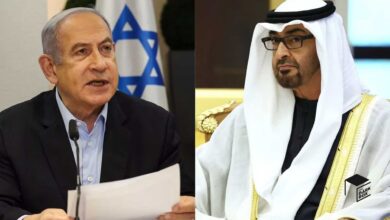
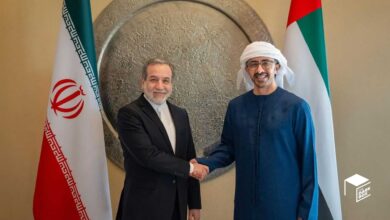
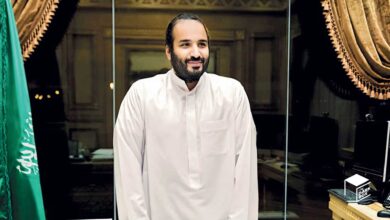
Dark Box Investigation: Netanyahu’s Secret Abu Dhabi Mission — Sources Say He Is Seeking Emirati Money and Political Support Ahead of Israel’s Election
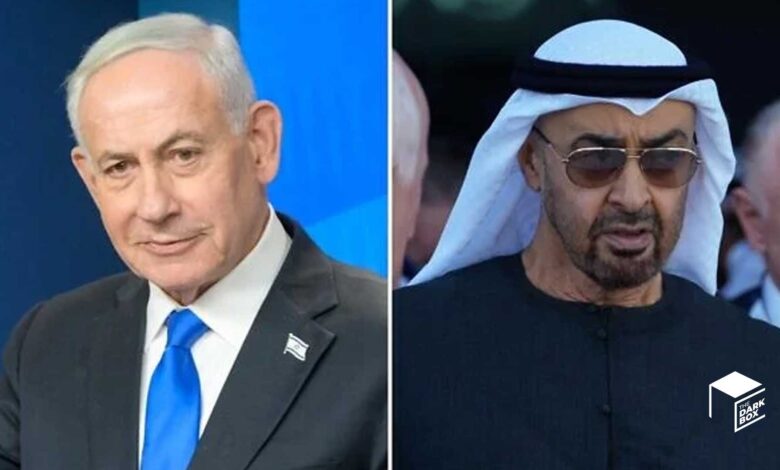
Benjamin Netanyahu disappeared from Israel for several hours on September 27 and flew aboard a private aircraft to Abu Dhabi for a secret meeting with UAE President Mohammed bin Zayed. The trip was not announced in advance. Netanyahu’s office initially refused to disclose what was discussed. Emirati authorities offered no immediate public explanation. Channel 12 reported the journey citing two sources, while Reuters cited a senior Israeli official confirming the visit. Netanyahu reportedly landed in Abu Dhabi at approximately 3:10 p.m. and spent around four hours in the UAE before returning to Israel.
The secrecy matters. But the timing matters even more.
Israel votes on October 27, in its first national election since the October 7, 2023 Hamas attack and the wars that followed in Gaza, Lebanon and Iran. Netanyahu enters that election facing intense scrutiny over the October 7 security failure and a politically damaging controversy concerning what he knew before the attack.
According to information provided to Dark Box by sources familiar with the matter, Netanyahu’s election campaign formed part of the political backdrop to the Abu Dhabi encounter. The sources say Netanyahu is seeking to leverage his relationship with Mohammed bin Zayed as he fights to remain in power and is pursuing Emirati political and financial support ahead of the vote.
That allegation is potentially explosive. It must also be stated with precision.
Dark Box has not independently obtained bank records, campaign documents, communications or other evidence establishing that Mohammed bin Zayed agreed to finance Netanyahu, that Emirati money has been transferred to Netanyahu’s campaign, or that a mechanism for such support was finalized during the September 27 meeting. No credible public report currently establishes such a transaction. The allegation that Netanyahu sought political or financial support is therefore attributed to Dark Box’s sources, not presented as an established financial transfer.
What the public record does establish, however, is something highly relevant: Netanyahu has already treated his relationship with Mohammed bin Zayed as politically valuable inside Israel.
Only months ago, Netanyahu’s relationship with Abu Dhabi became entangled in his rivalry with former prime minister Naftali Bennett. In May, Netanyahu’s office publicly disclosed what it described as an earlier secret visit to the UAE and a meeting with MBZ during the war with Iran. Abu Dhabi publicly denied that an undisclosed Netanyahu visit had taken place, insisting that UAE-Israel relations were public and conducted through the framework of the Abraham Accords. Reuters nevertheless reported that a source familiar with the encounter said Netanyahu and MBZ had met in Al Ain on March 26 for several hours.
Then came the political explanation.
Channel 12 reported that Netanyahu’s office decided to reveal the confidential UAE visit after learning that Bennett was preparing his own trip to Abu Dhabi. According to the report, Netanyahu’s team feared that Bennett could be photographed or publicly received by Emirati officials while Netanyahu’s own encounter remained secret, creating the impression among Israeli voters that Bennett was welcome in the UAE while the sitting prime minister was not. The disclosure reportedly angered Abu Dhabi, which had wanted the encounter kept confidential. Netanyahu’s office denied Channel 12’s account of its motivation.
That episode fundamentally changes how the latest Abu Dhabi trip should be examined.
It demonstrates that access to Mohammed bin Zayed has already acquired domestic political value in Netanyahu’s calculations, at least according to Israeli reporting. A meeting with MBZ is not merely diplomacy. In an election campaign, it can become an image: Netanyahu as the Israeli leader who can enter an Arab capital, sit privately with one of Washington’s most closely connected Gulf partners and demonstrate that his regional relationships remain intact despite Gaza, international condemnation and the legal proceedings against him.
Now, weeks before Israelis vote, Netanyahu has returned to Abu Dhabi.
And this time the meeting comes against an even more politically dangerous backdrop.
Earlier in September, Haaretz published an investigation alleging that Mohammed bin Zayed personally warned Netanyahu roughly ten days before October 7 that Hamas leader Yahya Sinwar was preparing a major operation. According to the report, MBZ spoke to Netanyahu for approximately 45 minutes and conveyed concern about a potentially destabilizing attack. Haaretz further reported that Netanyahu did not pass the warning to Israel’s senior military and intelligence leadership.
Netanyahu has categorically denied the story. His office called it false, denied that the reported conversation with MBZ occurred and threatened legal action against Haaretz and the journalists behind the report. The UAE has not publicly confirmed that MBZ personally delivered the warning described by Haaretz.
The chronology is therefore extraordinary.
First, an investigation places Mohammed bin Zayed at the center of one of the most politically damaging questions facing Netanyahu: whether the Israeli prime minister received an explicit warning before October 7 and failed to act on it.
Netanyahu denies it.
The controversy erupts during an election campaign.
Then, less than three weeks later, Netanyahu privately flies to Abu Dhabi and spends hours with MBZ.
Chronology is not proof of a bargain. It does not establish that the October 7 controversy was discussed. But it makes the agenda of the meeting a legitimate matter of public interest.
Did Netanyahu ask Mohammed bin Zayed to clarify what happened before October 7?
Did he seek an Emirati statement that could undermine the Haaretz account?
Did he discuss Bennett and the Israeli election?
Did Netanyahu seek a diplomatic announcement with Abu Dhabi that could be presented to Israeli voters as a foreign-policy achievement?
And, as Dark Box sources allege, did Netanyahu ask for political or financial assistance that could strengthen his election effort?
Those questions become more important because the UAE is not an ordinary foreign relationship for Netanyahu.
The Abraham Accords are central to Netanyahu’s political legacy. The normalization agreement with the UAE allowed him to argue that Israel could build formal relationships with major Arab governments without first reaching a comprehensive settlement with the Palestinians. Mohammed bin Zayed consequently occupies a distinctive place in Netanyahu’s regional political narrative.
For Netanyahu, access to MBZ can be converted into political imagery.
It allows him to tell Israeli voters that despite Gaza, despite international isolation and despite the arrest warrant issued against him by the International Criminal Court, he can still walk into Abu Dhabi and meet one of the Arab world’s most influential rulers.
The ICC currently lists Netanyahu as “at large.” Its arrest warrant, issued on November 21, 2024, concerns alleged responsibility for the war crimes of starvation as a method of warfare and intentionally directing an attack against civilians, as well as the crimes against humanity of murder, persecution and other inhumane acts. These are allegations supporting an arrest warrant, not a criminal conviction. Israel disputes the Court’s case and jurisdiction.
That makes the political symbolism of the Abu Dhabi encounter particularly significant.
An Arab government receiving Netanyahu while that warrant remains outstanding does not erase the warrant. But it does demonstrate that the Israeli prime minister continues to possess direct access to a major regional capital.
And the UAE gains something from the relationship as well.
Since establishing diplomatic relations with Israel in 2020, Abu Dhabi has treated the relationship as part of a wider strategic architecture involving security cooperation, technology, investment and access to Washington. Reuters reported earlier this year that ties strengthened further following the Iran war and that the UAE regards its Israeli relationship as important for regional leverage and engagement with the United States.
This is where the Netanyahu-MBZ relationship becomes larger than two men.
Abu Dhabi possesses money, diplomatic access, regional networks and influence in Washington.
Netanyahu possesses Israeli political power, relationships across the American political system and a long-standing role in the regional security architecture that emerged around the Abraham Accords.
Each side therefore has assets that matter to the other.
But an Israeli election creates a different question: where does strategic partnership end and domestic political assistance begin?
Dark Box’s sources place that question at the center of the September meeting.
If Netanyahu merely sought MBZ’s diplomatic reassurance, that would constitute conventional — if politically useful — foreign engagement.
If he sought an Emirati announcement that could be unveiled before October 27, that would carry a clearer electoral dimension.
If he sought political messaging designed to strengthen his standing against Bennett or other rivals, the UAE relationship would be entering Israel’s domestic campaign more directly.
And if evidence ultimately establishes that Netanyahu solicited or obtained Emirati financial support for his electoral effort, the story would move into an entirely different category requiring scrutiny of the amount, recipient, intermediaries, legal structure and intended purpose of any money.
At present, that final step has not been proven.
But there is already enough evidence to establish a broader pattern: Netanyahu understands the political value of Abu Dhabi.
The Bennett episode demonstrated it.
According to Channel 12’s reporting, Netanyahu was prepared to risk angering the Emiratis by revealing an encounter they wanted kept confidential because his political team feared the image of Bennett being welcomed in Abu Dhabi while Netanyahu appeared excluded.
That is not speculation about whether UAE access matters politically to Netanyahu.
It is evidence that his relationship with MBZ has already intersected with Israeli electoral competition.
The September 27 meeting therefore cannot be viewed in isolation.
It came one month before election day.
It came after the October 7 warning allegation placed MBZ at the center of a controversy threatening Netanyahu.
It came after Netanyahu had already used his relationship with the UAE in his rivalry with Bennett.
And it came while Netanyahu remains the subject of an ICC arrest warrant.
There is another dimension.
Days before the Abu Dhabi trip, Netanyahu used the United Nations stage to defend Israel’s military conduct amid continuing international criticism over Gaza. The UAE’s continued strategic engagement with his government therefore sends its own message: whatever disagreements exist between Abu Dhabi and Jerusalem, their relationship has survived extraordinary regional upheaval.
For Netanyahu, that survival itself can become political capital.
The image is simple: international institutions may pursue him, critics may accuse his government over Gaza, and his domestic opponents may blame him for October 7 — yet he can still fly privately to an Arab capital and spend hours with Mohammed bin Zayed.
The unresolved issue is whether Abu Dhabi is merely maintaining a strategic relationship with whoever governs Israel, or whether that relationship is now being asked to provide something more useful to Netanyahu personally as he fights for another term.
There is currently no sufficient public evidence to conclude that Mohammed bin Zayed has chosen Netanyahu as his preferred candidate. Indeed, Abu Dhabi’s willingness to maintain contacts with Bennett cuts against any simplistic conclusion that the UAE has placed all its political weight behind Netanyahu.
A more plausible strategic interpretation is that the UAE wants access across the Israeli political spectrum.
It can maintain Netanyahu.
It can receive or communicate with his rivals.
It can cultivate Israeli intelligence and security institutions.
It can preserve the Abraham Accords regardless of who wins.
That is influence without necessarily requiring an electoral endorsement.
Netanyahu’s incentives, however, are different.
He needs political survival.
He needs to neutralize the October 7 controversy.
He needs to demonstrate that his regional strategy still functions.
And, according to Dark Box sources, he is seeking political and financial support from Abu Dhabi before Israelis vote.
That allegation now demands evidence.
Who participated in the September 27 meeting beyond Netanyahu and MBZ?
Were Israeli campaign officials, political advisers, businessmen or intermediaries involved before or after the visit?
Was financial support discussed directly?
Was any money requested for Netanyahu’s campaign, associated political organizations, advertising, influence operations or third-party entities?
Were commitments made?
Were Emirati-linked businessmen or institutions approached?
Was the Haaretz October 7 report discussed?
Was Bennett discussed?
Was a diplomatic announcement considered for release before October 27?
Those are the questions capable of turning a source allegation into a documented investigation.
Until then, Dark Box can establish the meeting, the secrecy, the electoral timing, Netanyahu’s previous political use of his UAE relationship, the October 7 controversy surrounding MBZ and the broader strategic value of UAE-Israel relations. It cannot yet establish that Emirati money changed hands.
But the political picture is already remarkable.
Weeks before an election, Netanyahu secretly flew to Abu Dhabi.
He met the Arab leader whose alleged pre-October 7 warning has become part of the campaign against him.
He met the same leader whose relationship with Netanyahu had already become an issue in Netanyahu’s rivalry with Bennett.
And he did so while facing an ICC arrest warrant and one of the most consequential political battles of his career.
Dark Box sources say Netanyahu is looking to Abu Dhabi for more than diplomacy — that he wants political and financial support capable of strengthening his position before the vote.
The money remains unproven.
The political value of Abu Dhabi does not.
That leaves one question hanging over the four hours Netanyahu spent behind closed doors with Mohammed bin Zayed:
Was Abu Dhabi simply receiving the Israeli prime minister — or was Netanyahu asking one of the Gulf’s most powerful capitals to become an asset in his fight to remain in power?