War Shockwaves: How the Iran Conflict Exposed and Deepened the Strategic Rift Between the UAE and Saudi Arabia
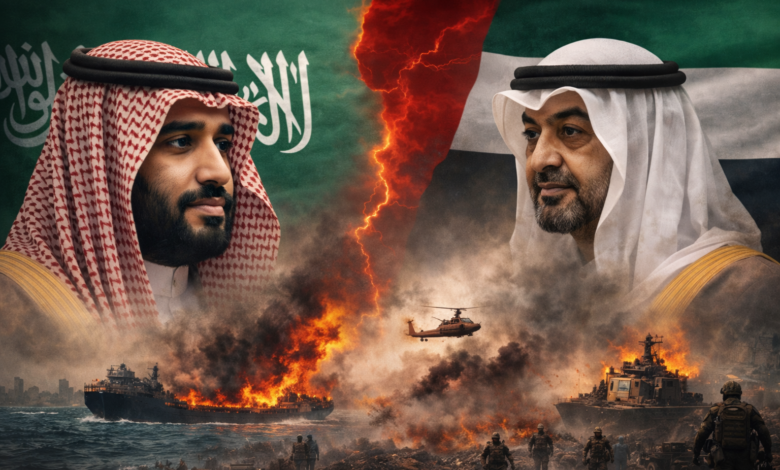
The war involving Iran has not only reshaped regional security dynamics but has also exposed and intensified underlying tensions between two of the Gulf’s most influential powers: the United Arab Emirates and Saudi Arabia. What once appeared to be a coordinated strategic partnership has increasingly evolved into a visible divergence in priorities, approaches, and long-term visions. The conflict acted as a stress test, revealing structural differences that were previously contained beneath a shared regional framework.
At the center of this evolving tension lies a fundamental disagreement over how to respond to Iran and the broader regional security environment. Saudi Arabia, heavily exposed to disruptions in energy flows and regional instability, has adopted a more cautious and calculated stance. The closure of the Strait of Hormuz, a critical artery for global oil trade, exposed a major vulnerability in the Saudi economic model and forced Riyadh to reassess its strategic posture. This development directly threatens the kingdom’s long-term economic transformation agenda, which depends on stable energy exports and secure trade routes.
In contrast, the UAE has taken a far more assertive position. Abu Dhabi aligned itself closely with Western and Israeli approaches to the conflict, adopting a harder line toward Iran and criticizing what it perceives as insufficient regional response. This divergence in approach marked a clear break from the traditional Gulf consensus, where collective caution often defined policy toward major regional confrontations.
The implications of this divergence extend beyond diplomatic positioning. They directly impact economic strategy, regional influence, and long-term geopolitical alignment. Saudi Arabia’s response to the war has been shaped by its need to protect critical infrastructure and maintain investor confidence. The kingdom has recognized that escalation could expose its energy assets and economic projects to direct threats, particularly from Iran-aligned actors such as the Houthis. As a result, Riyadh has actively sought to limit escalation and avoid deeper military involvement.
This cautious approach contrasts sharply with the UAE’s willingness to engage in more confrontational policies. The difference is not merely tactical but reflects deeper strategic calculations. For Saudi Arabia, stability is essential to sustaining its economic transformation plans. For the UAE, projecting strength and securing influence across regional trade routes appears to be a higher priority, even if it involves greater risk.
One of the most visible consequences of this divergence is the renewed rift between the two countries. Analysts note that the war has intensified disagreements that were already emerging in areas such as energy policy, regional conflicts, and economic competition. The UAE’s decision to exit OPEC represents a particularly significant break, undermining a key mechanism of coordination that historically aligned Gulf producers. This move forces Saudi Arabia into a more difficult position, potentially requiring it to adjust production to maintain market balance.
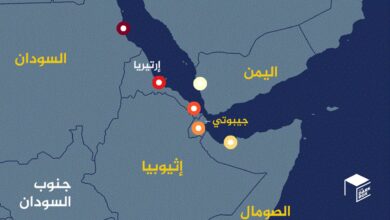
The competition between the two states is also becoming more pronounced in strategic geographic zones, particularly the Red Sea. As Saudi Arabia seeks to reduce its dependence on the Strait of Hormuz by shifting trade and energy routes westward, the Red Sea has become central to its long-term strategy. However, the UAE has already established a network of ports and military positions along this corridor, positioning itself as a dominant actor in regional logistics and maritime security.
This overlapping ambition creates a direct point of friction. Control over trade routes, infrastructure, and security arrangements in the Red Sea is no longer a secondary issue but a central arena of competition. Both countries view the region as critical to their economic futures, yet their approaches are increasingly unaligned.
The war has also reshaped Saudi Arabia’s internal strategic thinking. The leadership has begun to reevaluate major economic projects, reduce exposure to high-risk investments, and prioritize domestic stability. This shift reflects a broader recognition that the regional environment has become more unpredictable and that long-term resilience requires caution rather than rapid expansion.
At the same time, the UAE’s policies are being viewed in Riyadh with growing concern. Saudi Arabia increasingly perceives alignment with Israel and a confrontational stance toward Iran as potential sources of instability rather than security. This perception deepens the strategic gap between the two countries and complicates efforts to maintain a unified Gulf position.
The broader result is a transformation of Gulf dynamics. The UAE and Saudi Arabia are no longer operating as closely aligned partners but as competitors with diverging priorities. Their policies toward Iran, their economic strategies, and their approaches to regional influence are increasingly shaped by distinct national calculations rather than shared objectives.
This shift has significant implications for the region. A divided Gulf weakens collective influence, reduces policy coordination, and increases the risk of misalignment in times of crisis. It also creates opportunities for external powers to engage with each country separately, further fragmenting the regional landscape.
In conclusion, the Iran war did not create tensions between the UAE and Saudi Arabia, but it exposed and accelerated them. The conflict highlighted fundamental differences in how each state perceives risk, opportunity, and the future of regional order. What is emerging is not a temporary disagreement but a structural divergence that is likely to shape Gulf politics for years to come.
The war’s lasting impact may therefore extend beyond its immediate consequences, reshaping alliances, redefining strategic priorities, and fundamentally altering the balance of power within the Gulf itself.