Tensions with Saudi Arabia Were the Straw That Broke the Camel’s Back: Are Cracks Emerging Inside the UAE Leadership?
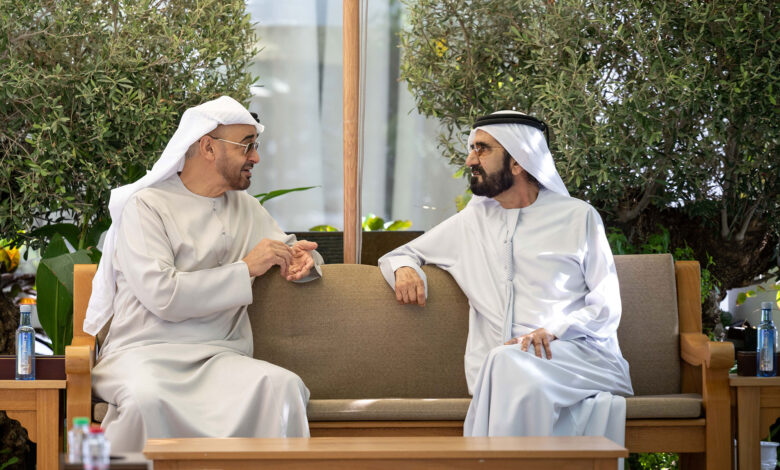
For years, the United Arab Emirates projected an image of internal cohesion, centralized authority, and carefully managed political unity. The federation presented itself as a model of stability in a region shaped by fragmentation and rivalry. Yet recent political signals, public messaging, and policy divergences increasingly suggest that important tensions may be emerging beneath the surface of the Emirati leadership structure, particularly between Abu Dhabi’s expanding central authority and other influential emirates concerned about the long-term direction of the federation.
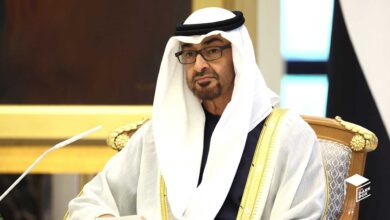
At the center of these discussions stand two distinct political approaches. On one side is the leadership circle surrounding UAE President Mohammed bin Zayed and the growing concentration of strategic, security, and economic decision-making within Abu Dhabi. On the other side are figures associated with Dubai and Sharjah, particularly Mohammed bin Rashid Al Maktoum and Sheikh Sultan Al Qasimi, whose political language and public messaging have at times reflected a noticeably different vision regarding governance, regional relationships, and the future balance inside the federation.
The debate intensified following a series of public statements and symbolic political moments that many observers interpreted as indirect criticism of the UAE’s current trajectory. Mohammed bin Rashid’s recent public remarks about selfish leadership, responsibility, and officials becoming burdens on the nation triggered unusually strong reactions across Emirati political circles. The significance of these remarks did not lie solely in their content, but in the fact that they were delivered publicly by the Prime Minister himself and followed by visible reactions from senior officials through social media rather than internal institutional channels.
For analysts of Gulf politics, such public exchanges are highly unusual. Political disagreements inside Gulf monarchies are traditionally managed privately and rarely surface in ways visible to the public. The emergence of indirect political messaging therefore attracted considerable attention because it suggested the existence of deeper institutional sensitivities.
The broader regional context helps explain why these tensions may be growing. Over recent years, the UAE has pursued an increasingly assertive regional strategy involving multiple conflict zones, geopolitical rivalries, and expanding security influence. Critics of this approach argue that the federation’s foreign policy has shifted from cautious economic pragmatism toward aggressive geopolitical activism. This transformation has generated international controversy surrounding the UAE’s role in conflicts across the Middle East, Africa, and the Horn of Africa.
Within the UAE itself, concerns reportedly exist regarding the long-term consequences of this approach on the federation’s economic model and regional relationships. Dubai’s leadership has historically prioritized commercial openness, international investment, and regional economic integration. Stability and balanced relations with neighboring powers formed the foundation of Dubai’s rise as a global business hub. Escalating regional confrontations and increasingly confrontational political alignments therefore carry direct economic and strategic implications for Dubai.
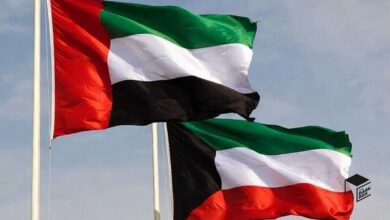
The relationship with Saudi Arabia appears particularly sensitive in this context. Despite years of close coordination between Abu Dhabi and Riyadh, recent developments have exposed growing competition and policy divergence between the two Gulf powers. Economic rivalry, energy disputes, competition over regional influence, and differing approaches to foreign policy have all contributed to a more complicated relationship.
Observers note that Dubai’s political and commercial elite traditionally viewed strong ties with Saudi Arabia as essential to Gulf stability and long-term economic growth. Any deterioration in that relationship therefore creates anxiety among sectors of the Emirati establishment concerned about the future of regional integration and economic coordination.
Sharjah’s position also carries symbolic importance. Sheikh Sultan Al Qasimi has long cultivated an image distinct from Abu Dhabi’s increasingly security-centered governance style. His emphasis on cultural identity, institutional continuity, and intellectual discourse contrasts with the more centralized and geopolitical approach associated with Abu Dhabi’s current leadership structure. While public disagreements remain rare, differences in tone and priorities have become increasingly noticeable.
The issue is not necessarily the existence of open political confrontation, but rather the emergence of competing visions for the future of the federation itself. One model prioritizes centralized authority, aggressive geopolitical positioning, and strategic influence abroad. The other places greater emphasis on internal stability, balanced regional relations, economic pragmatism, and preserving the federation’s traditional equilibrium among its constituent emirates.
The use of social media as a platform for political signaling has become particularly revealing. Statements that once would have remained confined to internal discussions are now entering the public domain through carefully worded posts, symbolic language, and indirect criticism. This evolution reflects a changing political atmosphere in which elite disagreements are becoming harder to fully conceal.
These developments come at a delicate moment for the UAE. The federation faces mounting regional instability, economic pressures linked to shifting energy markets, growing international scrutiny over foreign policy actions, and intensifying competition within the Gulf itself. In such an environment, maintaining internal cohesion becomes more difficult, especially when strategic priorities begin to diverge.
In conclusion, the growing signs of tension inside the UAE leadership structure point toward a deeper debate over the federation’s future direction. While the Emirati state continues to project unity publicly, the emergence of indirect criticism, policy divergence, and competing political narratives suggests that internal balances are becoming increasingly fragile.
What is unfolding may not yet amount to an open political rupture, but it reflects an important transformation inside one of the region’s most tightly controlled political systems. The real issue is no longer whether differences exist, but whether the federation’s traditional mechanisms of balance and consensus remain capable of containing them in the years ahead