UAE Diplomat Lana Nusseibeh’s Lobbying Push Hits a Wall in London: British Political Figure Rejects Her UN Leadership Bid

Dark Box | Special Investigative Report | November 20, 2026
Behind closed doors at Westminster: Abu Dhabi’s diplomatic push encounters resistance
The United Arab Emirates’ campaign to secure the United Nations’ highest diplomatic office has encountered direct resistance in London after Emirati diplomat Lana Nusseibeh personally approached former Conservative Party leader Sir Iain Duncan Smith in an effort to address his opposition to her candidacy.
The private meeting, held in Duncan Smith’s parliamentary office in early November 2026, brought a senior Emirati diplomat face to face with one of the British political figures most openly critical of Abu Dhabi’s regional activities.
Nusseibeh’s visit followed Duncan Smith’s public demand that the British government use its permanent seat on the UN Security Council to block her nomination.
Rather than securing his endorsement, the meeting ended with Duncan Smith maintaining his opposition and confronting the Emirati diplomat over reports concerning Sudan and the continued detention of British citizens in Dubai.
The episode illustrates the limits of Abu Dhabi’s diplomatic outreach: a candidate seeking international support found herself challenged over the policies of the government that nominated her.
The available account establishes that Nusseibeh sought a meeting with a prominent critic of her candidacy. It does not establish that she offered inducements, issued threats, or applied financial pressure during the conversation.
The lobbying mission: Why Nusseibeh approached Duncan Smith
Nusseibeh’s approach to Duncan Smith was politically significant because he had already made his position clear.
The former Conservative leader had publicly condemned the UAE’s involvement in Sudan’s war and called for Britain to block the Emirati nomination.
His opposition mattered because Britain is one of five permanent members of the UN Security Council, each possessing the power to veto a recommendation for secretary-general.
Duncan Smith himself does not control Britain’s vote. Nevertheless, his parliamentary standing and public criticism gave him a platform from which to press the government to oppose Nusseibeh.
Against that background, the Emirati diplomat’s decision to visit his office represented a direct attempt to engage a political opponent rather than rely exclusively on conventional diplomatic contacts.
Nusseibeh’s campaign has described her meetings with stakeholders as part of its wider outreach.
The meeting with Duncan Smith was therefore consistent with an effort to build support, address objections, and reduce resistance to her nomination.
But the encounter also exposed the difficulty of separating her personal campaign from Abu Dhabi’s foreign policy record.
The refusal: Duncan Smith demands action on Sudan
According to Duncan Smith’s account of the meeting, he rejected Nusseibeh’s claim that she could act independently of the Emirati government.
He argued that her longstanding role within the UAE Foreign Ministry made her candidacy inseparable, in the eyes of critics, from the government’s conduct.
The former Conservative leader also told her that Abu Dhabi needed to end its involvement in Sudan.
His demand was explicit: the UAE should “cease and desist” from activities connected to the conflict.
Sudan has become one of the principal controversies surrounding Nusseibeh’s nomination.
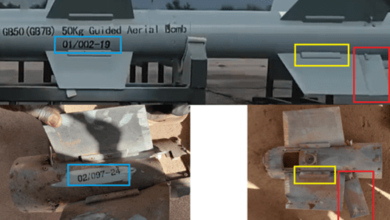
International investigations have identified weapons and cross-border supply networks associated with the Rapid Support Forces, while Amnesty International concluded that certain Chinese-made weapons used by the RSF had almost certainly been re-exported from the UAE.
Abu Dhabi denies supplying military support to the RSF.
That characterization reflects his account of a private meeting. It should not be interpreted as an admission by Nusseibeh or proof that she accepted the reports.
The political outcome, however, was clear: Duncan Smith did not withdraw his opposition or offer the support Nusseibeh’s campaign was seeking.
British detainees become another obstacle to the UN campaign
The confrontation also extended to two British citizens imprisoned in Dubai: Ryan Cornelius and Charles Ridley.
Duncan Smith, who has campaigned for their release, raised their cases directly with Nusseibeh.
Both men have been the subject of findings by the United Nations Working Group on Arbitrary Detention, which called for their release.
For Duncan Smith, the cases provided another reason to question the UAE’s suitability to sponsor a candidate for the UN’s highest office without first addressing concerns raised by UN human rights mechanisms.
The issue placed Nusseibeh in a difficult diplomatic position.
Her campaign emphasizes the importance of international law and human rights, while critics point to unresolved cases involving the government she has represented.
No evidence establishes that Nusseibeh personally ordered or directed the detentions.
Nevertheless, the cases became part of the political conditions Duncan Smith pressed upon her during the meeting.
Can Abu Dhabi’s economic influence shape Britain’s position?
The Westminster meeting took place against the background of extensive financial ties between the UAE and Britain.
Abu Dhabi has committed substantial investment to the UK through sovereign investment partnerships, infrastructure projects, commercial ventures, and real estate.
The UAE-UK Sovereign Investment Partnership has involved investment commitments approaching £30 billion.
Duncan Smith has argued that these financial relationships create pressure within the British government to maintain favorable relations with Abu Dhabi.
He has particularly questioned whether the Treasury’s interest in securing Emirati investment could influence the government’s position on Nusseibeh’s nomination.
These concerns reveal a broader dimension of the diplomatic contest.
The UAE’s campaign is taking place in a country where Abu Dhabi possesses substantial economic relationships, while political critics are demanding that the government separate those interests from its responsibilities at the United Nations.
However, there is no documented evidence in the material reviewed that Nusseibeh threatened to withdraw Emirati investment, offered financial benefits, or attempted to trade investment commitments for Duncan Smith’s support.
The meeting demonstrates direct political lobbying. It does not, on the available evidence, demonstrate financial coercion.
A campaign built around independence faces questions about government loyalty
Nusseibeh has sought to distinguish her UN candidacy from her official responsibilities within the Emirati government.
Her campaign says she took leave from her ministerial role following her nomination and is committed to serving independently if selected.
She has also promised to prioritize efforts to end the war in Sudan.
Yet Duncan Smith’s response highlights a central difficulty for her campaign.
Nusseibeh spent more than a decade representing the UAE at the United Nations, including during periods when Abu Dhabi’s regional policies attracted significant criticism.
Her nomination was formally submitted by the Emirati government.
Those facts do not establish that she would act under UAE instructions as secretary-general.
They do explain why opponents are demanding more than general assurances of independence.
For critics, the issue is whether Nusseibeh can demonstrate a willingness to acknowledge and act upon international findings that may conflict with the interests of the government that nominated her.
Her meeting with Duncan Smith showed how difficult that question can become when raised directly.
The British veto: The strategic importance of winning over critics
The UN secretary-general is appointed by the General Assembly following a recommendation from the Security Council.
A candidate must obtain sufficient Council support without being blocked by any of the five permanent members.
Britain therefore has the ability to prevent Nusseibeh’s appointment through a veto.
Duncan Smith’s opposition does not mean the British government has decided to exercise that power.
Nor does his refusal amount to a formal rejection of Nusseibeh by the Security Council.
But it does represent an obstacle to her diplomatic outreach within British political circles.
The distinction matters because Nusseibeh’s campaign has not been conclusively defeated by the meeting.
Rather, a direct effort to engage a prominent opponent failed to produce his support.
That failure may reinforce the concerns of other politicians who believe the UAE’s foreign policy record should be considered when evaluating her nomination.
Conclusion: A direct lobbying effort fails to change a British critic’s position
Lana Nusseibeh’s visit to Iain Duncan Smith’s parliamentary office was an important moment in the UAE’s campaign for the United Nations’ top position.
The Emirati diplomat approached a politician who had publicly called for her nomination to be blocked.
The meeting provided an opportunity to address his objections and make the case for her independence.
Instead, Duncan Smith maintained his opposition, challenged the UAE’s involvement in Sudan, and demanded action over two British citizens imprisoned in Dubai.
The central finding is that Nusseibeh’s direct lobbying of a prominent British critic did not secure his support and instead brought unresolved disputes involving Abu Dhabi into the center of her UN campaign.
The episode also illustrates the broader pressures surrounding the nomination: substantial Emirati investment in Britain, competing assessments of the UAE’s regional conduct, and the Security Council’s power to block a candidate.
There is no established evidence that Nusseibeh used threats or financial inducements in the meeting, and Duncan Smith’s refusal does not constitute a formal British veto.
Nevertheless, the encounter demonstrates that Abu Dhabi’s diplomatic campaign faces resistance that cannot be resolved simply through private meetings.
For Nusseibeh, the challenge is to convince governments that her future role would be independent. For her critics, the question is whether that independence can be credible without confronting the controversies surrounding the UAE’s international conduct.
Dark Box | Special Investigative Report | November 20, 2026