The UAE’s Support for a Genocidal Militia in Sudan — Exclusive Revelations
In a quiet yet devastating theatre of war in Sudan, the Gulf state of the United Arab Emirates (UAE) has emerged not simply as a foreign backer, but as a central sponsor enabling the atrocities of the militia known as the Rapid Support Forces (RSF). The following report presents fresh leaked evidence and new details that demonstrate how Abu Dhabi’s involvement is helping fuel what is arguably the world’s worst humanitarian crisis.
New Evidence of Direct Support
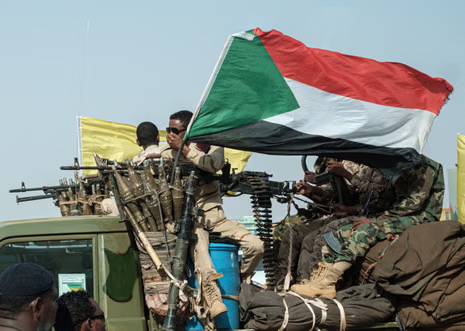
Leaked internal UN‑expert documents obtained by Dark Box reveal that the UAE facilitated arms transfers to the RSF via neighbouring Chad. The documents detail routing of Chinese‑made guided bombs and AH‑4 howitzers from UAE territory into Sudan, in violation of the arms embargo in Darfur. In one instance, photographs confirm the presence of Gulf‑manufactured UAE vehicles equipped with French Galix defence systems on RSF battlefields.
Additional banking records obtained in 2019, but newly analysed, show the RSF maintaining an account in the National Bank of Abu Dhabi (now First Abu Dhabi Bank) and recording multi‑million‑dirham transfers to a UAE‑registered shell company, Tradive General Trading LLC, linked to RSF financial networks. These financial pathways correlate with battlefield reports of equipment and logistics operations supplied through UAE‑controlled transit hubs.
Who in Abu Dhabi is Running the Network?
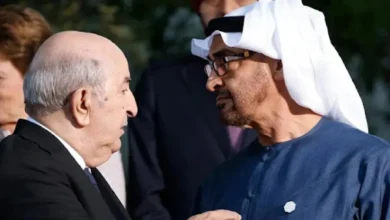
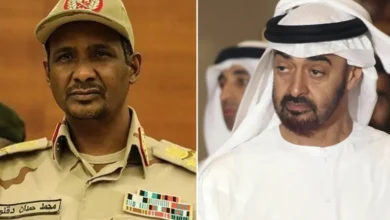
Sources inside Sudan’s diplomatic service and intelligence analyst circles point to high‑level Emirati involvement. They allege a direct linkage between UAE Vice President Mansour bin Zayed Al Nahyan, and RSF leader Mohamed Hamdan Dagalo (often called “Hemedti”). Conversations intercepted by U.S. intelligence discuss coordination via Mansour’s office and connectivity between Dagalo and UAE President Mohammed bin Zayed Al Nahyan. These intercepts suggest UAE oversight of the RSF financing and operational chain.
The UAE’s nominal denial of involvement claims it is providing humanitarian assistance. Yet a 41‑page leaked dossier submitted to the UN Security Council in 2024 included images of UAE‑branded trucks, ammunition crates routed via Dubai, and Emirati passports recovered from RSF vehicles in the Omdurman area.
The Consequences: Fueling Genocide and Collapse
The war between the Sudanese Armed Forces (SAF) and the RSF since April 2023 has devastated Sudan. The U.S. designated RSF operations in West Darfur as genocide; millions have been displaced, and tens of thousands killed. The UAE’s backing has allowed RSF to procure heavy weapons, maintain air operations using UAE‑supplied or routed drones, and enrich itself via illicit gold exports through Dubai.
One unreported revelation: internal humanitarian‑logistic records from a UAE‑funded “field hospital” in Amdjarass, Chad, show that RSF fighters, not civilians, were airlifted to the facility for treatment. The same facility was used as a staging point for weapons shipments disguised as humanitarian flights. Sudanese military intelligence recovered flight manifests linking UAE charter flights to RSF logistics hubs.
Furthermore, gold exported from RSF‑controlled areas in West Darfur continued to flow to Dubai even after the war’s outbreak. UAE trade data show no interruption in gold imports, despite the conflict and sanctions. This financial lifeline allowed RSF to sustain its operations bereft of state funding.
International Legal Implications
In March 2025, Sudan initiated a case at the International Court of Justice (ICJ) accusing the UAE of violating the Genocide Convention by supporting the RSF’s attacks on the Masalit and other non‑Arab groups. The UAE countered the case, denying jurisdiction and rejecting the accusations as politically motivated.
What Abu Dhabi Stands to Gain
Abu Dhabi’s support for the RSF aligns with its broader African policy. The UAE pursued the $6 billion Abu Amama Red Sea port deal with Sudan before Khartoum cancelled it in 2024 following RSF‑UAE revelations. Analysts believe the UAE backed the RSF as a means of securing mineral concessions, military bases, and transport corridors via war‑torn regions. The RSF‑UAE link enabled access to gold, strategic ports, and influence over the Red Sea’s trade routes.
The evidence compiled by Dark Box demonstrates that the UAE’s support for the RSF is not peripheral or charitable — it is a calculated strategic investment in a militia responsible for mass atrocities. By providing weapons, financial infrastructure, logistics, and political cover, Abu Dhabi is fueling Sudan’s humanitarian disaster. This support has helped sustain the RSF, prolong the war, and deepen civilian suffering across the country. The international community must address the UAE’s complicity if Sudan’s crisis is to be resolved.