The Black Deal: How the UAE Executed a Joint Military Operation with Israel to Protect Abu Shabab’s Militia in Gaza
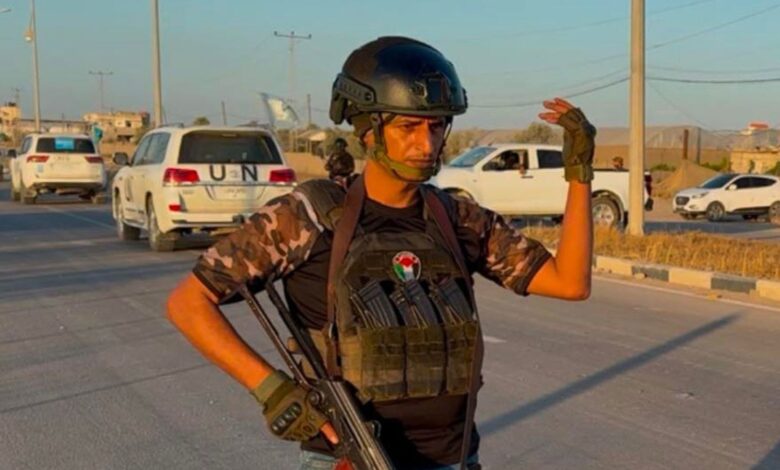
An earlier exclusive investigation by Dark Box revealed that senior Emirati authorities had directly instructed Israeli counterparts to intervene militarily to protect the armed militia led by Yasser Abu Shabab in southern Gaza — and today those instructions were executed in real time. According to leaked reports from Israeli Defence Forces (IDF) internal cables and Emirati diplomatic‑intelligence files shared with Dark Box, Abu Shabab was placed under formal Israeli protection after a fragile cease‑fire collapsed this morning. This intervention was not spontaneous: it was the implementation of a pre‑planned operation brokered by Abu Dhabi.
From the leaked documents, dated July 2025, the UAE National Security Council forwarded a classified memorandum to Israeli Prime Minister Benjamin Netanyahu’s office via the UAE Ambassador in Tel Aviv, proposing that Abu Shabab be recognised as a proxy force for “Gaza stability and humanitarian logistics” — a euphemism for enabling his forces to secure border crossings and aid routes under Israeli oversight. The document explicitly requested Israel to “provide tactical support and safe‑passage for Abu Shabab’s unit and key personnel in Rafah,” and offered the UAE’s “training, funding and diplomatic cover” for that arrangement.
Today, at dawn, Israeli forces breached the cease‑fire zone near eastern Rafah. Multiple sources inside Gaza report that Israeli armoured vehicles deployed adjacent to Abu Shabab’s compound in al‑Bayuk, and that a special IDF reconnaissance detachment shielded his fighters when pro‑Hamas resistance attempted to arrest him. The sources say Abu Shabab suffered a minor injury, was evacuated inside an armoured Israeli vehicle and moved into a secure zone under Israeli command. Minutes later, Israeli air‑assets struck what they defined as “resistance operatives” advancing on the compound, allowing Abu Shabab’s force to repel their arrest attempt.
The Emirati‑mediated arrangement thus transformed into active military intervention. The leaked UAE cables revealed that Abu Dhabi would guarantee the provision of “secure funding streams” via offshore accounts, logistic corridors through the Sinai and Egypt, and diplomatic immunity for Abu Shabab and his commanders — in effect turning him into a UAE‑protected actor inside the Gaza Strip. The Israeli cables confirm that Netanyahu authorised Protocol “Rafah Gamma,” naming Abu Shabab’s militia as “collaborative” and ordering IDF liaison teams to “coordinate with UAE channels” in support of the operation.
The broader objective of the UAE appears to be twofold: first, to establish a pliant local force within Gaza that can serve Emirati‑Israeli interests in humanitarian logistics and border control; second, by shielding Abu Shabab, the UAE aims to undermine the dominant role of Hamas and replace it with a patron‑client structure favourable to Abu Dhabi. This aligns with earlier Dark Box findings that the UAE is constructing a new governance layer inside Gaza—one that skirts Palestinian popular structures and answers directly to Gulf regimes and Israeli security architecture.
The involvement of the UAE thus turns what appears to be an intra‑Palestinian armed clash into an orchestrated proxy operation. The Emirati sponsorship undermines internationally accepted rules of conflict and humanitarian law: a foreign state is directing the use of force inside an occupied territory and coordinating with another occupier’s military to protect a local militia acting in a contested zone. The leaked reports also show that the funding network included payments to Abu Shabab’s family trusts, offshore shell companies, and front‑line equipment purchases—paid for by the UAE via a Dubai‑registered entity named “Silkway Logistics & Security Ltd” which liaised with Tel Aviv via the Israeli defence export‑control division.
The outcome today is grim: as Abu Shabab’s forces remain in place, residents of eastern Rafah report a surge of checkpoints and military patrols outside his compound, intimidated by his armed men. Meanwhile, humanitarian convoys arriving through the Kerem Shalom crossing (also under Israeli control) were delayed, and one large truck of U.N.‑designated aid was reportedly diverted to a warehouse under Abu Shabab’s control. Local aid workers expressed alarm that this protected, “quasi‑official” force will become a gatekeeper of aid and movement in Gaza.
In short, this operation marks a turning point: the UAE, in coordination with Israel, has moved beyond diplomacy and investment into active military‑proxy engineering inside Gaza. The protection of Abu Shabab is a concrete manifestation of that strategy. It signals that Abu Dhabi is prepared to shape the post‑war order of Gaza through covert force, partner militias and intelligence networks. The human implications are severe: one faction enjoys foreign‑backed immunity while the rest of the population remains subjected to bombardment, displacement and deprivation.
For Gaza watchers, observers and human rights monitors, today’s intervention demands urgent scrutiny: chains of command, funding flows and foreign sponsorship must be exposed. The UAE’s role is no longer hidden behind soft‑power; it has become operational, paramilitary and deeply implicated in shaping the Gaza conflict’s outcome.