Abu Dhabi’s Sudan crisis deepens: UAE seeks Turkish intelligence’s help as evidence of RSF arms supplies closes in
Dark Box | Special Investigative Report | November 12, 2026
Abu Dhabi turns to Ankara as its Sudan strategy comes under mounting pressure
The United Arab Emirates is facing a deepening diplomatic crisis over Sudan, with new information attributed to Dark Box sources indicating that Abu Dhabi has approached Türkiye to help reopen negotiations with Sudanese military leader General Abdel Fattah al-Burhan.
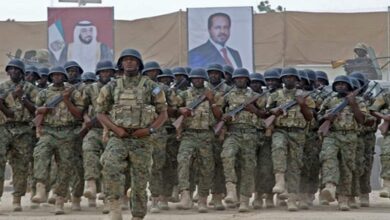
The reported request comes amid mounting international scrutiny of the UAE’s relationship with Sudan’s Rapid Support Forces (RSF), the paramilitary organization descended from the Janjaweed militias, and growing documentation of weapons transfers, foreign fighters, and logistical networks supporting its military operations.
According to information provided to Dark Box and corroborating accounts published by Sudanese Echo, senior Emirati officials used a high-level visit by Turkish intelligence chief Ibrahim Kalın to seek Ankara’s intervention in the increasingly hostile relationship between Abu Dhabi and Khartoum.
The Emirati request reportedly went beyond diplomatic reconciliation. Officials also wanted Türkiye to persuade Sudanese authorities to halt media campaigns exposing and criticizing the UAE’s role in the war.
The approach places Abu Dhabi in an uncomfortable position.
After years of maintaining extensive regional influence and defending its Sudan policy against accusations of arming the RSF, the Emirates is now reportedly seeking help from a government with direct channels to Sudan’s military leadership.
More significantly, the diplomatic initiative comes as international investigations increasingly document the military supply networks associated with the RSF.
Abu Dhabi’s problem is no longer simply the criticism coming from Khartoum. It is the growing body of evidence that international investigators have assembled concerning weapons, military logistics, and foreign support for a paramilitary force implicated in atrocities against Sudanese civilians.
Inside the Abu Dhabi meetings: Mansour bin Zayed, Tahnoon and Turkish intelligence
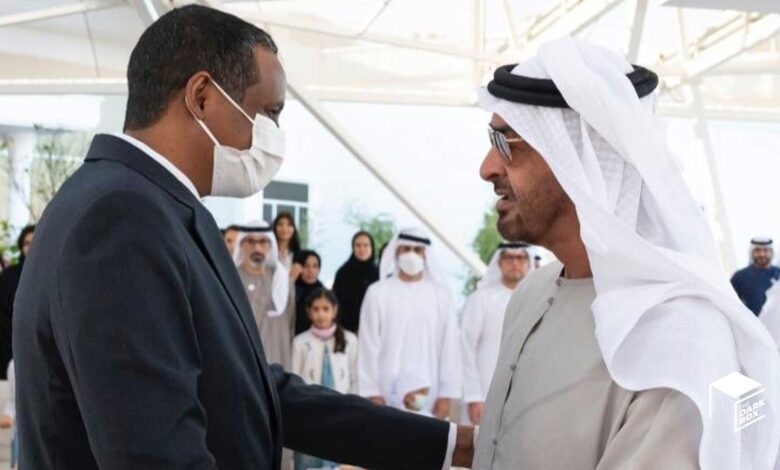
The diplomatic activity became publicly visible on November 3, when the UAE announced that Vice President Sheikh Mansour bin Zayed Al Nahyan had received Ibrahim Kalın, director of Türkiye’s National Intelligence Organization, known as MIT.
The meeting was attended by Sheikh Tahnoon bin Zayed Al Nahyan, the UAE’s national security adviser, and Ali bin Hammad Al Shamsi, secretary-general of the Supreme Council for National Security.
Turkish diplomatic reporting independently confirmed the visit, identifying regional security and bilateral cooperation as subjects of discussion.
The participation of senior Emirati security officials underscores the importance of the consultations.
According to Sudanese Echo’s account, Kalın also held discussions involving Sheikh Shakhboot bin Nahyan Al Nahyan, the Emirati minister of state who handles important aspects of Abu Dhabi’s Africa diplomacy, including Sudan.
The sources further identified Ali Saeed Al Neyadi, chairman of the UAE’s National Emergency Crisis and Disaster Management Authority, as a participant in the wider consultations.
Al Neyadi’s name previously appeared in the Abu Dhabi Secrets investigation concerning intelligence-linked influence operations in Europe. His reported participation in the Sudan discussions, however, has not been independently confirmed by the official meeting records.
The November meeting is an established diplomatic event. The confidential Sudan-related discussions are drawn from the source accounts supplied to Dark Box and published by Sudanese Echo.
Those accounts describe an Emirati request for Kalın to convey a message to al-Burhan seeking the reopening of political communication and an end to Sudanese media campaigns directed against Abu Dhabi.
The request is politically significant because it places the management of public criticism alongside the restoration of diplomatic relations.
For a government facing repeated accusations concerning its role in Sudan’s war, the distinction matters.
Stopping criticism of weapons supplies is not the same as stopping the supplies themselves.
The Turkish warning that strikes at the center of the crisis
The most consequential part of the reported consultations concerns a warning delivered by Kalın over continued weapons transfers to the RSF.
According to Sudanese Echo’s sources, the Turkish intelligence chief told Emirati officials that American intelligence agencies had detected and monitored arms shipments supporting the paramilitary force.
The reported warning would represent a direct challenge to Abu Dhabi’s position that it does not provide military support to the RSF.
It would also connect Turkish diplomatic intervention to intelligence findings already reported by major international news organizations.
In November 2025, the Associated Press reported that two US intelligence assessments had identified increased Emirati weapons supplies to the RSF between late summer and early autumn.
The assessments, attributed to the US State Department’s Bureau of Intelligence and Research and the Defense Intelligence Agency, reportedly identified Chinese-manufactured armed and unarmed drones, artillery, mortars, machine guns, ammunition, and other military equipment.
The significance of these assessments is substantial.
They indicate that scrutiny of the UAE’s military connections to the RSF has extended into the intelligence institutions of Washington, a government with extensive strategic, commercial, and security relationships with Abu Dhabi.
The UAE has consistently denied supplying weapons to the RSF.
But the allegations have increasingly been accompanied by weapons identification, supply-route analysis, satellite imagery, and testimony from individuals familiar with the conflict.
If Kalın delivered the warning described by the sources, it would mean that Abu Dhabi’s effort to secure Turkish mediation was confronted by the same central question raised by international investigators: the continued movement of military equipment to the RSF.
From Chinese drones to artillery: the evidence confronting the Emirates
The international record extends far beyond the reported Turkish intelligence warning.
In May 2025, Amnesty International published an investigation identifying Chinese-manufactured GB50A guided bombs and 155-millimeter AH-4 howitzers used or recovered in Sudan.
The organization concluded that the weapons had almost certainly been transferred to the RSF through the UAE.
Its findings were based on photographs, videos, weapons markings, and information about the original purchasers of the military equipment.
The investigation was especially important because the UAE was identified as the only known importer of the AH-4 howitzer from China.
The presence of this equipment in Sudan raised serious questions about the diversion of weapons originally acquired by Emirati forces.
Subsequent investigations added further detail.
Human Rights Watch documented the involvement of Colombian fighters in RSF operations and examined the UAE’s role in facilitating their deployment.
The organization also identified military equipment originally supplied to the Emirati armed forces that later appeared in RSF possession.
In several cases, investigators established that the equipment had been diverted in violation of restrictions governing its original sale.
The precise chain of custody was not established for every weapon, but the findings provided material evidence linking Emirati procurement networks to equipment subsequently used by the RSF.
These investigations challenge the notion that the dispute is merely a diplomatic disagreement between Sudan and the UAE.
They concern identifiable weapons, documented transfers, commercial relationships, and military supply systems.
The evidence confronting Abu Dhabi is increasingly technical and documentary, making it far more difficult to dismiss through diplomatic statements alone.
The UN investigation: a transnational network linking the UAE to RSF operations
The most consequential recent findings come from the United Nations Independent International Fact-Finding Mission for Sudan.
In its 2026 report on weapons, fighters, and external support networks, the mission stated that verified evidence provided reasonable grounds to believe that a transnational network facilitated RSF military operations through interconnected routes involving the UAE, Chad, southeastern Libya, and Puntland in Somalia.
The mission identified logistical hubs used to move weapons, personnel, and other supplies into RSF-controlled territory.
It also obtained evidence linking UAE-based individuals and entities to elements of these arrangements.
The investigation identified military equipment including AH-4 howitzers, FK-2000 air-defense systems, and CH-95 reconnaissance and attack drones.
Witnesses described weapons and ammunition being unloaded at Nyala Airport and distributed to RSF positions.
The mission further examined the involvement of Colombian contractors in drone operations conducted from RSF-controlled territory.
These findings are especially significant because they document an international logistical structure rather than isolated weapons discoveries.
The UAE’s role in Sudan is therefore being examined through an increasingly detailed picture of military procurement, transportation routes, private contractors, and operational support.
The European Union Agency for Asylum’s October 2026 Sudan security report reinforced this picture, identifying the UAE as the RSF’s principal foreign backer while noting Abu Dhabi’s continued rejection of that assessment.
The report also examined the Emirates’ interests in Sudanese gold, agricultural investments, and access to the Red Sea.
These interests provide an important strategic context for the controversy.
Sudan is not simply another diplomatic file for Abu Dhabi. Its natural resources, geographic position, and access to regional trade corridors make it a country of considerable economic and geopolitical importance.
The question now confronting the UAE is whether its regional ambitions have created an international accountability crisis that diplomacy alone cannot contain.
Why Türkiye has become Abu Dhabi’s potential diplomatic lifeline
Türkiye occupies a distinctive position in Sudan’s conflict.
Ankara maintains close relations with Sudan’s military leadership and has supplied military equipment to the Sudanese Armed Forces, including Turkish-manufactured drones.
At the same time, Türkiye maintains extensive diplomatic, economic, and security relations with the UAE.
This combination gives Ankara channels of communication that Abu Dhabi may find particularly valuable.
Turkish President Recep Tayyip Erdoğan previously offered to mediate between Sudan and the UAE in December 2024.
At the time, al-Burhan welcomed Türkiye’s potential contribution to resolving the dispute, while Abu Dhabi expressed willingness to cooperate with Ankara.
The latest reported initiative therefore builds on an existing diplomatic proposal.
What has changed is the international environment.
Since 2024, investigations into the RSF’s supply networks have expanded substantially. The military and humanitarian consequences of the war have become more visible, and international pressure on the Emirates has grown.
Türkiye’s own relationship with Sudan’s military has also strengthened.
For Abu Dhabi, Turkish mediation offers the possibility of reopening communication with Khartoum without requiring direct political concessions at the outset.
For Ankara, mediation could strengthen its diplomatic role in Sudan and the wider Red Sea region.
For Sudan, however, the critical issue remains the same: whether foreign support sustaining the RSF will end.
A negotiation that addresses media criticism while leaving military supply networks untouched would fail to resolve the central dispute.
Abu Dhabi’s attempt to contain the media fallout
The reported request to halt Sudanese media campaigns is among the most revealing details in the source account.
It indicates that Abu Dhabi’s concerns extend beyond bilateral diplomacy to the reputational consequences of sustained criticism.
Sudanese officials, journalists, and civil society organizations have repeatedly drawn international attention to investigations linking the Emirates to the RSF.
Their reporting has contributed to wider scrutiny of weapons transfers and the UAE’s diplomatic defense of its Sudan policy.
Yet the international record now includes findings that do not depend on Sudanese government statements.
American intelligence assessments, Amnesty International’s weapons identification, Human Rights Watch’s investigations, and the UN fact-finding mission have independently examined different aspects of the supply networks.
Suppressing or reducing criticism from Khartoum would not invalidate those findings.
Nor would it address the underlying issue of military assistance to an armed organization implicated in mass killings, sexual violence, forced displacement, and other serious abuses.
The distinction is fundamental.
A diplomatic effort directed at ending weapons transfers could contribute to reducing Sudan’s suffering.
A diplomatic effort directed primarily at ending public scrutiny would protect political reputations without necessarily changing conditions on the ground.
Abu Dhabi cannot resolve the crisis surrounding its Sudan policy by treating the exposure of military support as a public relations problem.
Lana Nusseibeh and the widening cost of Sudan’s war for Emirati diplomacy
The UAE’s difficulties are also extending into international diplomacy.
The nomination of Emirati diplomat Lana Nusseibeh for United Nations Secretary-General has attracted criticism from human rights organizations concerned about her defense of Abu Dhabi’s position on Sudan.
Human Rights Watch has examined her public statements rejecting evidence of Emirati support for the RSF.
The Arab Organisation for Human Rights in the UK has urged governments and international institutions to oppose her candidacy, citing concerns over the UAE’s role in Sudan.
The controversy illustrates how the conflict is affecting Abu Dhabi’s international standing beyond its immediate relationship with Khartoum.
The reported request for Turkish assistance comes at a time when the Emirates is facing scrutiny over both its Sudan policy and its efforts to secure prominent diplomatic positions.
There is no independently established evidence that Nusseibeh’s candidacy was discussed during Kalın’s November visit.
Nevertheless, the controversy forms part of the broader diplomatic environment in which Abu Dhabi is operating.
The UAE is attempting to maintain its international influence while responding to increasingly detailed investigations into its connections to the RSF.
That combination creates a difficult diplomatic challenge.
The unresolved question: will Sudan accept Turkish mediation?
Despite the reported Emirati initiative, Sudan’s response remains unclear.
No official announcement has established whether Ankara has formally transmitted Abu Dhabi’s request to al-Burhan or whether Sudanese authorities have accepted a new mediation framework.
The UAE has also not publicly confirmed the specific requests attributed to its officials during the consultations.
These limitations do not diminish the significance of the officially documented intelligence meeting or the independent findings concerning RSF supply networks.
They do, however, distinguish an emerging diplomatic initiative from an established negotiation.
For Türkiye, any mediation effort would require careful management of its relationships with both countries.
For Sudan, the issue is not simply whether communication with Abu Dhabi resumes.
It is whether negotiations can produce meaningful guarantees concerning the flow of weapons, foreign military involvement, and the protection of civilians.
The Sudanese population has already paid an enormous price for the continuation of the conflict.
Any credible diplomatic process must place civilian protection and an end to external military support at its center.
Conclusion: Abu Dhabi’s search for Turkish assistance exposes the limits of its Sudan strategy
The UAE is confronting a serious diplomatic challenge.
The November meeting between Ibrahim Kalın and senior Emirati officials is confirmed. Reports attributed to sources familiar with the discussions indicate that Abu Dhabi sought Turkish assistance in reopening negotiations with Sudan and reducing the media pressure directed against it.
Those reports also describe a Turkish warning concerning continued weapons supplies to the RSF.
The confidential details remain attributed to the sources reporting them, but the wider evidence concerning the UAE’s connections to RSF supply networks is substantial.
American intelligence assessments, Amnesty International, Human Rights Watch, and the UN fact-finding mission have documented military equipment and logistical arrangements connecting Emirati interests to the Sudanese conflict.
The UAE continues to deny providing weapons to the RSF.
Yet the central political problem remains: Abu Dhabi is seeking a diplomatic opening while facing an increasingly extensive international record of military support associated with the RSF.
Türkiye may be able to help restore communication between Abu Dhabi and Khartoum.
It cannot make the documented weapons investigations disappear.
Nor can a reduction in Sudanese media criticism substitute for meaningful action to prevent further military supplies from sustaining the conflict.
The Emirates’ Sudan crisis will not be resolved by silencing criticism. It will be resolved only by addressing the evidence, ending support that fuels the war, and ensuring accountability for violations against Sudanese civilians.
For Abu Dhabi, the reported appeal to Turkish intelligence illustrates the growing costs of its confrontation with Khartoum.
For Sudan, the stakes are far greater.
They concern the survival of communities, the protection of civilians, and the country’s ability to escape a devastating war prolonged by external intervention.
Dark Box | Special Investigative Report | November 12, 2026