Dark Box Investigation: The Encirclement of Algeria — Inside the UAE Plan to Weaken Algiers Through Its Neighbors
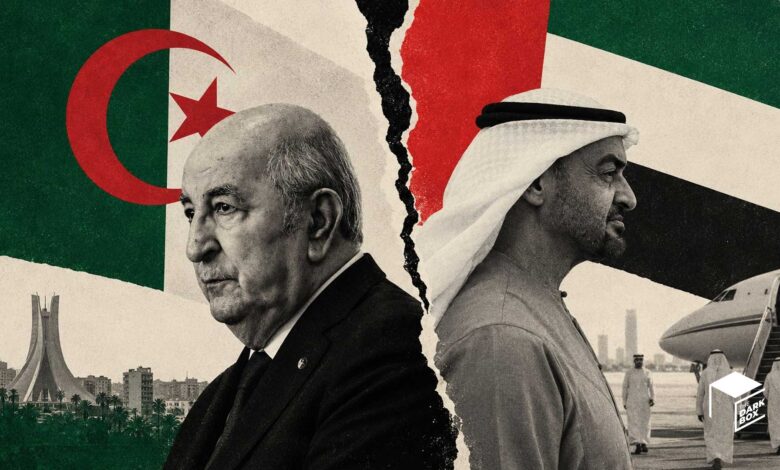
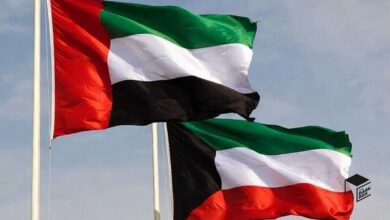
Well-informed sources have told Dark Box that the United Arab Emirates is quietly seeking to intensify pressure on Algeria through the countries and conflicts surrounding it, opening a new chapter in a rivalry that moved into the open when Algiers severed diplomatic relations with Abu Dhabi on September 10.
According to information provided to Dark Box, the Emirati strategy is not built around a direct confrontation with Algeria. It is designed around something potentially more difficult for Algiers to contain: pressure from its strategic environment.
The sources describe an approach aimed at exploiting existing rivalries, instability and competing interests around Algeria, while strengthening relationships with political and security actors across North Africa and the Sahel. The objective, according to these sources, is to narrow Algeria’s regional room for maneuver, weaken its traditional influence and force Algiers to devote increasing political, economic and security resources to problems developing around its borders.
In this emerging confrontation, geography itself becomes the weapon.
The rupture that changed the confrontation
Algeria’s decision to cut diplomatic relations with the UAE was not an isolated diplomatic explosion. It followed years of worsening distrust.
When Algiers announced the rupture, it accused Abu Dhabi of a succession of “provocative or hostile” actions that had reached a level it considered no longer acceptable. The Algerian government said it had exhausted attempts to preserve bilateral relations.
The disagreements extend across several of the region’s most sensitive files.
Algeria and the UAE stand on opposing sides of the Western Sahara dispute. Abu Dhabi supports Moroccan sovereignty over the territory and maintains exceptionally close relations with Rabat, while Algeria supports the Polisario Front.
Their strategic positions also diverge over Israel. The UAE and Morocco normalized relations with Israel through the Abraham Accords, while Algeria remains strongly opposed to normalization.
The Sahel has created another arena of competition. The UAE has expanded relations with governments across the region at precisely the moment Algeria has struggled with deteriorating relations and instability among some of its southern neighbors.
Long before the formal rupture, President Abdelmadjid Tebboune had publicly complained of interference by an unnamed Gulf state widely understood to mean the UAE.
September 10 therefore did not create the conflict. It removed what remained of the diplomatic barrier containing it.
Algeria’s neighbors become the battlefield
Dark Box sources say Abu Dhabi’s response is developing not primarily inside Algeria, but around it.
The strategy does not require the UAE to construct a formal alliance against Algeria. Such an arrangement would be politically obvious and strategically unnecessary.
Instead, pressure can emerge through several independent fronts.
Morocco provides one strategic pressure point in the west. Libya provides another in the east. Mali, Niger and the wider Sahel constitute the enormous and unstable southern frontier.
Each theater has its own political dynamics and should not be reduced to Emirati control. But together they form the strategic geography through which Algeria increasingly believes its national security will be determined.
That is what makes Abu Dhabi’s expanding African footprint particularly sensitive for Algiers.
The contest is no longer simply about which country has more diplomatic influence.
It is about who shapes the political and security environment surrounding Algeria.
Morocco: Algeria’s western pressure point
Morocco is the most obvious component of this strategic picture.
Rabat is Algeria’s principal regional rival, while the UAE is one of Morocco’s closest Gulf partners. Abu Dhabi’s recognition of Moroccan sovereignty over Western Sahara placed the Emirates firmly on the opposite side of one of Algeria’s most important foreign-policy issues.
This does not make every Emirati-Moroccan initiative an operation against Algeria. But from Algiers’ perspective, deepening strategic cooperation between two governments that share positions opposed to Algeria on Western Sahara inevitably changes Algeria’s security calculations.
The addition of Israel has made that calculation still more sensitive.
Morocco’s normalization with Israel created an increasingly interconnected strategic environment involving Rabat, Abu Dhabi and Israel—three actors whose positions on several regional issues diverge sharply from those of Algeria.
For Algerian strategists, the western frontier is therefore no longer simply an Algeria-Morocco dispute. It has become connected to a wider regional architecture.
Libya: Emirati influence on Algeria’s eastern flank
To Algeria’s east lies another arena where Abu Dhabi has spent years building influence.
The UAE became one of the most important external supporters of Khalifa Haftar and the eastern Libyan military camp during Libya’s civil conflict.
For Algeria, Libya is not a distant intervention theater. The countries share a long border, and instability in Libya directly affects Algerian security through weapons trafficking, militant movements, smuggling networks and the potential fragmentation of state authority.
A powerful political or military structure in eastern Libya with longstanding relationships with Abu Dhabi therefore represents another strategic variable that Algeria cannot ignore.
From Algiers’ perspective, the concern is not necessarily that Libya will suddenly become an Emirati platform for direct confrontation.
The danger is leverage.
A government able to maintain deep relationships with powerful actors on Algeria’s eastern frontier possesses influence over an environment vital to Algerian security.
The Sahel: where the struggle becomes most dangerous
The southern front may ultimately matter more than either Morocco or Libya.
Algeria shares enormous borders with the Sahel, and instability there can quickly cross into Algerian territory through militant organizations, trafficking networks, migration routes and separatist tensions.
For decades, Algeria attempted to manage this space primarily through diplomacy, mediation and security cooperation.
That model is now under extraordinary pressure.
Military coups have transformed political structures across the Sahel. Russia, Turkey, Morocco and Gulf states have expanded their presence. Traditional Western influence has weakened or changed. Armed movements continue operating across vast territories where state control remains limited.
And Abu Dhabi has steadily expanded its own relationships across Africa.
Algerian officials and analysts have become increasingly suspicious of that Emirati footprint. The report reviewed by Dark Box notes Algerian accusations that the UAE has indirectly financed armed and separatist groups in the Sahel, while analysts describe Algeria as determined to prevent foreign interference—including Emirati influence—from becoming entrenched in Niger.
This is precisely where the strategy described by Dark Box sources becomes significant.
If Algeria’s southern strategic depth becomes unstable or increasingly dominated by competing foreign powers, Algiers can be pressured without a single hostile action taking place inside Algeria itself.
Why Niger matters
Niger has consequently become one of the most important pieces on the board.
It shares roughly 950 kilometers of border with Algeria. Political collapse there would immediately create a security problem for Algiers.
But Niger also matters economically.
The country sits at the center of the proposed Trans-Saharan Gas Pipeline connecting Nigeria through Niger to Algeria. The project could strengthen Algeria’s position as a major energy gateway toward Europe.
Morocco supports a competing Atlantic gas pipeline.
Security and economics therefore intersect.
An unstable Niger threatens Algeria’s border while simultaneously threatening a strategic energy corridor.
This helps explain Algeria’s unusually visible response when Niger faced an attempted destabilization in August. Algiers deployed Su-30 fighter jets, a refueling aircraft and a military transport plane at Nigerien authorities’ request.
For a state historically associated with military non-intervention beyond its borders, the symbolism was significant.
Algeria was effectively saying that defending Algeria may now require defending the stability of the territory beyond Algeria.
Abu Dhabi’s strategy: pressure without fingerprints
According to Dark Box sources, this is precisely the vulnerability Abu Dhabi intends to exploit.
The Emirati approach does not require tanks on Algeria’s borders or an openly declared anti-Algerian coalition.
Modern regional influence operates differently.
Money can build political relationships. Investment can create dependency. Security cooperation can establish access. Local allies can provide leverage. Media and lobbying networks can shape narratives. Relationships with governments and armed actors can create pressure without requiring the sponsoring state to appear directly involved.
The result is a form of geopolitical encirclement that can remain fragmented enough for every individual relationship to be defended as ordinary diplomacy.
No single piece proves an operation against Algeria.
But Dark Box sources argue that the strategy lies in connecting those pieces.
Morocco pressures Algeria’s western strategic environment.
Libya remains vulnerable to competing external influence on Algeria’s eastern frontier.
The Sahel is increasingly contested to the south.
Niger has become strategically essential.
The Emirati objective, according to the sources, is to capitalize on these existing fault lines rather than manufacture entirely new ones.
Algeria is already changing
There is another consequence Abu Dhabi may not have anticipated.
Algeria is beginning to change its own behavior.
For decades, Algiers relied heavily on diplomatic mediation while remaining deeply reluctant to project military power beyond its borders.
Niger suggests that doctrine is becoming more flexible.
Algeria’s message is increasingly clear: it can no longer protect itself simply by guarding the line on the map. It must protect the political and security environment beyond that line.
That represents a major strategic shift.
If Algiers concludes that hostile or competing foreign influence is systematically expanding around it, Algeria may become considerably more active in Niger, Mali and other parts of the Sahel.
Its military assistance could increase. Its economic investment could accelerate. Its intelligence relationships could deepen. And its traditional diplomatic influence could increasingly be reinforced by hard security power.
In that sense, an effort intended to contain Algeria could ultimately produce a more assertive Algeria.
A struggle larger than Algeria and the UAE
The confrontation between Algeria and the UAE should therefore not be understood simply as another diplomatic dispute between two Arab governments.
It reflects a larger struggle over the future political order of North Africa and the Sahel.
Algeria sees itself as a sovereign regional power determined to prevent external actors from reshaping its immediate neighborhood.
The UAE has developed a very different model of influence: capital, strategic partnerships and relationships extending across governments, political actors and security networks far beyond the Gulf.
Those two models are now colliding.
Dark Box’s sources describe what comes next in stark terms: an Emirati effort to use Algeria’s regional vulnerabilities to weaken its strategic position after the diplomatic relationship collapsed.
The publicly documented evidence establishes the surrounding architecture—the UAE’s close alignment with Morocco, its longstanding involvement in Libya, its expanding relationships across the Sahel, the growing Algerian suspicion of Emirati interference, and Algeria’s unprecedented willingness to protect Niger.
What remains a report is the central claim that these different pressure points are now being deliberately connected by Abu Dhabi into a coordinated strategy against Algeria.
That distinction matters.
But so does the geography.
Algeria is looking west and seeing Morocco. It is looking east and seeing a fragmented Libya where Abu Dhabi has long cultivated influence. It is looking south and seeing a Sahel undergoing one of the most profound geopolitical transformations in decades.
Algiers has concluded that what happens around Algeria can ultimately determine what happens inside Algeria.
That may explain why its response is becoming increasingly assertive.
The diplomatic relationship with Abu Dhabi has already been broken.
The far more consequential struggle is now over whether Algeria can prevent the strategic space surrounding it from being turned into a network of pressure against it.