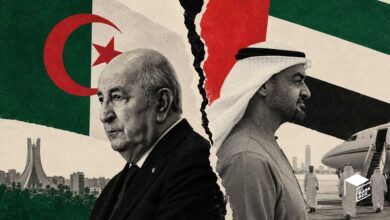
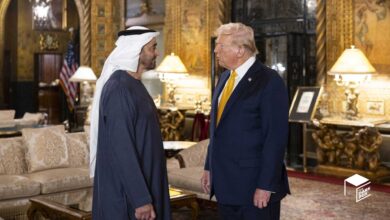
Dark Box Investigation: Dark Box Reveals: Abu Dhabi Secretly Facilitated a U.S.–Houthi Channel as Saudi Arabia Sought American Support
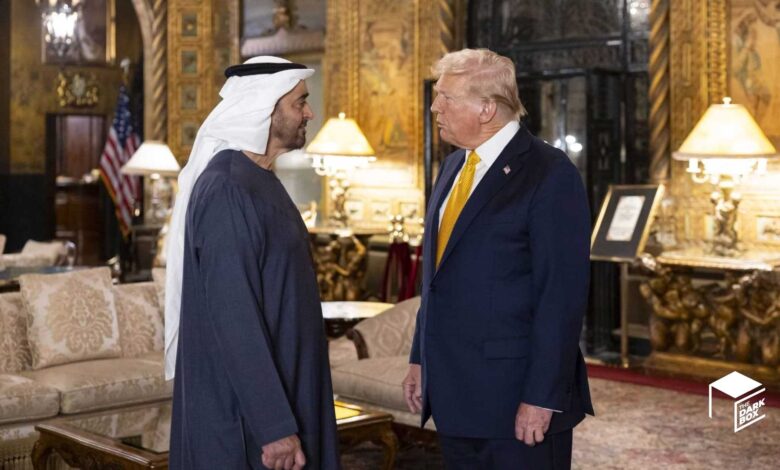
Well-informed sources have told Dark Box that the United Arab Emirates played a quiet, behind-the-scenes role in facilitating the political channel that brought American officials and Houthi representatives together in Muscat, at precisely the moment Saudi Arabia was pressing Washington for military support against the Houthi offensive in Yemen.
If confirmed, the Emirati role would add an explosive new dimension to the rapidly widening Saudi-UAE struggle over Yemen.
Public reporting has already established that American officials secretly met Houthi representatives at the U.S. Embassy in Muscat. Oman, which has long maintained relations with both Washington and the Houthis, helped organize the meeting. But information provided to Dark Box points to another layer operating away from the formal mediation: sources say Abu Dhabi quietly helped facilitate the broader channel that allowed Washington to preserve political communication with the Houthis while Saudi Arabia was seeking American help to confront them militarily.
The significance lies not simply in who attended the meeting, but in when it happened and what each side wanted from it.
Saudi Arabia was facing one of its most serious Yemen crises in years. Houthi forces had seized strategically important territory along the Red Sea, Saudi-backed forces had suffered major setbacks, and Riyadh was increasingly concerned about the security of Bab al-Mandeb, its energy infrastructure and alternative oil-export routes.
Crown Prince Mohammed bin Salman personally appealed to President Donald Trump for stronger American military involvement against the Houthis. Washington refused to enter the fighting directly.
Then came Muscat.
While Riyadh was asking Washington how to stop the Houthis, American officials were quietly sitting across the table from Houthi representatives.
The contrast could hardly have been sharper.
What Washington wanted from the Houthis
The Muscat talks exposed a fundamental difference between Saudi and American priorities.
Saudi Arabia wanted the Houthi military advance contained or reversed. Washington’s immediate objective was considerably narrower: protect American interests, preserve maritime security and avoid being pulled into another major regional battlefield.
During the talks, the Houthis reassured American officials that they intended to respect their existing ceasefire with Washington and would not target American vessels. Reporting on the meeting also indicated assurances concerning Israeli shipping, while the Houthis maintained their confrontation with Saudi interests.
For Washington, such an arrangement offered an obvious advantage.
The United States could reduce the threat to its own vessels and avoid another costly military campaign while keeping diplomatic options open.
For Saudi Arabia, the same arrangement looked very different.
Riyadh could find itself confronting a strengthened Houthi movement while its most powerful Western ally negotiated an understanding designed primarily to remove American interests from the line of fire.
The United States was not necessarily choosing the Houthis over Saudi Arabia. It was choosing American priorities over Saudi priorities.
And according to Dark Box sources, Abu Dhabi understood exactly what that meant.
The Emirati connection
Dark Box sources describe the UAE role not as replacing Oman as the official mediator, but as quietly helping create and encourage the political environment in which the American-Houthi channel could operate.
Oman remained the visible diplomatic bridge. Muscat hosted the talks, and Omani officials are publicly reported to have assisted in arranging them.
The Emirati role described to Dark Box was different: discreet facilitation and political encouragement behind the scenes.
That distinction is important.
Abu Dhabi did not need to appear at the negotiating table to benefit from what happened around it.
A successful American-Houthi understanding could keep the United States from joining Saudi Arabia’s military campaign. Washington could secure its maritime interests. Oman could manage the diplomacy. The Houthis could avoid another direct confrontation with the U.S. military.
Saudi Arabia, meanwhile, would remain responsible for fighting the war.
This is where the Emirati involvement becomes particularly sensitive.
A stab in the back of Riyadh?
The accusation becomes even more serious when placed against the breakdown of Saudi-Emirati cooperation in Yemen.
Saudi Arabia and the UAE entered the Yemen war as partners. Over time, however, they constructed increasingly different political and military projects.
Riyadh remained committed to a broader Yemeni government structure and to containing the Houthi movement. Abu Dhabi built powerful relationships with southern separatists, coastal forces and local military networks whose interests did not always coincide with those of Saudi Arabia.
Those contradictions eventually became impossible to conceal.
As Saudi Arabia attempted to consolidate anti-Houthi forces under its own leadership, Emirati influence increasingly became a competing center of power. The result was fragmentation inside the camp supposedly confronting the Houthis.
The latest Houthi advances have exposed the strategic cost of that fragmentation.
Against that background, Abu Dhabi quietly facilitated and encouraged a U.S.–Houthi political channel, a move carries enormous implications.
Abu Dhabi was not merely standing aside while Saudi Arabia struggled. It was helping preserve a diplomatic architecture that made direct American intervention on Riyadh’s behalf less necessary.
That is why Saudi officials would have reason to view such activity as far more than ordinary mediation.
From Riyadh’s perspective, an ally that helps open a political door to its battlefield adversary while Saudi territory and energy infrastructure are under threat is operating according to a very different definition of partnership.
Abu Dhabi does not need a Houthi alliance to benefit
The UAE does not have to become an ally of the Houthis for the current situation to serve Emirati interests.
That distinction is crucial.
Abu Dhabi has itself condemned Houthi attacks on Saudi Arabia, including the recent attempted strike targeting Mecca. Publicly, the UAE continues to express solidarity with Saudi security.
But geopolitics is not determined by statements alone.
A Saudi Arabia trapped in an expensive confrontation with the Houthis has fewer resources and less freedom to impose its preferred political order on Yemen.
A Washington unwilling to intervene directly reduces Riyadh’s military options.
An Oman-centered diplomatic process gives regional actors alternatives to Saudi leadership.
And a ceasefire understanding separating American interests from Saudi interests leaves Riyadh carrying a disproportionate share of the confrontation.
Abu Dhabi can benefit from all of those outcomes without signing a single agreement with the Houthis.
Two conversations at the same time
Perhaps the most revealing aspect of the affair is the existence of two completely different conversations happening almost simultaneously.
One was visible.
The commander of U.S. Central Command was engaging regional military leaders and meeting Saudi officials as Washington attempted to reassure its Gulf partners.
The other was secret.
American diplomats were meeting Houthi representatives inside the U.S. Embassy in Muscat.
Saudi Arabia was discussing military security.
Washington was discussing political deconfliction.
Riyadh wanted assistance against the Houthis.
Washington wanted assurances from them.
And according to Dark Box sources, Abu Dhabi was quietly helping the second conversation remain possible.
That is the contradiction at the heart of the story.
Oman gains, Saudi Arabia pays
Oman also emerges significantly strengthened.
For years, Muscat has carefully preserved relations with actors that refuse to speak directly to one another. It talks to Washington, Tehran, Riyadh and the Houthis.
That diplomatic neutrality has repeatedly made Oman indispensable during crises.
The latest meeting reinforces that position.
If the U.S.–Houthi channel survives, Muscat could become the principal intermediary not only over Yemen but eventually in wider attempts to reopen communication between Washington and Tehran.
Saudi Arabia could ultimately benefit from such diplomacy. A negotiated mechanism limiting attacks on Saudi energy infrastructure or preventing further escalation would clearly serve Riyadh’s interests.
But there is a difference between Saudi Arabia choosing negotiation and Saudi Arabia discovering that its allies and partners have already been developing channels with its adversary while it was asking them for military assistance.
That difference is political trust.
Washington’s message to Riyadh
The Muscat meeting also reveals something larger about the American-Saudi relationship.
Washington still considers Saudi stability strategically important. American intelligence cooperation continues, and the United States remains deeply connected to Saudi defense.
But alliance does not mean identical objectives.
Saudi Arabia sees the Houthis as a direct threat that must be contained militarily.
Washington sees them as both a security threat and an actor with whom tactical arrangements may be necessary.
That divergence explains why Trump could reject direct military intervention while American diplomats simultaneously explored an accommodation with Houthi representatives.
Washington wants options.
Riyadh wants commitment.
Those are not the same thing.
The question Abu Dhabi must answer
The publicly documented facts establish the Muscat meeting, Oman’s facilitation, Washington’s refusal to intervene directly on Saudi Arabia’s behalf, and the American effort to preserve its ceasefire with the Houthis.
The new element comes from Dark Box sources: Abu Dhabi quietly helped facilitate or encourage the channel behind the scenes.
That claim requires further evidence before it can be treated as established fact.
But if corroborated, it would fundamentally change the political meaning of the meeting.
The story would no longer be simply about Oman mediating between Washington and the Houthis.
It would become part of the larger struggle between Saudi Arabia and the UAE over who shapes Yemen’s future.
Abu Dhabi would have helped maintain a diplomatic channel with the force Riyadh was trying to defeat, while simultaneously avoiding the enormous military costs Saudi Arabia was being forced to absorb.
Saudi Arabia would be fighting the Houthis on the battlefield while another Gulf capital quietly helped keep Washington’s door open to them.
That would explain why this is potentially much more damaging than another disagreement between Riyadh and Abu Dhabi.
Wars can survive disagreements over tactics.
Alliances have a much harder time surviving the belief that one partner was opening doors for the other’s enemy while the fighting was still underway.
Dark Box will continue investigating the Emirati role in the Muscat channel and whether Abu Dhabi’s involvement extended beyond political encouragement into direct facilitation between Washington and the Houthis.