Dark Box Investigation: From Abu Dhabi to Tabuk — Did Israel Exploit the Flydubai Crisis to Break a Saudi-Israeli Taboo?
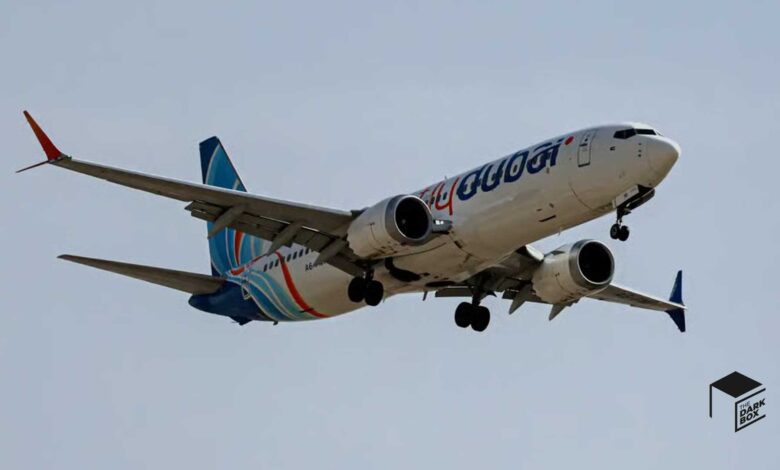
Dark Box — Three days after Israeli Prime Minister Benjamin Netanyahu made a secret visit to Abu Dhabi, an extraordinary event unfolded in the skies above the Arabian Peninsula.
A Flydubai aircraft traveling from Dubai to Tel Aviv, packed overwhelmingly with Israeli passengers and reportedly carrying Israeli security personnel, suddenly plunged thousands of feet before declaring an emergency and diverting to Saudi Arabia.
Its destination was Tabuk.
For hours, a Saudi airport hosted an aircraft carrying around 170 people, the overwhelming majority of them Israelis, despite Riyadh having no diplomatic relations with Israel.
Israeli security personnel were reportedly among those aboard.
The episode immediately raises a politically sensitive question that goes far beyond aviation safety:
Was Saudi Arabia simply responding to an unavoidable airborne emergency — or did Israel recognize, and potentially exploit, an extraordinary opportunity to force an unprecedented Saudi encounter with a plane full of Israelis onto the ground?
And why did the incident occur only days after Netanyahu’s secret meeting with UAE President Mohammed bin Zayed?
There is currently no publicly available evidence proving that Israel manufactured the incident or deliberately caused the aircraft to land in Saudi Arabia. Available flight data, injuries and official Saudi and Emirati investigations provide evidence that a serious aviation emergency did occur.
But the extraordinary timing, the identities of some of those reportedly aboard, Netanyahu’s immediate political intervention and the unprecedented Saudi-Israeli circumstances surrounding the landing warrant scrutiny.
Three Days After Netanyahu’s Secret UAE Visit
The chronology begins in Abu Dhabi.
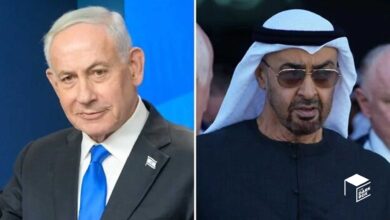
Netanyahu secretly traveled to the UAE on September 27, meeting President Mohammed bin Zayed Al Nahyan.
The visit was initially kept out of public view before Emirati authorities confirmed it.
Officially, the meeting concerned bilateral relations. It also took place against the backdrop of continuing regional diplomacy and Netanyahu’s political struggle at home ahead of Israel’s October election.
Three days later, Flydubai Flight FZ1073 departed Dubai for Tel Aviv.
The Boeing 737 was carrying 174 passengers, overwhelmingly Israelis.
What happened next transformed an ordinary commercial flight between two states that normalized relations under the Abraham Accords into an extraordinary encounter involving a third country that has consistently refused to establish formal diplomatic relations with Israel.
A Plane Full of Israelis Lands in Saudi Arabia
Approximately two and a half hours after departing Dubai, the aircraft experienced a violent emergency.
Publicly available flight-tracking data shows that the plane rapidly lost thousands of feet of altitude and flew erratically.
The aircraft transmitted emergency code 7700, indicating a general emergency, and subsequently 7500, the international transponder code associated with unlawful interference or hijacking.
Israeli Prime Minister Benjamin Netanyahu later said the co-pilot had stabbed the captain and apparently attempted to crash the aircraft.
Passengers and crew reportedly entered the cockpit and subdued him, while additional pilots traveling aboard the aircraft assumed control.
The plane was then diverted to Prince Sultan bin Abdulaziz International Airport in Tabuk.
Saudi authorities say air traffic control received the emergency request at 8:44 a.m. and authorized the aircraft to land.
It touched down safely about an hour later.
But this was not simply an Emirati aircraft entering Saudi territory.
It was an aircraft traveling to Israel and carrying overwhelmingly Israeli passengers.
And, according to reporting based on a person familiar with the regional investigation, members of the Israeli security forces and air marshals were among the passengers who intervened aboard the aircraft.
That detail makes the episode particularly sensitive.
Saudi authorities were suddenly dealing directly, on Saudi soil, with scores of Israeli citizens and reportedly Israeli security personnel.
Under emergency conditions, a barrier that decades of politics had kept firmly in place had effectively been crossed.
Israel Reportedly Wanted to Send Its Own Aircraft
What happened afterward is equally revealing.
Israel sought to recover its citizens.
According to reporting on the episode, Israeli authorities initially sought to send an Israeli aircraft to Saudi Arabia to collect the passengers.
Saudi Arabia reportedly rejected that request.
Instead, Flydubai dispatched another aircraft to Tabuk, and the passengers were subsequently flown to Tel Aviv.
That distinction matters.
Riyadh appears to have maintained the political boundary: it permitted an Emirati aircraft in distress to land under international aviation procedures, but it did not turn the incident into authorization for an Israeli aircraft to operate directly into the kingdom.
Far from proving normalization, that reported refusal demonstrates the limits Saudi Arabia continued to impose.
But the episode nevertheless created images and facts that would previously have been politically extraordinary: Israelis inside Saudi Arabia, Saudi authorities dealing with Israeli passengers and security personnel, and direct operational communication surrounding their safety and eventual departure.
The Security Personnel Question
One of the most intriguing aspects of the story concerns who exactly was aboard.
Initial reports focused simply on approximately 170 Israeli passengers.
Later reporting indicated that Israeli security personnel and air marshals were among those who intervened in the cockpit.
Their presence does not itself establish anything unusual. Security personnel can travel aboard commercial flights serving Israel.
But in an investigation into the geopolitical consequences of the incident, their presence cannot simply be ignored.
A Flydubai aircraft originating in the UAE, filled overwhelmingly with Israelis and containing Israeli security personnel, ended up on Saudi soil only three days after Netanyahu secretly met the Emirati president.
That sequence does not prove coordination.
It does, however, create legitimate questions about what Israeli and Emirati authorities knew, when they knew it, how the decision to divert to Tabuk was made, what communications occurred among Israeli, Emirati and Saudi officials, and whether any political discussions followed the emergency.
Those questions require documentary answers.
Netanyahu’s Remarkable Warning Before the Incident
There is another element of the chronology.
On September 29 — the day before the Flydubai incident — Netanyahu publicly warned that Israel had indications its enemies might attempt attacks ahead of the October 27 election.
He did not explain the nature of the threat.
That same night, opposition leader Yair Lapid received a security briefing from Netanyahu.
Then came FZ1073.
After the aircraft emergency, however, Lapid made an important clarification.
He said there had been absolutely nothing in the security briefing resembling the Flydubai incident — “nothing similar,” “nothing reminiscent of it” and “not even a hint.”
Lapid subsequently accused government-aligned voices of trying to use the incident politically.
The timing therefore raises questions, but does not establish foreknowledge.
Any investigation claiming Israeli advance knowledge would need evidence connecting Netanyahu’s warning to the flight. At present, that evidence has not emerged publicly.
Netanyahu Immediately Seized Control of the Narrative
Netanyahu moved rapidly to define what had happened.
He announced that one pilot had stabbed the other and apparently attempted to crash the aircraft with everyone aboard.
He praised those who intervened as heroes and announced additional security preparations.
Israeli officials quickly began examining a possible terrorism motive.
Netanyahu subsequently said the co-pilot had undergone “Islamist radical indoctrination.”
Yet the precise motive remains under investigation.
The UAE has opened its own inquiry into whether terrorism, prior planning or external direction was involved.
Saudi Arabia’s National Transport Safety Center is conducting a separate investigation.
This gap between an ongoing investigation and the speed with which political narratives were constructed around the incident is itself worthy of examination.
A Convenient Geopolitical Outcome
Whatever caused the emergency, its political symbolism is undeniable.
For years, Netanyahu has sought normalization between Israel and Saudi Arabia as one of his most important regional objectives.
Saudi Arabia has resisted establishing diplomatic relations with Israel without movement on the Palestinian question.
Then, suddenly, an aircraft packed with Israeli citizens landed inside the kingdom.
Saudi security authorities protected them.
Saudi officials coordinated the emergency response.
Israeli and Saudi authorities were necessarily involved, directly or indirectly, in managing the fate of the passengers.
And the entire episode unfolded through an Emirati carrier — from the Arab state that helped inaugurate the Abraham Accords and has developed one of the closest relationships with Israel in the Gulf.
The sequence creates a powerful symbolic triangle:
Israel. The UAE. Saudi Arabia.
That does not demonstrate that the triangle was deliberately engineered.
But it does explain why the episode deserves investigation beyond the cockpit.
Did the Emergency Create a Normalization Precedent?
The central political question may therefore be less whether the emergency itself was fabricated and more whether Israel sought to transform it into a precedent.
A humanitarian aviation emergency forced Saudi Arabia to do something extraordinary: accept an aircraft overwhelmingly carrying Israelis and reportedly Israeli security personnel.
International aviation obligations and basic safety considerations provide a straightforward explanation for Riyadh’s decision.
But from Israel’s perspective, the resulting political imagery could still be valuable.
The event demonstrated that direct Saudi-Israeli operational interaction is possible when circumstances require it.
It temporarily placed Israeli citizens under Saudi protection.
And it created an extraordinary real-world encounter between populations and security systems that remain formally separated by the absence of diplomatic relations.
The crucial question is whether Israeli officials subsequently sought to leverage that exceptional event in their wider normalization campaign.
That question cannot be answered from the emergency landing alone.
What the Evidence Does — and Does Not — Show
There are genuine anomalies and politically significant coincidences surrounding Flight FZ1073.
Netanyahu secretly visited Abu Dhabi three days before the incident.
The aircraft originated in the UAE.
Nearly all its passengers were Israeli.
Israeli security personnel and air marshals were reportedly aboard.
The aircraft landed in Saudi Arabia.
Netanyahu had issued an unspecified security warning the previous day.
And the incident occurred while Saudi-Israeli normalization remains one of Netanyahu’s most important regional ambitions.
Those facts justify scrutiny.
But they do not, on their own, prove that Israel fabricated the cockpit attack or deliberately engineered the emergency landing.
Indeed, several pieces of evidence weigh against making that conclusion prematurely.
Flight-tracking data independently recorded a severe and abnormal loss of altitude.
The aircraft transmitted internationally recognized emergency codes.
The captain and co-pilot were hospitalized.
Passengers have independently recounted a violent emergency.
Saudi Arabia has launched an aviation-safety investigation.
The UAE is investigating the cockpit incident and whether it involved terrorism or prior planning.
Any claim that the entire event was staged would therefore require evidence capable of explaining these facts.
The Questions Investigators Should Ask
A serious investigation should now focus on evidence rather than assumption.
Who made the final decision to divert FZ1073 to Tabuk?
What other airports were technically available?
What communications occurred between the cockpit, Flydubai operations, Emirati authorities, Saudi air traffic control and Israeli officials before the diversion?
Exactly how many Israeli security personnel were aboard, and in what capacity?
Did any of them communicate with Israeli authorities during the emergency?
Why were additional qualified pilots aboard the aircraft, and were they scheduled crew, positioning crew or ordinary passengers?
What did the cockpit voice recorder capture?
What does the flight data recorder show about control inputs during the aircraft’s violent descent?
What evidence supports Netanyahu’s subsequent claim of ideological radicalization?
And critically: what discussions concerning Saudi Arabia took place during Netanyahu’s secret Abu Dhabi visit three days earlier?
Without answers to those questions, declaring the entire event an Israeli operation would move beyond investigation into speculation.
But refusing to ask them would be equally inadequate.
From Aviation Emergency to Geopolitical Opportunity
The strongest conclusion currently supported by the evidence is therefore more complicated than the official narratives emerging from the region.
A serious and independently observable aviation emergency occurred aboard an Emirati aircraft carrying overwhelmingly Israeli passengers.
That emergency produced an extraordinary geopolitical result: the aircraft landed in Saudi Arabia, bringing a large group of Israelis — reportedly including security personnel — onto Saudi territory.
The event came just three days after Netanyahu’s secret meeting with Mohammed bin Zayed and amid Netanyahu’s continuing pursuit of Saudi-Israeli normalization.
There is currently no public evidence demonstrating that Israel manufactured the emergency to achieve that outcome.
But there is every reason to investigate whether Israeli officials anticipated, manipulated or subsequently exploited the crisis to advance a political objective that has eluded Netanyahu for years.
For Dark Box, this is where the real investigation begins.
The question is not answered by the dramatic story of what happened inside the cockpit.
It lies in what happened before the aircraft left Dubai, during the secret diplomacy in Abu Dhabi, in the communications that redirected it toward Saudi Arabia — and in the political use Israel makes of an emergency that unexpectedly placed scores of Israelis on Saudi soil.