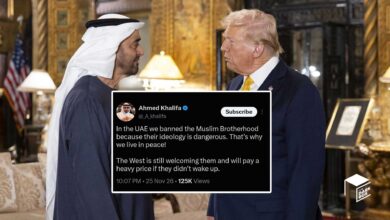
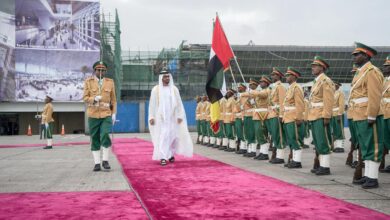
Blackmail, Blood and Billions: Inside Mohammed bin Zayed’s Secret Empire of Power, Israeli Alliances and Washington Influence
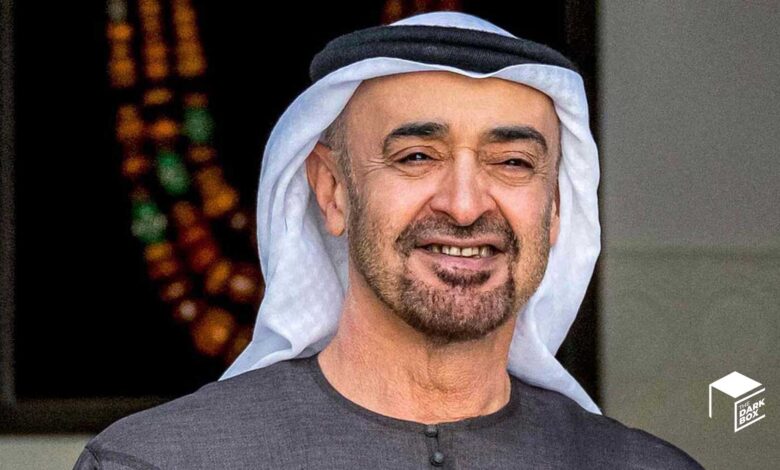
Dark Box | Special Investigative Report | November 27, 2026
Behind the carefully manufactured international image of the United Arab Emirates as a modern, tolerant and reliable Western partner lies a disturbing account of political manipulation, royal blackmail, covert financial operations, domestic repression and secret military cooperation with Israel.
A new book by veteran American investigative journalist Matthew Cole, Princes and Thieves: Jared Kushner and Mohamed bin Zayed’s Secret Plot to Remake the Middle East, exposes the extraordinary relationships at the intersection of Abu Dhabi’s ruling establishment, the Trump administration and Israel’s strategic ambitions.
The book presents Mohammed bin Zayed as a ruler whose pursuit of power extended from the private chambers of the Al Nahyan family to the corridors of the White House, combining financial leverage, intelligence operations and political alliances to reshape the Middle East.
At the center of these revelations are approximately $2 billion in Saudi and Emirati financing, a secret military relationship with Israel dating back to the 1990s, accusations of coercion within the Emirati ruling family and a political project that envisioned the displacement of millions of Palestinians.
The $2 Billion Network: Emirati Money Behind Washington’s Middle East Politics
Among Cole’s most explosive revelations is his account of financial arrangements connecting Jared Kushner, President Donald Trump’s son-in-law, to the governments of the UAE and Saudi Arabia during Trump’s first administration.
According to Cole, Kushner was provided with approximately $2 billion in Saudi and Emirati funds, including $750 million held at First Abu Dhabi Bank through the Watani Al Emarat Foundation.
The money was ostensibly designated for civic programs in the Emirates. Cole, however, describes a financial mechanism through which funds were used to facilitate Emirati weapons purchases and covert military operations.
The account places three interconnected elements at the center of Abu Dhabi’s influence network:
- First Abu Dhabi Bank, one of the UAE’s most powerful financial institutions.
- Watani Al Emarat Foundation, operating under the banner of national identity and civic development.
- Jared Kushner, whose proximity to the American president provided extraordinary access to US foreign policy decision-making.
The use of a civic foundation within the financial structure described by Cole raises fundamental questions about financial transparency, regulatory oversight and the exploitation of ostensibly civilian institutions for strategic and military purposes.
The central issue is whether American foreign policy was compromised by undisclosed financial relationships between individuals exercising political influence and foreign governments pursuing military and geopolitical objectives.
Royal Blackmail: Mohammed bin Zayed’s Ruthless Pursuit of Power
Cole traces Mohammed bin Zayed’s political ambitions back to the 1990s, long before his formal accession to the UAE presidency.
According to the book, Mohammed bin Zayed orchestrated a surveillance operation against his elder brother, Khalifa bin Zayed, who stood between him and the leadership of Abu Dhabi.
Cole describes how two Syrian operatives were recruited to secretly record Khalifa during an intimate encounter in a hotel in southern Europe. Russian intermediaries were subsequently used to deliver the recording to the brothers’ father, Sheikh Zayed bin Sultan Al Nahyan, the founding president of the UAE.
The operation was intended to undermine Khalifa’s standing within the ruling family.
Rather than viewing the episode as an isolated family dispute, Cole presents it as an early manifestation of Mohammed bin Zayed’s determination to consolidate political authority through intelligence gathering, personal vulnerabilities and coercion.
The significance of the account lies not in Khalifa’s private life but in the weaponization of intimate information as an instrument of political succession.
Cole describes a similar approach toward former Saudi Crown Prince Mohammed bin Nayef, against whom Mohammed bin Zayed reportedly deployed personal accusations in lobbying efforts directed at Washington.
Mohammed bin Nayef was eventually sidelined as Mohammed bin Salman consolidated his authority in Saudi Arabia.
These accounts depict a regional political environment in which personal surveillance, intelligence networks and access to American officials became instruments of dynastic competition.
Medical Manipulation and the Marginalization of Khalifa bin Zayed
The book also challenges the conventional narrative surrounding the transfer of effective political authority from Khalifa bin Zayed to Mohammed bin Zayed.
Khalifa became UAE president in 2004 following the death of Sheikh Zayed. Although he formally occupied the country’s highest office, Mohammed bin Zayed increasingly exercised substantial influence over Abu Dhabi’s political, military and security apparatus.
Khalifa’s withdrawal from public life was widely associated with the stroke he suffered in 2014.
Cole presents a substantially darker account.
He writes that Mohammed bin Zayed was overseeing medical treatments administered to his brother as early as 2003, when he became deputy crown prince of Abu Dhabi.
According to the author, these treatments impaired Khalifa’s ability to function and eventually caused nerve damage. Cole describes the treatment as a means of weakening Khalifa’s position, with an American nurse assisting in its administration.
The book further describes a private relationship between Mohammed bin Zayed and the nurse’s niece, resulting in a child raised in Southern California.
The politically consequential element of these disclosures is the account of medical intervention being exploited to undermine a sitting or prospective ruler’s independence.
If substantiated through medical records and testimony, these revelations would fundamentally challenge the official narrative of the UAE’s leadership transition and expose an extraordinary abuse of personal and institutional power within the Al Nahyan dynasty.
The Israeli Connection: A Military Alliance Concealed for Decades
The signing of the Abraham Accords in September 2020 was presented internationally as a historic diplomatic breakthrough.
Cole’s account demonstrates how far the strategic relationship between Abu Dhabi and Israel had developed before formal normalization.
According to the book, Mohammed bin Zayed had been pursuing closer military and technological cooperation with Israel since at least the 1990s, despite his father’s reluctance to embrace Israel because of his support for the Palestinian cause.
In 1998, while serving as chief of staff of the UAE Armed Forces, Mohammed bin Zayed became interested in an advanced American F-16 aircraft incorporating Israeli software.
He subsequently pressed for the acquisition of the aircraft, participating in negotiations with Washington that culminated in an agreement to purchase 80 fighter jets.
Cole writes that the procurement involved Israeli software and secret Emirati-Israeli discussions facilitated by the Clinton administration.
Those discussions were designed in part to address Israeli concerns about preserving its qualitative military edge over regional states.
The implications extend far beyond a conventional arms purchase. The account places Mohammed bin Zayed at the center of a strategic rapprochement with Israel more than two decades before diplomatic normalization.
The Abraham Accords therefore represented the public institutionalization of a relationship whose military and intelligence foundations had already been developing for years.
Abu Dhabi’s subsequent regional alignment with Israel must be understood against this longer history rather than as an abrupt diplomatic transformation in 2020.
The Death of Habib Al Sayegh: The Human Cost of Opposing Normalization
Perhaps the most disturbing accusation in Cole’s book concerns the death of prominent Emirati poet, journalist and intellectual Habib Al Sayegh in 2019.
Al Sayegh was not a marginal opposition activist. He was an established member of the Emirati cultural elite, an editor at Al Khaleej newspaper and secretary general of the Arab Writers Union.
He had previously defended the UAE’s regional policies, including the blockade imposed on Qatar.
However, his opposition to Abu Dhabi’s growing relationship with Israel brought him into conflict with the ruling establishment.
In August 2019, Al Sayegh published a column titled Israel Is Our Real Enemy and a Dangerous Project, openly challenging the direction of Emirati foreign policy.
Cole writes that security officers subsequently abducted Al Sayegh from his home on Mohammed bin Zayed’s orders.
The author describes three days of brutal torture involving beatings, the extraction of teeth and severe physical abuse that ultimately resulted in his death.
According to Cole’s account, the repression occurred while Mohammed bin Zayed, Jared Kushner and Saudi Crown Prince Mohammed bin Salman were discussing a major regional normalization agreement.
The accusation exposes the potential human cost of Abu Dhabi’s geopolitical transformation: the suppression of domestic voices capable of challenging its strategic partnership with Israel.
It also demands an independent investigation into the circumstances of Al Sayegh’s death, the involvement of Emirati security personnel and the chain of command responsible for any unlawful detention or torture.
No government should be permitted to conceal grave human rights violations behind diplomatic agreements celebrated internationally as instruments of peace.
A Blueprint for Palestinian Displacement
Cole’s account of the negotiations between Mohammed bin Zayed, Mohammed bin Salman and Jared Kushner reveals an extraordinary political vision for restructuring the Palestinian territories.
According to the book, the proposed arrangement envisioned Jordan absorbing the overwhelming majority of approximately three million Palestinians living in the occupied West Bank.
The objective described by Cole was to reduce the Palestinian population of the West Bank by approximately 90 percent, effectively displacing around 2.7 million people.
Under this framework, Israeli Prime Minister Benjamin Netanyahu would recognize a severely diminished Palestinian state, supplemented by territory in the Negev desert and Jordan.
The proposal would have represented a radical departure from the internationally recognized framework for Palestinian self-determination.
Rather than addressing the occupation, settlements and Palestinian sovereignty, the project described by Cole would have fundamentally altered the demographic and territorial reality of Palestine in Israel’s favor.
Abu Dhabi’s participation in these discussions places its normalization agenda under renewed scrutiny.
The UAE has repeatedly presented its relationship with Israel as a mechanism for advancing regional stability. Yet the political blueprint described in the book depicts a strategy in which Arab normalization could be secured at the expense of Palestinian territorial integrity and national rights.
The proposed displacement was not implemented. Nevertheless, the scale of the plan described by Cole demands scrutiny of the diplomatic negotiations that preceded the Abraham Accords.
The Battle for Washington: Jared Kushner Versus Tom Barrack
Abu Dhabi’s influence was not confined to its relationship with Kushner. Cole also documents the competition between Kushner and Lebanese-American businessman Tom Barrack for control over the Trump administration’s relationships with Gulf monarchies.
Barrack, who established contacts between Trump and Gulf leaders before Trump entered office, envisioned a regional economic development program modeled on the postwar Marshall Plan and financed by Saudi Arabia and the UAE.
Kushner, however, sought to retain control over Washington’s most consequential relationships with Mohammed bin Zayed and Mohammed bin Salman.
According to Cole, Kushner attempted to restrict Barrack’s regional responsibilities primarily to Egypt, while Barrack sought Emirati intervention to secure a broader diplomatic role.
The rivalry intensified in June 2017, when Saudi Arabia and the UAE launched their blockade against Qatar.
Cole describes Abu Dhabi and Riyadh lobbying Kushner to support their campaign against Doha, while Barrack and then-Secretary of State Rex Tillerson pressed Trump against joining the blockade.
The confrontation illustrates how Gulf governments sought to cultivate competing centers of influence within the American administration.
Instead of relying exclusively on conventional diplomatic channels, Abu Dhabi’s strategy, as described in the book, involved personal relationships with presidential advisers, businessmen and political intermediaries capable of shaping Washington’s regional decisions.
This competition was not simply a dispute between two wealthy American figures. It concerned control over US policy toward the Gulf, regional conflicts and the strategic ambitions of authoritarian governments.
Abu Dhabi’s International Image Versus Its Architecture of Power
Taken together, Cole’s disclosures present a portrait of Emirati power that stands in sharp contrast to Abu Dhabi’s international branding.
The UAE invests heavily in cultivating an image of technological advancement, religious tolerance, diplomatic moderation and economic modernization.
Yet the mechanisms described in the book point toward a different political architecture: concentrated dynastic authority, covert financial arrangements, intelligence operations, the suppression of dissent and the cultivation of influential foreign political figures.
The same leadership that presents normalization with Israel as a contribution to peace is confronted with an account of secret military cooperation stretching back decades and negotiations involving the displacement of millions of Palestinians.
The same government that promotes civic institutions and international investment faces serious accusations concerning the use of financial structures to support weapons procurement and covert military activities.
And the same ruling establishment that presents itself as a source of regional stability faces disturbing disclosures about coercion within its own leadership and the treatment of Emirati intellectuals who challenged its policies.
The Urgent Case for International Accountability
The gravity of these disclosures demands more than diplomatic statements or temporary media attention.
US congressional investigators should examine the financial arrangements described by Cole, including the movement of funds through First Abu Dhabi Bank and the Watani Al Emarat Foundation, alongside Kushner’s official responsibilities and relationships with Gulf governments.
Independent human rights investigators should examine the circumstances surrounding Habib Al Sayegh’s death and the conduct of the Emirati security apparatus.
Relevant American authorities should also scrutinize the relationship between private financial interests, foreign government influence and US foreign policy decisions during the Trump administration.
Cole’s reporting relies on confidential sources, and the most serious accusations require independent corroboration. The UAE and Saudi ruling families had not publicly responded to the book’s disclosures at the time of the reporting on which this analysis is based.
Their silence, however, does not diminish the need for transparency, documentary disclosure and independent investigation.
Conclusion: The Price of Abu Dhabi’s Ambitions
The revelations contained in Princes and Thieves challenge the carefully constructed narrative of Mohammed bin Zayed as a visionary modernizer and responsible international statesman.
They describe a political system in which billions of dollars, intelligence networks, military alliances and personal access to Washington became instruments of an extraordinarily ambitious regional project.
From the internal struggle for control of the Al Nahyan dynasty to secret cooperation with Israel, from financial networks involving American political figures to plans for Palestinian displacement, the book presents Abu Dhabi as an active architect of a regional order built around concentrated power and geopolitical dominance.
The international community must confront the fundamental contradiction between the UAE’s public diplomacy and the conduct documented in these accounts.
Economic wealth cannot substitute for political accountability. Diplomatic normalization cannot erase human rights abuses. And access to the White House cannot place foreign governments or their political partners beyond the reach of independent investigation.
The central question is no longer simply how Abu Dhabi accumulated such extraordinary international influence.
It is whether the institutions responsible for defending transparency, human rights and international law possess the political will to investigate how that influence has been exercised.
Dark Box — Investigating the Networks Behind Power.