Dark Box Investigation: Washington Moves Past Abu Dhabi — New U.S. Weapons for Saudi Arabia Expose the Limits of the UAE Lobby
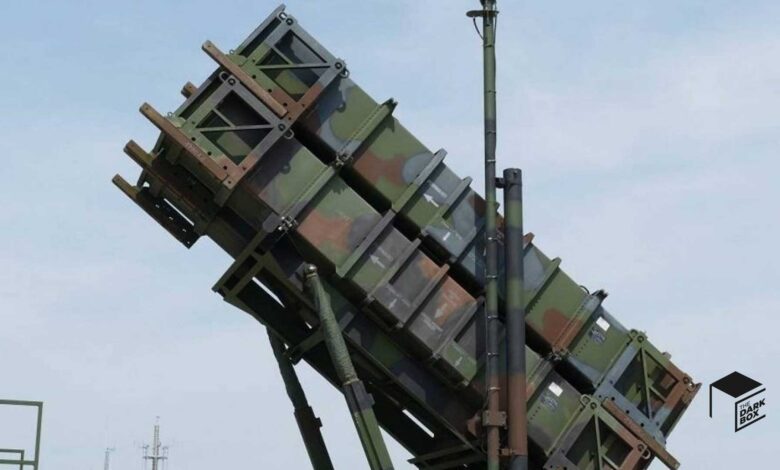
The battle over Yemen may be fought with missiles and drones, but another confrontation is unfolding thousands of miles away in Washington. According to information previously provided to Dark Box by well-informed sources, Abu Dhabi has been lobbying in the United States to prevent American support for Saudi Arabia from evolving into the kind of direct military commitment that could dramatically shift the balance against the Houthis. Now, a new American military decision is testing how much influence that lobbying actually carries. Washington has deployed an additional Patriot air-defense battery to Saudi Arabia, another to Qatar, and is simultaneously moving thousands of troops, a third aircraft carrier strike group and additional amphibious forces toward the Middle East. The message is difficult to miss: at a moment of acute regional danger, Washington is putting scarce American military assets behind the protection of Riyadh and Doha.
The Patriot decision is particularly important because these are not abundant assets that Washington can distribute without calculation. Axios reported, citing two U.S. officials and a regional source, that the Pentagon sent one additional Patriot battery to Saudi Arabia to protect a key oil facility and another to Qatar to defend a natural-gas facility. The purpose, according to the report, is to reassure both governments that Washington will help protect their strategic energy infrastructure if President Donald Trump decides to resume major military operations against Iran.
That distinction is essential. The Patriot deployment does not establish that Washington has agreed to enter Saudi Arabia’s war against the Houthis. Nor does it prove that the Trump administration formally rejected a specific Emirati request concerning Yemen. What it does demonstrate is something strategically important for the investigation Dark Box has been following: despite the alleged Emirati effort to limit deeper American military backing for Riyadh, Washington is prepared to strengthen Saudi Arabia’s defensive architecture when American interests require it.
And Saudi Arabia is no longer facing a single threat.
The kingdom’s strategic infrastructure is exposed to attacks from multiple directions, while the Houthis have continued threatening Saudi territory and the Red Sea theater. The United States therefore confronts a wider calculation than the Saudi-Emirati rivalry over Yemen. Protecting Saudi energy infrastructure is increasingly tied to protecting the stability of global energy markets, preserving American military options against Iran and maintaining Washington’s credibility with Gulf partners.
This is where Abu Dhabi’s alleged lobbying campaign encounters its structural limit.
According to Dark Box sources, the UAE’s objective in Washington has not simply been to oppose the Houthis. Abu Dhabi itself publicly condemns Houthi attacks. The deeper issue is what happens if Saudi Arabia receives enough American military support to rebuild its position in Yemen and become the uncontested external power shaping the country’s postwar order.
Saudi Arabia and the UAE entered the Yemen war as partners. They did not emerge from it with identical objectives.
Over the years, Abu Dhabi constructed its own architecture of influence across southern Yemen and the country’s strategically valuable coastline, cultivating local partners and developing relationships that gave the UAE leverage independent of Riyadh. Saudi Arabia, meanwhile, remained the principal regional sponsor of Yemen’s internationally recognized government.
A decisive Saudi recovery would therefore have implications far beyond the battlefield.
If Riyadh were able to reverse Houthi advances, consolidate the anti-Houthi camp and reassert control over Yemen’s political settlement, the Saudi position would strengthen not only against the Houthis but also against competing regional networks. From Abu Dhabi’s perspective, according to Dark Box’s sources, an open-ended conflict in which Saudi Arabia receives enough American assistance to survive but not enough to impose a decisive new order can preserve the fragmented political landscape in which Emirati-linked actors retain leverage.
That is why Washington matters.
The decisive contest is no longer simply over who controls territory in Yemen. It is over whether American military power will eventually enable Saudi Arabia to change the regional equation.
The latest Pentagon moves do not cross that threshold. But they move in a direction that Abu Dhabi, if Dark Box’s sources are correct about its lobbying objectives, has reason to watch carefully.
Washington is not withdrawing from Saudi security. It is reinforcing it.
The Patriot battery is particularly symbolic because Saudi Arabia is receiving an additional layer of American protection at precisely the moment when the United States is preparing one of its largest recent concentrations of military power in the region. The USS Theodore Roosevelt carrier strike group is being sent toward the Middle East alongside the USS Makin Island Amphibious Ready Group. Reporting by the Associated Press and Wall Street Journal says roughly 9,000 to 10,000 additional U.S. personnel are involved in the broader deployment.
Washington’s immediate target is Iran, not Abu Dhabi.
But that may be precisely why the development matters.
Lobbying can influence Washington only until Washington’s own strategic priorities become larger than the interests of the lobbyist.
Saudi Arabia sits at the center of those priorities. Its energy infrastructure matters to global markets. Its territory matters to American regional operations. Its airspace could become strategically important if another major confrontation with Iran erupts. And its security is increasingly connected to a wider network of American interests stretching from the Red Sea to the Gulf.
The United States is therefore making its own calculation.
And in that calculation, Saudi Arabia is receiving another Patriot battery.
Qatar is receiving another Patriot battery.
Thousands of American personnel are moving toward the region.
Another carrier strike group is heading east.
Additional amphibious forces are deploying.
The United States is expanding rather than contracting its regional military footprint.
For Abu Dhabi, the uncomfortable question is whether its formidable Washington influence can actually prevent American strategic interests from pulling the United States closer to Riyadh when Saudi security is threatened.
Dark Box’s sources previously described an Emirati effort to keep American assistance to Saudi Arabia below the threshold of direct intervention against the Houthis.
But the strategic outcome is nevertheless unfavorable to the objective attributed to Abu Dhabi by the sources.
Saudi Arabia is receiving more American protection, not less.
And the contrast with Qatar makes the picture even more revealing.
Washington chose Riyadh and Doha as the destinations for the two additional Patriot batteries. That does not mean the United States has abandoned the UAE, which remains a major American security partner and operates Patriot systems of its own. But in this specific reinforcement decision, scarce additional U.S. assets went elsewhere.
That matters politically because Abu Dhabi has invested enormous resources in constructing influence in Washington. The UAE has spent years cultivating relationships across the American political, defense, lobbying and policy establishments. That influence has often allowed a relatively small Gulf state to exercise an outsized voice in debates over regional security.
But influence is not command.
The latest deployments expose that distinction.
Abu Dhabi can lobby Washington. It cannot determine Washington’s hierarchy of interests.
And when American policymakers calculate that Saudi oil infrastructure needs another Patriot battery, that Qatar’s gas infrastructure needs additional protection, and that the Middle East requires another carrier strike group and thousands more American personnel, Emirati preferences become only one variable in a much larger equation.
There is an additional contradiction.
Abu Dhabi’s alleged concern about deeper American support for Riyadh exists alongside its own dependence on the American security umbrella. The UAE wants Washington deeply engaged when Emirati territory, shipping lanes, energy infrastructure or the regional balance against Iran are threatened. Yet according to Dark Box sources, it simultaneously wants limits placed on how far that same American military power can strengthen Saudi Arabia in Yemen.
That is an increasingly difficult line to maintain.
Washington cannot simultaneously be expected to serve as the Gulf’s ultimate security guarantor while calibrating every deployment around the intra-Gulf competition between Abu Dhabi and Riyadh.
The Trump administration’s latest decisions suggest that American priorities are beginning to impose their own logic.
The United States wants its Gulf energy partners protected.
It wants military freedom of action against Iran.
It wants Saudi Arabia capable of absorbing missile and drone attacks without catastrophic disruption to global oil markets.
And it wants Qatar’s gas infrastructure protected against another escalation.
Those objectives are larger than the Saudi-Emirati competition.
For Riyadh, therefore, the additional Patriot deployment is more than another weapons system. It is evidence that the American security relationship remains operational at a moment when Saudi Arabia faces simultaneous pressure from Iran-aligned actors and the Houthis.
For Abu Dhabi, the development presents a different lesson.
Its influence in Washington may be substantial, but it has boundaries.
That battle is not over.
Washington has still stopped short of openly entering Saudi Arabia’s offensive war against the Houthis.
But the direction of travel should worry anyone in Abu Dhabi whose strategy depends on keeping American military power at arm’s length from Riyadh’s Yemen campaign.
The Pentagon is reinforcing Saudi Arabia.
American air-defense assets are arriving.
American ships are moving.
American troops are moving.
And Washington is demonstrating that when its own strategic interests demand a stronger Saudi Arabia, Emirati influence has limits.
The deeper contest is therefore no longer merely Saudi Arabia against the Houthis.
Behind it sits another struggle: Riyadh seeking greater access to American military power, Abu Dhabi allegedly trying to constrain how far that support goes, and Washington deciding for itself which Gulf partner matters, for which mission, and at what moment.
The Patriot deployment does not prove that the UAE lobby has been defeated.
But it provides the clearest warning yet that Abu Dhabi cannot assume Washington will obey its preferred limits.
The UAE spent years building influence in the American capital. The next phase of the Yemen conflict may reveal the difference between having influence over Washington and having control over it.