Dark Box Investigation: Abu Dhabi’s Money and Europe’s Anti-Muslim Right — New Financial Network Targets Muslim Political and Civic Influence
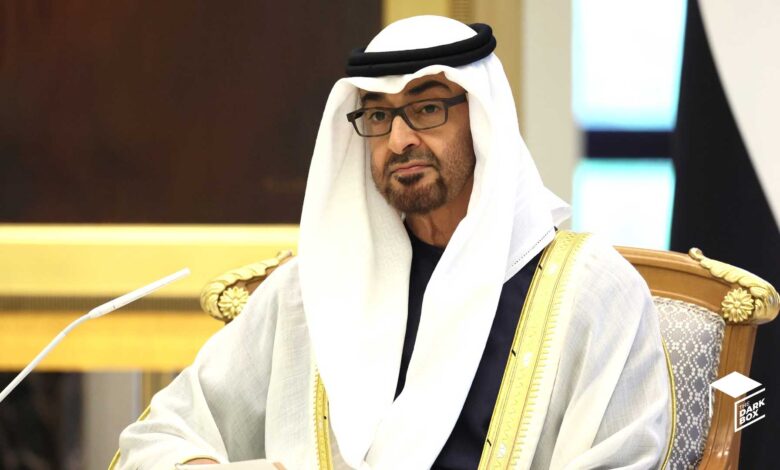
Well-informed sources have told Dark Box that the United Arab Emirates is directing new financial resources toward political figures, influence networks and organizations in Europe whose agendas include hardline campaigns against Muslim political and civic organizations.
According to information provided to Dark Box, Abu Dhabi sees the growing European campaign against what governments and political parties describe as “political Islam” as an opportunity to export one of the central pillars of Emirati domestic and regional policy into Europe. Rather than treating the rise of anti-Muslim politics as a purely European phenomenon, the UAE is seeking relationships with political forces whose positions can reinforce Abu Dhabi’s own campaign against Muslim political organizations and activists.
The method described by Dark Box sources is broader than simply transferring money directly to political parties. Emirati financial influence can move through lobbying networks, private intelligence and consultancy firms, political intermediaries, research initiatives, media relationships and organizations capable of placing allegations and security narratives into European political debate. This creates distance between Abu Dhabi and the eventual political message while allowing Emirati priorities to circulate through European institutions.
There is already a documented history behind this model.
The “Abu Dhabi Secrets” investigation exposed an extensive operation involving the Swiss private intelligence firm Alp Services, which worked for Emirati interests while compiling information on more than 1,000 individuals and around 400 organizations across 18 European countries. Muslim activists, businesspeople, organizations and public figures were placed within networks portrayed as connected to political Islam, with the resulting information fed into influence operations involving journalists and political circles.
The significance of that operation was not simply surveillance. It demonstrated how Emirati money could finance an entire chain of political influence: identify targets, construct dossiers, establish associations between individuals and controversial organizations, move those allegations into media and political networks, and ultimately influence how European institutions viewed Muslim civic participation.
France offered a particularly revealing example. Material from the investigation documented activities involving outreach toward elected figures from the far-right National Rally. This exposed a natural political convergence. Abu Dhabi wanted European governments to adopt a harder approach toward Muslim political organizations, while sections of Europe’s far right were already building electoral campaigns around immigration, Islam and claims that Muslim institutions represented a threat to European identity.
The new information obtained by Dark Box suggests that this convergence has not disappeared. It is evolving.
Across Europe, ideas once associated primarily with the far right are increasingly entering mainstream political debate: mapping Muslim organizations, investigating their funding, restricting associations suspected of ideological extremism and cutting public support for organizations accused of links to political Islam. The European People’s Party has itself adopted proposals calling for greater scrutiny of networks associated with political Islam and their funding.
For Abu Dhabi, this political transformation creates an extraordinary opportunity.
The UAE does not need to convince Europe to adopt the Emirati political model in its entirety. It needs European politicians, researchers and institutions to adopt enough of Abu Dhabi’s framing that Muslim political and civic organizations increasingly become viewed through a security lens.
This is where financial influence becomes more powerful than conventional diplomacy.
A government openly demanding that European states suppress particular Muslim organizations would immediately face questions about foreign interference. But a European politician raising the issue, a research institution publishing a report, a private intelligence company circulating a dossier or a media outlet repeating allegations gives the same narrative European legitimacy.
The message becomes European even when some of the infrastructure behind its circulation has been financed from abroad.
Dark Box’s sources describe precisely this strategy: supporting an ecosystem capable of turning Abu Dhabi’s ideological priorities into European political arguments.
The UAE did not create Europe’s far right, nor did it invent Islamophobia. Those movements have their own domestic histories, constituencies and political objectives. But Abu Dhabi has identified an area where its interests intersect with theirs. European anti-Muslim forces want political arguments and information capable of portraying Muslim organizations as threats. Abu Dhabi wants European governments to weaken political movements and organizations it regards as hostile to its regional order.
Money and influence can connect the two.
The contradiction for Europe is becoming increasingly difficult to ignore. European politicians are demanding investigations into foreign financing of Muslim institutions and warning that outside governments may be attempting to influence Muslim communities. Yet the Abu Dhabi Secrets affair exposed a foreign state-linked influence operation working in the opposite direction: Emirati money financing efforts intended to shape European perceptions of Muslim individuals and organizations.
The new information obtained by Dark Box raises an even more serious question: whether that model is now being expanded through new financial relationships with political and influence networks benefiting from Europe’s accelerating shift toward anti-Muslim politics.
This is no longer simply a story about Islamophobia.
It is a story about foreign money, political influence and the ability of a wealthy Gulf state to export its ideological battles into European democracy.
Abu Dhabi’s most effective weapon in Europe may therefore not be a politician carrying an Emirati flag or openly defending UAE policy.
It may be a European voice delivering Abu Dhabi’s preferred narrative without Abu Dhabi appearing in the room.