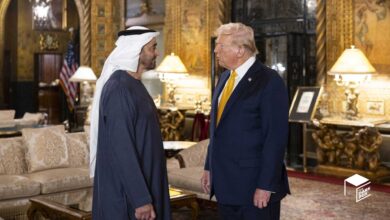
Dark Box Investigation: Abu Dhabi’s New Abraham Accords Offensive — UAE Makes Extraordinary Push to Bring Kuwait Into Normalization With Israel
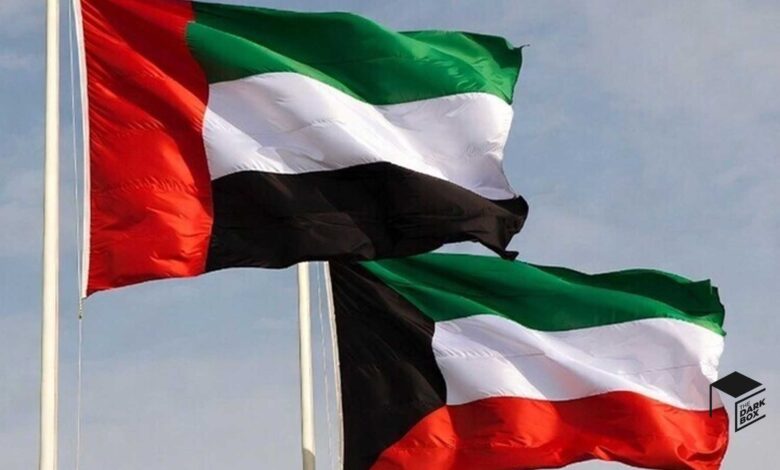
Well-confirmed sources have told Dark Box that the United Arab Emirates is making an extraordinary diplomatic effort to expand the Abraham Accords, with Kuwait emerging as one of Abu Dhabi’s most important targets for a new normalization agreement with Israel.
According to information provided to Dark Box, the Emirati effort has intensified around the anniversary of the Abraham Accords, with Abu Dhabi seeking to demonstrate that the normalization project it launched with Israel in 2020 remains capable of expanding despite years of war, regional upheaval and unprecedented anger toward Israel across much of the Arab world.
The timing is particularly important for the UAE. Abu Dhabi has spent years marketing itself in Washington and Western capitals as the architect of a new Middle East built around economic integration, security cooperation and normalization with Israel. But that image has been increasingly challenged by regional controversies surrounding Emirati policy from Yemen and Libya to Sudan, while Algeria’s decision this month to sever diplomatic relations with the UAE represented another major blow to Abu Dhabi’s regional standing. Algeria accused the UAE of “provocative or hostile” conduct, while the UAE said it hoped the rupture would be temporary.
Dark Box assesses that expanding the Abraham Accords would therefore give Abu Dhabi something it badly needs: a diplomatic success capable of restoring its preferred image as a regional dealmaker rather than a state increasingly associated by its critics with intervention, proxy networks and destabilizing regional competition.
And Kuwait would be an extraordinary prize.
The first public indication of what may be developing came from Israel’s ambassador to the UAE, Yossi Shelley. Speaking to Israeli public broadcaster KAN on the anniversary of the Abraham Accords, Shelley said another country could join the agreements within four to six months and specifically pointed toward Kuwait. He provided no details of negotiations, but said that “everyone is working on it” and referred to continued Emirati efforts to deepen regional cooperation.
That statement becomes considerably more significant when placed alongside the information obtained by Dark Box.
Sources say Abu Dhabi is investing exceptional political and diplomatic effort in attempting to convince Kuwait that normalization can be presented not simply as recognition of Israel, but as part of a broader security architecture connecting Gulf states, Washington and Israel. Such an argument has become easier to advance amid growing regional fears surrounding Iran, the Houthis, missile warfare and threats to Gulf energy infrastructure.
Recent developments show how rapidly that security architecture is evolving. Senior military commanders from the United States, Israel, Saudi Arabia, the UAE, Kuwait, Qatar, Jordan, Bahrain and Egypt reportedly participated in a secret U.S.-organized meeting in Germany focused on Iran and regional security. Formal diplomatic normalization and security coordination are not the same thing, but the growing overlap between Arab and Israeli security interests gives advocates of the Abraham Accords a powerful argument: cooperation that already exists behind closed doors should eventually become political cooperation in public.
Kuwait, however, is not an easy target.
Unlike the UAE, Kuwait has maintained a strongly pro-Palestinian public position and has historically resisted normalization with Israel. As recently as July, Kuwait’s Foreign Ministry reaffirmed its support for an independent Palestinian state on the 1967 borders with East Jerusalem as its capital while welcoming European measures against Israeli settlement products. Kuwaiti public opinion and longstanding political traditions also make normalization far more politically sensitive there than it was in Abu Dhabi.
This is precisely why bringing Kuwait into the Abraham Accords would represent such an important victory for the UAE.
If Abu Dhabi could help move one of the Gulf’s most resistant states toward normalization, the UAE could present itself once again to Washington as the indispensable Arab architect of the Abraham Accords. It would also help transform normalization from an Emirati-Israeli relationship into a wider Gulf process and increase pressure on the remaining Arab states still outside the framework.
For Israel, the benefit is obvious. Six years after the original agreements, another Gulf state joining would demonstrate that normalization can continue despite the political consequences of the Gaza war and subsequent regional conflicts. For Washington, an expanded Abraham Accords framework could reinforce a U.S.-aligned regional security architecture. And for Abu Dhabi, it would provide something equally valuable: renewed diplomatic relevance.
This is why Kuwait matters far beyond Kuwait.
The battle is ultimately over the future architecture of the Gulf. Abu Dhabi wants the model it pioneered in 2020 — open relations with Israel combined with security, technology and economic integration — to become the regional norm rather than an Emirati exception.
The Israeli ambassador’s extraordinary prediction that Kuwait could move within months suggests that something is already happening beneath the surface. Dark Box’s sources go further: they say Abu Dhabi is one of the principal forces pushing to make that possibility real.
For the UAE, another Arab signature on the Abraham Accords would not merely be another diplomatic agreement.
It would be an opportunity to rehabilitate Abu Dhabi’s regional image, restore its claim to diplomatic leadership and prove that, despite the controversies surrounding its interventions across the Arab world, the UAE can still shape the political direction of the Gulf.
And if Kuwait — historically one of normalization’s most resistant Gulf opponents — can be brought into the Abraham Accords, Abu Dhabi would be able to claim that the project it launched six years ago is no longer simply surviving.
It is expanding.