UAE-Linked Media Campaign Against Trump Raises New Questions About Abu Dhabi’s Influence Operations in Washington
Dark Box Analysis
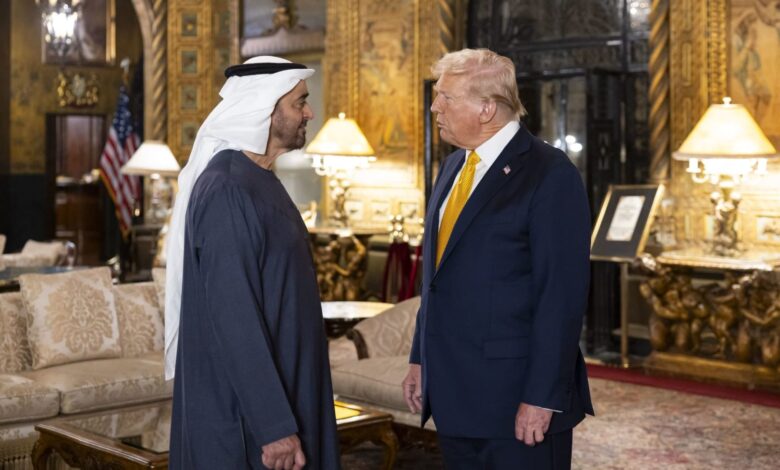
The public dispute surrounding political commentator Amjad Taha has introduced an unexpected point of friction in U.S.-UAE relations, raising broader questions about how unofficial media personalities can shape diplomatic narratives and influence strategic debates in Washington.
A Dark Box analysis of reporting published by The Washington Times suggests that the controversy extends beyond social media exchanges. Instead, it reflects growing concern among some figures within President Donald Trump’s political circle about whether individuals perceived to have close ties to the Emirati establishment are publicly undermining a major American foreign policy initiative.
A campaign directed at Trump’s Iran strategy
According to The Washington Times, Amjad Taha has used social media repeatedly to criticize President Trump’s handling of the conflict with Iran and the administration’s efforts to negotiate a diplomatic settlement.
The article describes Taha as a political strategist and journalist linked to the UAE government. It also reports that a document reviewed by the newspaper indicated that he had received more than $5 million from a UAE government court.
The newspaper further cites unnamed sources close to the White House who believe Taha’s campaign is not simply personal commentary but reflects a broader effort aligned with Emirati interests.
Those sources said that the repeated public attacks risk undermining President Trump’s diplomatic initiative at a sensitive stage of negotiations.
The article does not present independent evidence demonstrating that the UAE government directed or coordinated Taha’s public statements.
An unusual diplomatic contradiction
For Dark Box, the significance of the controversy lies less in the individual statements themselves than in the apparent contradiction highlighted by the report.
The UAE has long presented itself as one of Washington’s closest strategic partners in the Middle East.
Security cooperation, intelligence sharing, defense procurement, and regional coordination have formed the backbone of that relationship for decades.
Against that background, public criticism of the U.S. president’s flagship foreign policy initiative by a figure portrayed as closely connected to Abu Dhabi appears politically unusual.
According to the newspaper, one source close to the White House argued that if the UAE is genuinely committed to supporting American diplomatic efforts, it should distance itself from rhetoric that attacks those negotiations.
Whether this criticism reflects official Emirati policy remains unproven.
However, the controversy itself demonstrates how unofficial actors can complicate strategic relationships between allied governments.
The influence dimension
The report also illustrates the growing importance of influence operations conducted outside traditional diplomatic channels.
Rather than relying solely on embassies or official statements, governments increasingly operate within an environment where analysts, commentators, influencers, think tanks, and digital personalities shape political narratives.
If figures viewed as closely associated with a foreign government consistently intervene in sensitive American policy debates, their activities inevitably attract political scrutiny regardless of whether they formally represent that government.
For Dark Box, this reflects a broader transformation in geopolitical competition.
Narrative management has become an instrument of state influence alongside diplomacy, intelligence, economics, and military power.
Implications for U.S.-UAE relations
The controversy also highlights a potential divergence between Washington and Abu Dhabi over Iran.
Although both countries share concerns regarding Iran’s regional activities, they may not always agree on the preferred balance between military pressure and negotiated settlements.
The article suggests that criticism directed at President Trump and Vice President J.D. Vance by Taha focused specifically on diplomacy with Tehran.
If influential voices perceived to be close to regional governments openly criticize American negotiations, such interventions could complicate already delicate diplomatic efforts.
The article does not establish that these views represent official UAE policy.
Nevertheless, the perception among some individuals within Trump’s political orbit appears significant in itself.
Perceptions often influence alliances as much as formal policy.
A broader strategic question
For Dark Box, the episode raises a broader analytical question.
Modern alliances increasingly operate across multiple levels: official diplomacy, defense cooperation, media influence, lobbying networks, digital communications, and strategic messaging.
Disagreements expressed through unofficial channels can generate political consequences even when governments themselves avoid direct confrontation.
Whether the controversy surrounding Amjad Taha proves temporary or develops into a wider diplomatic issue will depend on how both Washington and Abu Dhabi manage the growing intersection between strategic communications and foreign policy.
Conclusion
The Washington Times report does not establish that the UAE government directed or coordinated the public criticism attributed to Amjad Taha.
What it does demonstrate is that individuals perceived to have close links to influential regional governments can become important actors in American foreign policy debates.
For Dark Box, the episode illustrates the increasing role of information campaigns and public messaging in shaping geopolitical competition.
As diplomacy becomes intertwined with digital influence, unofficial voices may carry strategic consequences that extend far beyond social media, particularly when they intersect with negotiations involving regional security and great-power interests.