Secret Correspondence Reveals Accelerating UAE–Israeli Military Axis Following Saudi–Turkey–Pakistan Defense Agreement
Dark Box Investigation
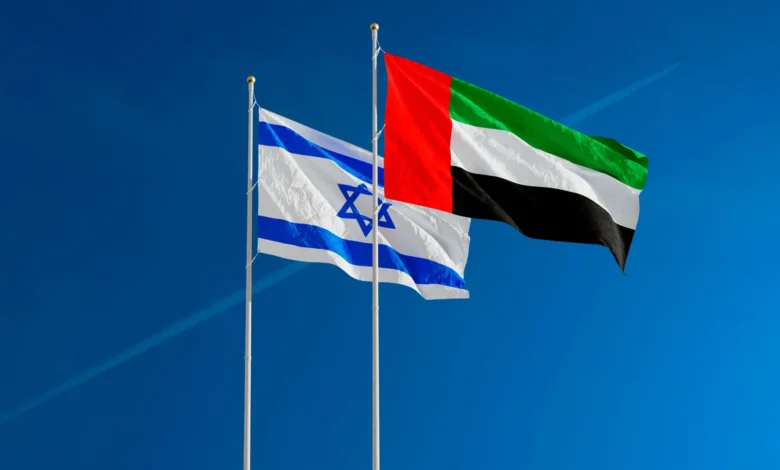
Leaked correspondence reviewed by Dark Box reveals a significant expansion in military discussions between the United Arab Emirates and Israel, exposing how advanced drones, surveillance systems, intelligence capabilities, and joint defense acquisition are becoming central to a rapidly deepening strategic relationship between Abu Dhabi and Tel Aviv.
The significance of the documents extends beyond the proposed purchase of Israeli weapons.
According to the material examined by Dark Box, Emirati interest in advanced Israeli military technology intensified against the backdrop of a changing regional security architecture, particularly following the announcement of the Saudi Arabia–Turkey–Pakistan joint military defense agreement.
Dark Box’s analysis suggests that these parallel developments point toward a broader transformation of Middle Eastern security: as Saudi Arabia, Turkey, and Pakistan deepen their defense coordination, Abu Dhabi appears increasingly interested in strengthening its military and technological relationship with Israel.
The result risks becoming more than a competition between individual states. It could contribute to the emergence of rival defense networks equipped with increasingly sophisticated drones, intelligence platforms, surveillance systems, and precision military technologies.
The Secret Drone Discussions
At the center of the leaked correspondence are discussions involving Elbit Systems, Israel’s largest defense contractor, and the proposed supply of advanced military technology to the UAE.
According to the emails reviewed by Dark Box, the proposed package included Hermes 900 unmanned aerial vehicles, SkyEye wide-area surveillance systems, ground control infrastructure, training, and logistical support.
The initial proposal was valued at approximately $154 million.
Additional capabilities and upgrades discussed in the correspondence could have increased the overall value to approximately $225 million.
The emails reviewed by Dark Box do not establish that the Hermes 900 aircraft were ultimately delivered. That distinction is important.
What the correspondence does establish, according to the material provided for this investigation, is the sophistication and scope of the capabilities under discussion between the Israeli defense company and the UAE.
The negotiations were not simply about purchasing aircraft.
They concerned the construction of a broader intelligence, surveillance, and reconnaissance capability.
Surveillance Beyond UAE Borders
The Hermes 900 is an advanced Israeli unmanned aircraft designed for intelligence, surveillance, reconnaissance, and other military missions.
Combined with the SkyEye system discussed in the correspondence, its significance becomes considerably greater.
SkyEye uses electro-optical sensors to continuously record large geographical areas at high resolution. Operators can subsequently analyze recorded movements from different perspectives, potentially allowing them to track an object or vehicle backward through time and determine where it originated.
According to the leaked material, Israeli officials were discussing an operational solution specifically intended to maintain surveillance beyond the UAE’s borders and identify missile and drone launch locations.
This represents one of the most consequential aspects of the correspondence.
The capabilities being discussed would not merely intercept threats after they entered Emirati airspace. They were intended to improve Abu Dhabi’s ability to identify and monitor threats at their point of origin.
That distinction transforms the proposed acquisition from conventional territorial defense into a potentially wider regional intelligence capability.
From the Hermes 900 to a Wider Israeli Arsenal
The correspondence indicates that the Hermes 900 was not the only Israeli system under consideration.
The documents also contain references to the SkyStriker loitering munition and another Israeli unmanned platform, the Hermes 650.
Taken together, these references suggest discussions extending across several categories of unmanned military technology.
For Dark Box, the importance lies in the pattern.
The UAE–Israel relationship that emerged publicly through normalization is increasingly reflected in discussions involving advanced surveillance, unmanned aviation, intelligence gathering, and potentially offensive capabilities.
The Abraham Accords therefore represent only the diplomatic framework within which a much deeper security relationship has been developing.
The Saudi–Turkey–Pakistan Equation
The broader geopolitical context gives the correspondence additional significance.
According to the information supplied to Dark Box, Emirati interest in expanding its Israeli military capabilities intensified following the Saudi Arabia–Turkey–Pakistan joint defense agreement.
Dark Box treats the connection as part of the report’s geopolitical analysis: the correspondence demonstrates UAE–Israel military discussions, while the claim that the trilateral agreement accelerated Abu Dhabi’s approach reflects the interpretation of those developments presented in the supplied material.
Nevertheless, the strategic implications are substantial.
Saudi Arabia possesses enormous financial resources and remains one of the Middle East’s largest military powers.
Turkey possesses one of the region’s most developed domestic defense industries, including rapidly expanding drone, missile, aerospace, and electronic warfare capabilities.
Pakistan adds another dimension as a major military power and a nuclear-armed state.
Deeper defense coordination between these three countries therefore creates a significant new factor in regional calculations.
Against this background, the UAE’s deepening military and technological relationship with Israel can be interpreted as an effort to maintain strategic relevance and technological superiority within an increasingly competitive regional environment.
Abu Dhabi Turns Toward Israeli Technology
The emerging picture is therefore not simply one of procurement.
It is one of strategic positioning.
The UAE has spent years investing heavily in advanced military capabilities while attempting to transform itself into an increasingly influential security actor despite its relatively small population.
Israel offers something particularly valuable within that strategy: access to sophisticated surveillance, intelligence, drone, missile-defense, and electronic warfare technologies.
For Israel, meanwhile, the UAE represents a wealthy regional partner capable of becoming a major market for Israeli defense companies.
The relationship therefore serves both sides.
Israel expands its military-industrial footprint within the Arab world, while Abu Dhabi gains access to technologies capable of extending its intelligence and surveillance reach beyond its own territory.
From Arms Sales to Joint Acquisition
The material examined by Dark Box points to an even deeper dimension of this relationship: information concerning a joint UAE–Israeli defense mechanism for acquiring new weapons systems.
If developed as described, such an arrangement would represent an important evolution.
Traditional weapons transactions are fundamentally commercial. One country purchases a platform manufactured by another.
Joint acquisition creates a different relationship.
It potentially requires shared assessments of military requirements, coordination over technology, procurement priorities, financing, and long-term capability development.
In other words, the relationship moves from purchasing Israeli weapons toward building defense capabilities together.
For Dark Box, this distinction is central to understanding the emerging UAE–Israel military relationship.
Normalization may have opened the political door, but institutionalized defense cooperation could transform that opening into a durable strategic architecture.
A Parallel Military Axis?
The developments raise a larger question about the future configuration of Middle Eastern alliances.
As Saudi Arabia, Turkey, and Pakistan strengthen their defense relationship, the UAE’s accelerating military cooperation with Israel could contribute to the formation of a parallel technological and security alignment.
This does not mean that the two emerging arrangements are necessarily preparing for confrontation with each other.
The supplied material does not establish such a conclusion.
But security competition does not require direct hostility.
When one group of states expands its military coordination, neighboring powers frequently reassess their own capabilities and partnerships.
Those reactions can produce a classic security dilemma: one side describes its buildup as defensive, while another interprets the same buildup as a potential threat and responds with additional military investment.
The cycle then reinforces itself.
The Risk of an Advanced Arms Race
This is where the UAE–Israel rapprochement becomes a regional issue rather than a bilateral one.
The Middle East has long been one of the world’s largest markets for military equipment. But the next phase of competition may differ significantly from traditional arms races built primarily around fighter aircraft, tanks, and conventional missiles.
The capabilities described in the leaked correspondence point toward a more technologically sophisticated competition.
Persistent aerial surveillance, long-endurance drones, electronic intelligence, wide-area sensors, precision weapons, automated target detection, and cross-border reconnaissance could increasingly define regional military power.
The ability to see an adversary before being seen, identify a missile launch before the projectile reaches its target, and maintain continuous surveillance across borders can fundamentally alter military calculations.
If multiple regional powers respond by acquiring comparable systems, the consequence could be an accelerated technological arms race.
Normalization Becomes Militarization
The broader political significance concerns the transformation of the UAE–Israel relationship itself.
The Abraham Accords were publicly associated with diplomatic normalization, economic integration, tourism, investment, and technological cooperation.
The correspondence examined by Dark Box illustrates another trajectory.
Normalization has provided an environment in which defense contractors, military institutions, and security officials can explore increasingly advanced forms of cooperation.
The relationship is therefore moving from diplomatic recognition toward military interoperability and technological integration.
That transition carries consequences extending far beyond Abu Dhabi and Tel Aviv.
It affects how other regional powers evaluate their own security requirements, alliances, and procurement strategies.
A Changing Balance of Power
Dark Box concludes that the most important revelation is not whether one particular Hermes 900 contract was completed.
The deeper story is the architecture forming around it.
The leaked correspondence describes discussions over advanced Israeli drones and surveillance capabilities designed to extend the UAE’s ability to monitor threats beyond its borders. References to additional unmanned systems indicate a potentially wider defense relationship, while information concerning joint defense acquisition suggests movement toward more institutionalized cooperation.
Placed alongside the Saudi Arabia–Turkey–Pakistan defense agreement, the developments described in the report illustrate an increasingly competitive regional security landscape.
One alignment brings together Saudi strategic weight, Turkish military-industrial capabilities, and Pakistani military power.
Alongside it, Abu Dhabi is deepening a relationship with one of the world’s most technologically advanced defense industries in Israel.
The danger is that each new security arrangement becomes the justification for another.
For Dark Box, the central question is therefore no longer simply why the UAE wants Israeli drones.
It is whether the Saudi–Turkey–Pakistan defense alignment is accelerating Abu Dhabi’s strategic turn toward Israel and whether this emerging UAE–Israeli military axis is becoming part of a broader restructuring of power across the Middle East.
If that trajectory continues, the region could enter a new era in which alliances are measured not only through diplomatic agreements but through integrated surveillance networks, unmanned weapons, intelligence cooperation, and shared defense acquisition.
What began as normalization could consequently evolve into something far more consequential: a deeply institutionalized UAE–Israel military partnership operating within an increasingly divided and heavily armed regional order.