Somaliland Becomes the New Frontline of the UAE–Israel Strategic Alliance in the Red Sea
Dark Box Investigation
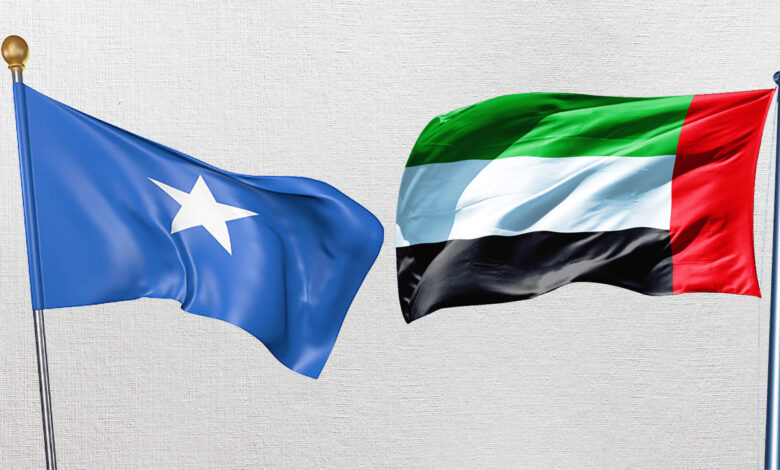
The strategic partnership between the United Arab Emirates and Israel appears to be entering a new phase centered on the Horn of Africa, where military infrastructure, intelligence cooperation, and geopolitical competition are increasingly converging around Somaliland.
A Dark Box review of an investigative report, supported by satellite imagery analysis, security sources, military assessments, and open-source defense research, suggests that Berbera is evolving from a commercial logistics hub into an emerging strategic military platform overlooking one of the world’s most sensitive maritime corridors.
Located only a short distance from the Bab al-Mandab Strait and Yemen’s western coastline, Berbera offers unparalleled strategic value for any state seeking to monitor maritime traffic, project military power into the Red Sea, or support operations in Yemen.
According to the investigation, military construction at Berbera Airport has accelerated significantly since October 2025.
Satellite imagery reportedly examined during the investigation shows extensive excavation south of the runway, revealing at least three separate construction zones where eighteen large underground pits were dug before containers were placed inside and covered.
European security officials cited in the investigation reportedly assessed that the buried structures are consistent with underground ammunition depots or protected fuel-storage facilities.
If accurate, these developments would represent a substantial expansion of Berbera’s military infrastructure beyond its previously known capabilities.
The UAE as the project’s principal architect
According to the investigation, military experts believe the construction is being carried out by the United Arab Emirates under the defense agreement signed with Somaliland in 2017.
That agreement granted Abu Dhabi military access to Berbera Airport while simultaneously enabling major Emirati investment in surrounding infrastructure.
A Berbera Airport employee interviewed in the investigation reportedly stated that the UAE was implementing the project on behalf of its Israeli and American partners.
Although this claim has not been independently verified, it reflects the perception among sources cited in the report that Abu Dhabi has become the principal logistical and engineering actor behind the military expansion.
Rather than serving solely as a commercial investor, the UAE increasingly appears to function as the operational facilitator linking Western security interests with local infrastructure.
Israeli military and intelligence presence
The investigation further reports that Israeli military personnel have already begun visiting the facility.
According to an East African security source cited in the report, Israeli military teams have conducted visits to Berbera and the base could eventually serve as a launching point for operations directed toward Yemen.
The investigation also reports that intelligence personnel from Somaliland received training in Tel Aviv, while Israeli military delegations have made repeated visits to both Hargeisa and Berbera.
Several of those delegations reportedly met senior Somaliland military officials, including the Chief of Staff.
Meanwhile, access to Berbera Airport has changed dramatically.
The road leading to the airport is reportedly closed, and what was previously considered a civilian airport has become increasingly inaccessible to the public.
These developments suggest an accelerating process of militarization extending well beyond ordinary airport modernization.
American strategic calculations
The report also links the military expansion to evolving American strategic priorities.
According to the investigation, senior officials from United States Africa Command (AFRICOM) have made repeated visits to Berbera.
General Dagvin Anderson reportedly visited the airport on December 1, 2025.
The investigation argues that Washington is increasingly interested in Berbera because of changing conditions in Djibouti.
The United States has long operated its principal African military base there.
However, China’s military presence in Djibouti and the host government’s reported reluctance to permit operations against Yemen have encouraged Washington to examine alternative locations.
According to the report, Somaliland may be prepared to provide such facilities in exchange for greater diplomatic recognition.
If that assessment proves accurate, Berbera could become a cornerstone of future American military planning in the Red Sea.
Air defense and regional integration
The investigation also highlights findings published by the International Institute for Strategic Studies indicating that elevated platforms constructed since October 2025 appear suitable for future deployment of air-defense systems.
The report compares the developing infrastructure with facilities at Bosaso Airport in Puntland, where Israeli-made ELM-2084 radar systems were reportedly deployed by the UAE during 2025.
The comparison does not establish that identical systems have already been installed at Berbera.
Instead, it suggests similarities in infrastructure that may indicate preparation for comparable capabilities.
Such developments would significantly enhance surveillance coverage across the Gulf of Aden, the Bab al-Mandab Strait, and portions of Yemen.
Beyond commercial ports
Berbera’s strategic importance did not begin with the latest expansion.
Its runway, exceeding four kilometers in length, ranks among the longest in Africa.
Originally constructed by the Soviet Union during the 1970s, the airport underwent major modernization after the UAE entered Somaliland under the 2017 defense agreement.
Military hangars were constructed, while adjacent port facilities were expanded to accommodate naval vessels.
The current construction therefore represents an expansion of an existing military platform rather than the creation of a new installation.
This gradual evolution illustrates how commercial investments can progressively acquire strategic military significance over time.
Recognition and strategy
The investigation concludes that Israel’s recognition of Somaliland should not be viewed solely as a diplomatic gesture.
Instead, the report argues that it reflects a broader strategic effort to secure a long-term foothold overlooking Bab al-Mandab, one of the world’s most critical maritime chokepoints.
From that perspective, the convergence of Emirati infrastructure investment, Israeli security cooperation, and growing American military interest transforms Somaliland into a central node within an emerging regional security architecture.
A changing Red Sea security landscape
For Dark Box, the developments outlined in the investigation illustrate how competition in the Red Sea has entered a new phase.
Military influence is increasingly being built through long-term infrastructure projects, logistics networks, intelligence partnerships, and strategically positioned ports rather than through traditional overseas bases alone.
Whether Berbera ultimately becomes a permanent multinational security platform remains uncertain.
However, the reported combination of underground military construction, expanding security cooperation, repeated foreign military visits, and growing geopolitical interest suggests that Somaliland is rapidly becoming one of the most strategically significant locations in the Horn of Africa.
As competition intensifies around the Red Sea and Bab al-Mandab, the UAE’s expanding role in connecting commercial infrastructure with regional security initiatives is likely to remain a defining element of the evolving geopolitical landscape.