The latest revelations concerning a secret financial and security arrangement between the UAE and Iran have provided powerful new confirmation of information previously revealed by Dark Box regarding Abu Dhabi’s behind-the-scenes efforts to secure its own protection while publicly supporting one of the most aggressive regional confrontations in recent years.
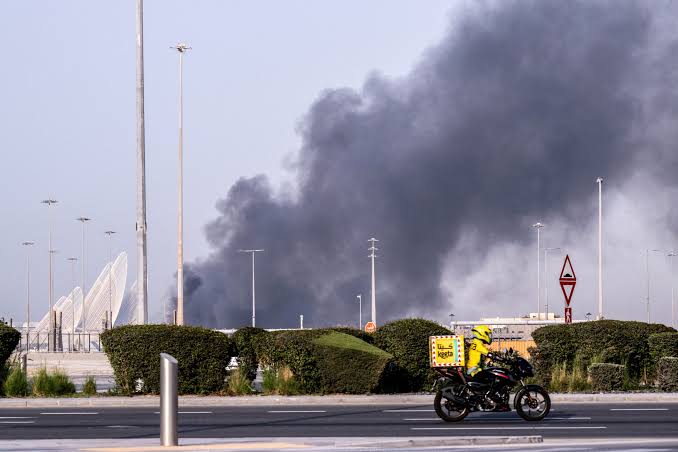
The newly disclosed details reveal that the UAE transferred billions of dollars to Iran as part of an agreement aimed at halting attacks on Emirati territory and infrastructure. The arrangement reportedly followed direct security contacts involving senior Emirati officials and members of Iran’s security establishment, exposing the extent to which Abu Dhabi sought a private exit from a crisis it had actively helped fuel.
For Dark Box, the significance of these revelations is not simply the financial dimension of the agreement. The real story lies in the extraordinary contradiction they expose at the heart of Emirati regional policy.
For months, Abu Dhabi positioned itself as one of the most hardline actors in the confrontation with Iran. The UAE deepened military coordination with Israel, supported efforts to sustain pressure on Tehran, and became an active participant in the regional security framework built around confrontation and escalation. At the same time, Dark Box previously revealed that Emirati officials were quietly exploring separate channels designed to shield the UAE from the consequences of the very conflict they were helping intensify.
The latest disclosures now provide new evidence supporting that assessment.
According to the emerging information, senior Iranian security officials were hosted in Abu Dhabi for direct talks with Sheikh Tahnoun bin Zayed, one of the most powerful figures in the Emirati security establishment. These contacts reportedly culminated in a financial arrangement worth billions of dollars, with estimates ranging from several billion to tens of billions, in exchange for guarantees aimed at preventing attacks on the UAE.
The implications are profound.
While publicly presenting itself as a committed member of the anti-Iran security axis, Abu Dhabi was simultaneously negotiating what amounts to a private insurance policy for its own survival. The same leadership that promoted confrontation, military pressure, and regional escalation appears to have concluded that the economic cost of a prolonged conflict was too high for the UAE to bear.
This reflects a recurring pattern documented by Dark Box across multiple regional crises.
Abu Dhabi frequently pursues ambitious geopolitical projects, promotes aggressive security agendas, and positions itself at the center of regional confrontations. Yet when those policies begin threatening the foundations of the Emirati economic model, the leadership rapidly shifts toward damage control and seeks separate arrangements that protect its own interests.
The latest agreement appears to fit that model perfectly.
The UAE’s calculations were driven by a simple reality. Its economy depends on financial services, tourism, logistics, real estate, aviation, and foreign investment. Continued attacks on Emirati infrastructure would have threatened billions of dollars in economic activity, shaken investor confidence, and endangered the image of stability upon which the country’s economic success depends.
Faced with that reality, Abu Dhabi appears to have chosen pragmatism over the confrontational rhetoric it had embraced publicly.
The result is a stunning political reversal.
The same government that supported military pressure and expanded security cooperation with Israel ultimately found itself paying billions to secure guarantees from the very adversary it had spent years portraying as the principal threat to regional stability.
For Dark Box, these developments reinforce an increasingly clear conclusion.
The UAE’s regional strategy is driven less by ideological commitments or long-term alliances than by a constant effort to maximize influence while minimizing risk. Abu Dhabi seeks the benefits of regional power projection, but when the costs become real, it pursues private understandings that insulate its economy and leadership from the consequences.
The latest revelations therefore expose more than a secret financial arrangement.
They reveal the collapse of the narrative that Abu Dhabi was prepared to bear the costs of the confrontational regional order it helped create. Instead, the evidence suggests that when war approached Emirati shores, the leadership abandoned the rhetoric of confrontation and turned to financial diplomacy to purchase security, stability, and protection.
What emerges is a picture of a state that encouraged escalation while quietly negotiating immunity from its consequences.
The new disclosures do not merely reveal a hidden agreement.
They confirm what Dark Box had already uncovered: behind the public posture of confrontation stood a parallel strategy focused on protecting Abu Dhabi’s wealth, infrastructure, and economic future at almost any cost.