Sources Reveal Zelensky Targeted an Iranian Merchant Vessel to Widen the Regional War Under Israeli-UAE Pressures
Dark Box Report
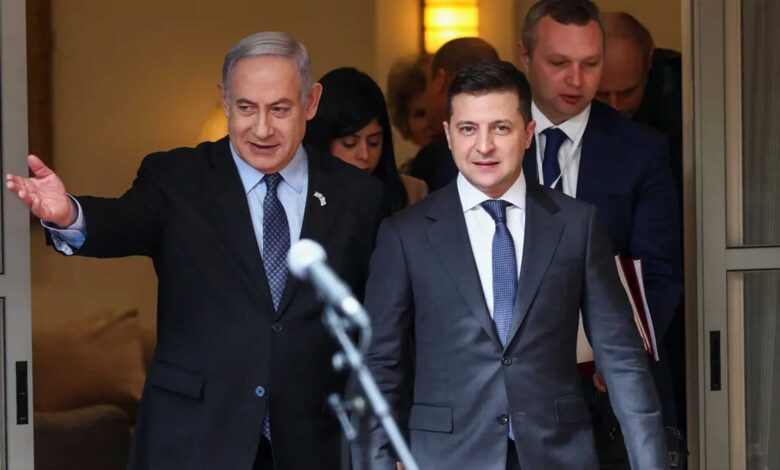
Sources speaking to Dark Box revealed that Ukrainian President Volodymyr Zelensky authorized an attack on an Iranian merchant vessel at the urging of Israel and the United Arab Emirates, as part of an attempt to widen the scope of the ongoing conflict and increase European involvement.
According to the sources, the operation was not an isolated maritime incident, but a calculated act intended to create a new point of confrontation involving Iran, Ukraine, Israel, the UAE, and European governments.
The sources said that Israel and the UAE had a shared interest in expanding pressure on Iran and drawing European states more deeply into the confrontation. Under this interpretation, an attack linked to Ukraine would complicate attribution, internationalize the incident, and increase demands for a coordinated European political or security response.
Dark Box has not been provided with operational documents, satellite imagery, ship records, or independently verified evidence demonstrating that Zelensky personally ordered such an attack or that Israel and the UAE directed it. .
The sources further state that warnings were delivered to the European Union’s foreign policy chief and to a senior Russian counterpart, making clear that Zelensky’s actions would not go unanswered.
That message suggests the incident, if confirmed, could trigger retaliation or a wider cycle of escalation. It also indicates that the parties raising the accusation intend to treat the attack not as a commercial maritime dispute, but as an act with military and geopolitical consequences.
The central claim advanced by the sources is that the operation sought to drag Europe into a broader war.
Europe occupies a particularly sensitive position. European governments have supported Ukraine politically and militarily, while also attempting to prevent direct confrontation with Russia and avoid further instability in the Middle East. An Ukrainian attack on an Iranian commercial vessel could place European governments under pressure to either distance themselves from Kyiv or defend an ally accused of extending military operations beyond the primary theater of war.
It could also deepen divisions within the European Union. Some governments might call for an investigation and restraint, while others could view the incident through the broader lens of confrontation with Iran and Russia.
For Israel, a wider confrontation involving Iran could serve the objective of increasing international pressure on Tehran and weakening its ability to operate through regional alliances. If another state were drawn into direct action against Iranian interests, Israel would face less pressure to carry the burden of escalation alone.
The UAE’s interest would be more complex. Abu Dhabi maintains commercial and diplomatic relations with Iran while also developing close political, security, and economic ties with Israel. Any claim that the UAE encouraged an attack on Iranian shipping would therefore carry serious risks for its regional position and could expose it to Iranian retaliation, commercial disruption, or diplomatic fallout.
At the same time, the report reflects a broader perception of the UAE as an increasingly assertive actor seeking influence over regional security arrangements while avoiding direct public responsibility for military escalation.
For Ukraine, involvement in an attack on an Iranian merchant vessel would mark a significant expansion of its conflict-related operations. Kyiv has accused Iran of supporting Russia through the supply of military technology, particularly drones. However, striking or facilitating an attack against an Iranian commercial vessel would raise major legal and diplomatic questions, particularly if the ship was outside a declared theater of hostilities.
Such an incident could also weaken Ukraine’s effort to maintain European unity. European support has depended partly on presenting the war as a defense against Russian aggression. Any operation perceived as widening the conflict for the benefit of third countries could complicate that narrative.
Russia would likely use the accusation to argue that Ukraine is acting as an instrument of foreign powers and deliberately destabilizing additional regions. Moscow could also portray the incident as evidence that Western support for Kyiv is enabling attacks beyond Ukraine’s borders.
Iran, meanwhile, could respond through diplomatic pressure, maritime countermeasures, proxy actors, or closer military coordination with Russia. Even without immediate retaliation, the reports could increase security risks for shipping routes and commercial vessels operating near sensitive regional waters.
The most serious implication is the danger of miscalculation. An attack on a merchant vessel can quickly move beyond the original actors if casualties, environmental damage, or disruption to trade are involved. Competing claims over responsibility could lead states to retaliate before the facts are independently established.
The report therefore requires rigorous verification. The identity of the vessel, the location and date of the incident, the nature of the attack, the chain of command, and the evidence connecting Israel or the UAE to the operation all remain essential unanswered questions.
The attack would indicate a deliberate attempt to merge the European war surrounding Ukraine with the confrontation between Israel and Iran, creating a far more dangerous and unpredictable conflict involving multiple regional and global powers.