Abu Dhabi’s Double Game—Targeting Saudi Arabia and Qatar While Rebuilding Ties with Iran
Dark Box Investigation
The United Arab Emirates has pursued a sharply contradictory regional strategy, publicly allowing pro-Emirati media networks to attack Saudi Arabia and Qatar over their engagement with Iran while quietly rebuilding its own commercial and diplomatic relations with Tehran, according to confidential sources who spoke to Dark Box.
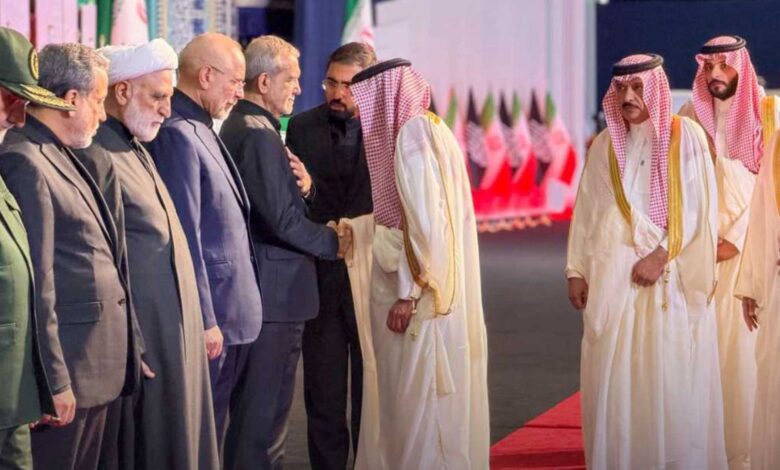
The sources said a large-scale campaign emerged across X, formerly Twitter, and other pro-Emirati media platforms after Saudi and Qatari officials offered condolences following the death of Iran’s leader and maintained diplomatic contacts with Tehran.
According to the sources, accounts aligned with Emirati political messaging portrayed the Saudi and Qatari positions as evidence of weakness, political inconsistency, or excessive accommodation of Iran. The campaign reportedly sought to cast suspicion on Riyadh and Doha’s diplomatic engagement, presenting condolence delegations and official contacts as signs that both governments were moving closer to Tehran.
Dark Box has not independently established that the campaign was formally directed by the Emirati government. However, the sources described a coordinated pattern of messaging among commentators and social-media accounts known for defending Abu Dhabi’s regional policies.
The campaign, they said, was notable not only for its aggressive language but also for its timing. It appeared as the UAE itself was reportedly restoring trade links with Iran and attempting to preserve its position as a central commercial hub between Tehran and global markets.
That contrast lies at the heart of Abu Dhabi’s regional approach.
While pro-Emirati voices publicly criticized neighboring Gulf states for maintaining diplomatic channels with Iran, the UAE was pursuing a far more consequential form of engagement: rebuilding trade routes, restoring direct flights, reviving financial activity, and protecting long-standing economic networks linking Dubai to Iranian coastal cities.
A report attributed to the Financial Times, titled “The UAE’s Bold Maneuver with Iran,” described a gradual revival of commercial activity between the two countries. Traditional dhow traffic reportedly resumed between Dubai’s ports and Iranian cities, while direct commercial flights returned and financial institutions in Dubai restored operations following months of heightened security tensions.
According to the report, Abu Dhabi’s strategy is based on the calculation that maintaining economic ties with Tehran gives Iran a direct interest in protecting regional trade routes and avoiding actions that could threaten Emirati commercial stability.
At the same time, the UAE has continued strengthening its defense systems in coordination with the United States and Israel.
This dual-track policy allows Abu Dhabi to preserve security partnerships with Washington and Tel Aviv while maintaining profitable economic relations with Tehran. It also enables the UAE to portray itself to Western allies as a security partner and to Iran as an indispensable commercial gateway.
The sources who spoke to Dark Box said that the social-media campaign against Saudi Arabia and Qatar exposes a deeper contradiction in Emirati regional behavior.
According to their assessment, Abu Dhabi sought to stigmatize its neighbors for engaging in diplomacy with Iran while presenting its own economic re-engagement as strategic pragmatism.
This distinction, the sources said, reflects an attempt to control the political narrative inside the Gulf. Saudi and Qatari contacts with Iran were portrayed as questionable concessions, while Emirati trade with Tehran was framed as a sophisticated policy intended to protect markets, shipping routes, and regional stability.
The reported strategy also raises questions about cohesion within the Gulf Cooperation Council.
Rather than coordinating a unified approach toward Iran, individual Gulf states appear to be pursuing separate policies shaped by their own security, economic, and political priorities. Saudi Arabia and Qatar have relied on official diplomacy and direct communication, while the UAE has combined economic engagement with military deterrence and close coordination with Israel and the United States.
The danger, analysts say, is that media campaigns targeting neighboring Gulf governments can deepen mistrust at precisely the moment when regional coordination is most necessary.
The UAE’s importance to regional trade is undeniable. Jebel Ali Port serves as a major hub connecting Gulf markets with East Africa and international supply chains. Any disruption to Emirati trade would therefore carry consequences far beyond the UAE itself.
This commercial exposure helps explain Abu Dhabi’s effort to reassure Tehran that Emirati territory will not be used to launch military operations against Iran, despite its continuing defense cooperation with Washington and Tel Aviv.
The policy is not simply one of alignment or confrontation. It is a calculated effort to extract benefits from opposing relationships simultaneously.
Abu Dhabi seeks the protection, intelligence, and military capabilities offered by the United States and Israel while preserving the trade, financial flows, and geographic access generated by relations with Iran.
According to Dark Box sources, the controversy is not that the UAE maintains contacts with Tehran. Gulf states have legitimate interests in avoiding war and protecting trade.
The central issue is the apparent attempt to attack Saudi Arabia and Qatar for diplomatic behavior while Abu Dhabi itself pursues deeper and more profitable engagement with Iran.
The result is a regional policy defined by selective outrage: confrontation in public messaging, accommodation in commerce, and deterrence in security affairs
Nevertheless, the contrast between the reported media narrative and the UAE’s economic policy toward Iran reveals a widening gap between Abu Dhabi’s public positioning and its strategic behavior.
That gap may protect Emirati interests in the short term. But it risks weakening trust among Gulf states, undermining collective diplomacy, and turning regional cooperation into another arena for political competition.