Diverging Paths in the Gulf: Escalation Signals from Abu Dhabi Amid Parallel Ceasefire Efforts
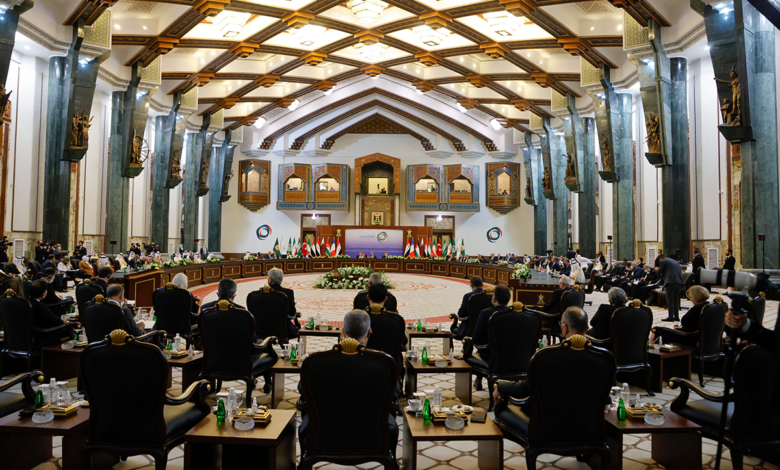
The evolving confrontation in the Gulf is no longer defined solely by military exchanges, but increasingly by competing strategic visions among regional actors. Recent political statements and diplomatic movements reveal a growing divergence between approaches that prioritise de-escalation and those that frame the conflict as an opportunity to reshape the regional balance of power.
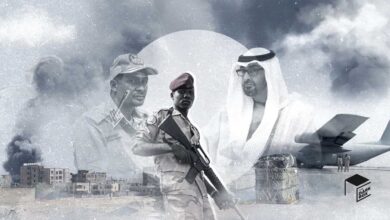
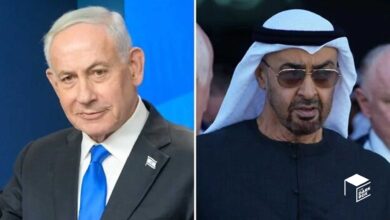
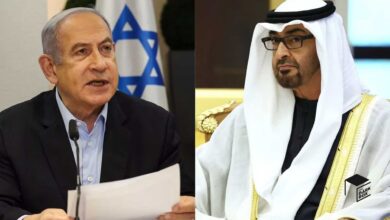
At the centre of this divergence are two parallel tracks. On one side, Saudi Arabia and Qatar, supported by Turkish and Egyptian mediation channels, are actively exploring pathways toward a ceasefire framework. On the other, official messaging from the United Arab Emirates reflects a position that places emphasis on addressing what it describes as the broader structural drivers of the conflict before any cessation of hostilities.
Public statements by senior Emirati officials provide important insight into this posture. Anwar Gargash, advisor to the UAE president, has openly questioned the absence of unified Arab and Islamic institutional responses, calling attention to what he frames as insufficient regional mobilisation. In parallel, he has argued that any resolution should not be limited to a temporary ceasefire, but should instead address issues such as missile capabilities, drone warfare, and maritime security in strategic waterways.
This framing is significant because it shifts the focus from immediate de-escalation toward long term strategic containment. In practical terms, such a position introduces additional conditions that may complicate or delay ceasefire efforts, particularly when other actors are prioritising the urgent need to halt military exchanges.
In contrast, Saudi and Qatari engagement appears to be guided by a different set of priorities. Both countries have strong incentives to stabilise the regional environment, given their exposure to economic disruption, energy market volatility, and security risks linked to escalation. Their coordination with Türkiye and Egypt reflects an attempt to build a broader mediation framework capable of engaging multiple parties simultaneously.
The involvement of Türkiye and Egypt is particularly noteworthy. Both states maintain complex relationships across regional fault lines and have experience in mediating high tension environments. Their participation suggests that the ceasefire track is not limited to bilateral diplomacy, but is part of a wider effort to create a structured negotiation channel.
The divergence between these approaches is further highlighted by external reactions. Statements from political figures in Washington praising the UAE’s position indicate that Abu Dhabi’s stance is being interpreted, at least by some, as aligned with a more assertive strategy toward Iran. This alignment adds another layer to the regional dynamic, linking Gulf positions to broader international strategic debates.
From an analytical perspective, the key issue is not simply whether one approach is more effective than the other, but how these competing strategies interact. When one track emphasises immediate de-escalation and another emphasises conditional resolution, the result can be a delay in convergence. This does not necessarily imply deliberate obstruction, but it does create friction within the diplomatic process.
Such friction has operational consequences. In high intensity environments, timing is critical. Delays in reaching ceasefire agreements increase the risk of further escalation, expand the geographic scope of the conflict, and complicate the security calculations of all actors involved. Each additional day of uncertainty introduces new variables, including the possibility of miscalculation or unintended engagement.
The broader strategic implication is that the Gulf is witnessing a fragmentation of consensus. Unlike previous crises where regional alignment was more clearly defined, the current environment reflects a multiplicity of positions shaped by national interests, threat perceptions, and long term strategic goals.
For the UAE, the emphasis on addressing structural threats suggests a desire to influence the outcome of the conflict beyond its immediate cessation. For Saudi Arabia and Qatar, the priority appears to be risk containment and stability. These are not mutually exclusive objectives, but their sequencing matters. Whether de-escalation precedes structural negotiation, or vice versa, will shape the trajectory of the conflict.
Ultimately, the success of any diplomatic effort will depend on bridging this gap. A ceasefire that fails to address underlying tensions may prove temporary, while a strategy that delays de-escalation risks prolonging instability. The challenge for mediators is to align short term and long term objectives within a coherent framework.
What is clear is that the Gulf is no longer operating within a unified strategic lens. The coexistence of parallel approaches reflects a region in transition, where traditional alignments are being re-evaluated and new patterns of engagement are emerging.
In this context, the path to de-escalation is not blocked, but it is increasingly complex. The outcome will depend not only on the willingness of external actors to negotiate, but on the ability of regional powers to reconcile their own divergent visions of security and stability.