From Riyadh to Tel Aviv: How Mohammed bin Zayed’s Policies Are Fueling Internal Tensions Inside the UAE
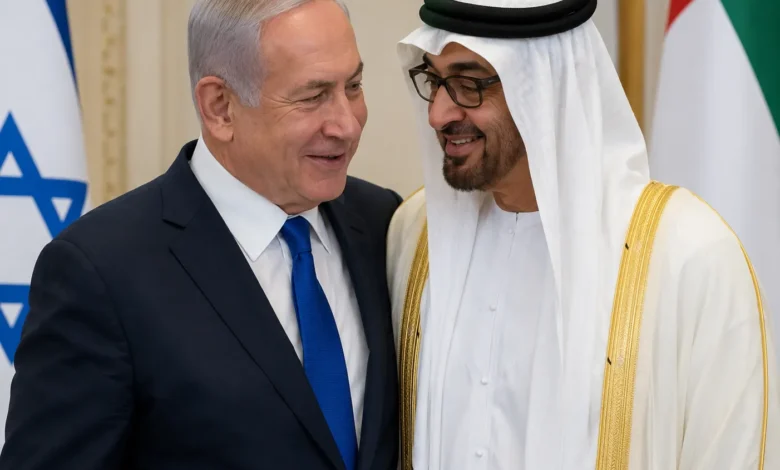
The controversy surrounding Benjamin Netanyahu’s alleged secret visit to Abu Dhabi has evolved into a major political issue extending far beyond the question of normalization with Israel. What initially appeared to be another discreet diplomatic meeting has increasingly become a symbol of deeper fractures developing inside the United Arab Emirates itself, particularly amid growing tensions between Abu Dhabi’s regional agenda and concerns emerging from other power centers within the federation.
The political sensitivity of the issue intensified after reports circulated regarding Netanyahu’s reported March visit to the UAE during the height of the regional war involving Iran, Israel, and the United States. Israeli political circles reportedly described the visit as a major strategic breakthrough and portrayed the relationship between the Emirati and Israeli leaderships as exceptionally close during wartime conditions.
At the same time, Abu Dhabi largely maintained public silence surrounding the controversy, fueling speculation across the region regarding both the nature of the visit and the political sensitivities surrounding it.
The situation escalated further after the hacker group Handala claimed to have breached communications linked to individuals allegedly involved in organizing the visit and broader normalization-related networks connecting Israeli and Emirati political, security, and economic actors. Although many of the claims remain independently unverified, the political fallout from the disclosures has already become significant.
The importance of the controversy lies not only in the allegations themselves, but in what they reveal about the changing political dynamics inside the UAE and the broader Gulf region. Over recent years, Mohammed bin Zayed pursued an increasingly assertive regional strategy centered on military influence, geopolitical expansion, close security coordination with Israel, and aggressive positioning across multiple regional theaters including Yemen, Sudan, the Red Sea, and the Horn of Africa.
Critics inside and outside the Gulf increasingly argue that these policies have dramatically altered the traditional identity of the UAE. Historically, Dubai in particular built its global reputation around commercial openness, economic pragmatism, regional balance, and the image of the Emirates as a neutral financial and trade hub insulated from regional conflicts.
However, the accelerating strategic alignment between Abu Dhabi and Israel during periods of intense regional instability increasingly appears to challenge that model directly.
Regional observers and political analysts have increasingly discussed signs of internal unease regarding the long-term consequences of Mohammed bin Zayed’s policies, particularly inside Dubai’s political and economic circles. These concerns reportedly intensified following the deterioration of relations between the UAE and Saudi Arabia across multiple strategic files.
The widening rift with Riyadh became one of the most destabilizing developments inside Gulf politics in recent years. Disagreements emerged over OPEC policy, regional influence competition, approaches toward Iran, the war in Yemen, Red Sea security, and broader geopolitical strategy. Saudi Arabia increasingly adopted a more cautious regional posture focused on preserving stability, protecting economic transformation projects, and avoiding uncontrolled escalation.
The UAE, by contrast, increasingly appeared aligned with a more confrontational regional doctrine built around strategic partnerships with Israel and expanding military-security influence networks.
For many observers inside the Gulf, the Netanyahu controversy became politically explosive precisely because it appeared to confirm fears that Abu Dhabi was moving too far away from traditional Gulf strategic balancing and too deeply into direct alignment with Israeli regional objectives.
The timing of the alleged visit further intensified these concerns. The meeting reportedly occurred during one of the region’s most dangerous moments of military escalation involving Iran. At the same time, reports circulated regarding expanding Emirati-Israeli wartime coordination, missile defense cooperation, intelligence sharing, and broader regional security integration.
Critics argue that such policies expose the UAE and the wider Gulf to enormous geopolitical risks. During the Iran conflict, the Emirates faced serious economic and security consequences including aviation disruptions, threats to maritime routes, market instability, investor anxiety, and fears surrounding broader regional escalation.
For Dubai especially, these developments reportedly generated increasing concern. Dubai’s economic model depends heavily on international confidence, tourism, global investment flows, aviation connectivity, and the perception of political neutrality and regional stability. The transformation of the UAE into a visible participant within regional military alignments threatens that image directly.
The Netanyahu controversy therefore increasingly became intertwined with broader debates regarding the future direction of the UAE itself. Analysts increasingly describe emerging tensions between Abu Dhabi’s geopolitical ambitions and Dubai’s traditional economic priorities.
This divergence is particularly sensitive because the UAE’s federal system historically relied on an informal balance between Abu Dhabi’s political and security leadership and Dubai’s economic and commercial management. Critics argue that Mohammed bin Zayed’s increasingly centralized and militarized regional strategy is gradually disrupting that balance.
The growing alignment with Israel appears to have intensified these internal sensitivities further. Across the Arab world, the Gaza war and wider regional escalation generated enormous public anger. In this environment, reports of exceptionally close wartime coordination between Abu Dhabi and Tel Aviv became politically damaging for the UAE’s regional image.
The controversy surrounding the alleged Netanyahu visit symbolized this transformation vividly. What once would have remained unimaginable inside Gulf politics increasingly appeared normalized behind closed doors, even as regional public opinion became more hostile toward Israeli military operations and Western-backed regional security frameworks.
The Handala leaks, regardless of whether every claim is independently verified, amplified these tensions because they portrayed normalization not simply as diplomacy but as part of an extensive network involving economic coordination, intelligence cooperation, technological integration, and regional security planning.
The UAE’s continued silence regarding many aspects of the controversy reinforced speculation that the issue carries exceptional political sensitivity inside the Emirati leadership itself. Analysts increasingly interpret the lack of aggressive public clarification as evidence that divisions may exist regarding how openly Abu Dhabi should embrace its expanding strategic relationship with Israel.
The broader regional environment further complicates the situation. Gulf politics are becoming increasingly fragmented as states pursue diverging approaches toward Iran, Israel, regional militarization, and relations with external powers. Saudi Arabia, Qatar, Kuwait, and Oman increasingly appear focused on de-escalation and strategic flexibility, while Abu Dhabi increasingly positions itself as part of a harder regional security axis closely aligned with Israeli and American priorities.
In conclusion, the controversy surrounding Netanyahu’s alleged secret visit to Abu Dhabi exposed far more than questions surrounding normalization with Israel. It revealed the growing tensions shaping the future of the UAE itself.
The intersection of deteriorating relations with Saudi Arabia, expanding strategic coordination with Israel, regional militarization, and fears regarding the economic and political costs of confrontation is generating increasing pressure inside the Emirati system.
What is emerging is not merely a diplomatic controversy but a deeper struggle over the future identity of the UAE, the direction of Gulf politics, and the risks associated with transforming the Emirates from a commercially driven balancing power into a frontline geopolitical actor deeply embedded in the region’s most dangerous conflicts.