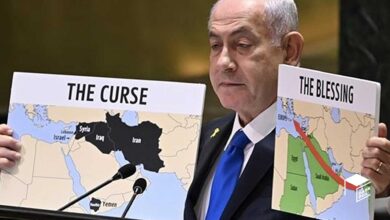
The Gulf Under Fire: Secret UAE Involvement in the Iran War Threatened Regional Security
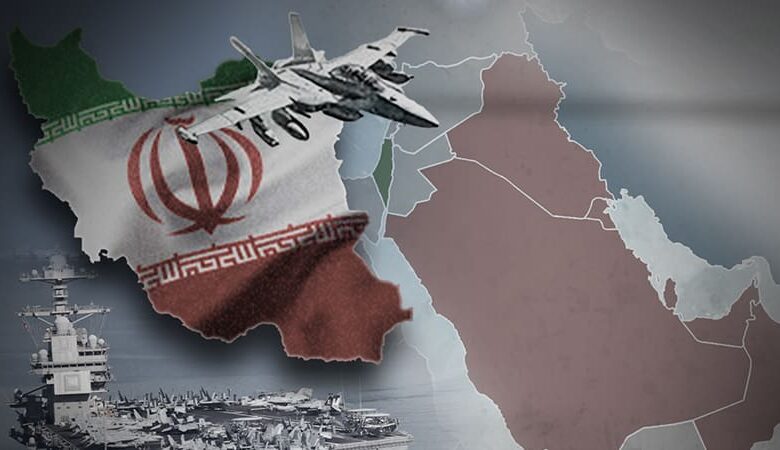
The Middle East entered a dangerous new phase during the recent war involving Iran, Israel, and the United States, but one of the most controversial developments emerged not on the battlefield itself, but through growing reports alleging covert Emirati participation in military operations against Iran. According to reporting circulated in major international media outlets, including claims cited by The Wall Street Journal, the United Arab Emirates may have quietly participated in strikes targeting Iranian infrastructure during the height of the regional escalation.
Although Abu Dhabi has not officially acknowledged any direct military role, the allegations have intensified regional scrutiny of the UAE’s increasingly close strategic alignment with Israel and the United States. More importantly, they have raised serious questions about how far Emirati regional policy has shifted from traditional Gulf balancing strategies toward direct involvement in military confrontation with Iran.
The controversy centers on reports that Emirati forces allegedly targeted an Iranian refinery facility on Lavan Island in the Gulf during the conflict. The reported strike caused significant damage and triggered a large fire that reportedly disrupted refinery operations for an extended period. Iran later described the incident as an “enemy attack,” while regional analysts increasingly linked the event to the broader Israeli-American military campaign against Tehran.
Whether fully confirmed or not, the allegations themselves have had major geopolitical consequences because they reinforce a rapidly growing perception across the region that Abu Dhabi has moved beyond quiet normalization with Israel into direct strategic and security integration with Israeli and American military objectives.
This perception intensified further after Iran reportedly launched massive retaliatory missile and drone attacks targeting the UAE at a scale surpassing attacks directed toward most other regional actors. Analysts interpreted Tehran’s focus on the Emirates as a signal that Iran increasingly views Abu Dhabi not as a neutral Gulf state attempting to balance regional tensions, but as an active participant in hostile military alignments.
The economic consequences for the UAE were immediate and severe. Regional markets experienced heavy losses, major disruptions affected aviation and tourism sectors, and investor confidence weakened sharply amid fears that the Emirates had become deeply exposed to regional military escalation. The image of Dubai and Abu Dhabi as insulated commercial and financial safe zones was significantly shaken.
For decades, Gulf monarchies largely attempted to preserve careful strategic balancing with Iran even while maintaining close ties to Washington. The UAE itself historically relied on economic pragmatism, trade connectivity, and diplomatic flexibility to avoid becoming a direct frontline actor in regional confrontation. However, critics argue that this traditional approach has steadily eroded under Abu Dhabi’s increasingly aggressive geopolitical strategy.
The war involving Iran appears to have accelerated this transformation dramatically. Reports of expanding Emirati-Israeli security coordination during the conflict, combined with allegations of operational cooperation, reinforced the image of an emerging regional axis centered on military integration between Abu Dhabi, Tel Aviv, and Washington.
This alignment did not emerge suddenly. Since the normalization agreements between the UAE and Israel, cooperation expanded steadily across intelligence sharing, cyber capabilities, military technologies, air defense coordination, and regional security planning. The Iran conflict appears to have pushed these relationships into a more overt strategic framework.
Regional critics argue that Abu Dhabi’s growing integration into Israeli-led security structures has fundamentally altered the UAE’s regional identity. Rather than functioning as a Gulf mediator or commercial balancing power, the Emirates increasingly appears positioned as a frontline actor embedded within broader Western and Israeli military architectures.
The consequences extend far beyond bilateral relations with Iran. Gulf unity itself has come under growing strain as regional states adopt diverging approaches toward security escalation. Saudi Arabia, while maintaining close ties with Washington, increasingly pursued a more cautious posture during the Iran conflict focused on preventing wider regional collapse and protecting economic transformation priorities tied to Vision 2030.
This divergence became especially visible as reports circulated that Tehran warned Saudi Arabia and Oman it would heavily target the UAE in retaliation for its perceived alignment with Israeli and American operations. Analysts interpreted these warnings as evidence that Iran was actively attempting to isolate Abu Dhabi diplomatically within the Gulf while exposing fractures inside the regional order.
The UAE’s recent withdrawal from OPEC further intensified these tensions. Although officially tied to energy policy disputes, the move increasingly appears linked to broader geopolitical divergence between Abu Dhabi and Riyadh. What once functioned as a coordinated Gulf axis now increasingly resembles a fragmented regional landscape shaped by competing strategic visions.
Critics of Abu Dhabi’s regional strategy argue that the UAE has pursued influence expansion too aggressively and without sufficient regard for long-term regional stability. Intervention in Yemen, expanding military footprints in the Red Sea and Horn of Africa, growing strategic coordination with Israel, and alleged involvement in anti-Iran operations collectively reflect a dramatic shift away from cautious Gulf diplomacy toward assertive geopolitical militarization.
This approach may have secured short-term influence and strategic visibility for Abu Dhabi, but analysts increasingly warn that it also carries enormous risks. By aligning so closely with Israeli and American security agendas, the UAE risks becoming deeply vulnerable to regional retaliation while undermining its longstanding reputation as a stable commercial and financial hub insulated from geopolitical conflict.
The situation also highlights the broader transformation occurring across the Middle East itself. Traditional regional balances are collapsing and being replaced by overlapping military alignments, proxy confrontations, economic warfare, cyber operations, and strategic corridor competition stretching from the Gulf to the Mediterranean and Red Sea.
The UAE’s evolving role inside this new order remains one of the region’s most controversial developments. Supporters argue that Abu Dhabi is acting decisively to confront regional threats and secure strategic influence in a rapidly changing environment. Critics, however, increasingly view the Emirates as contributing to regional polarization, militarization, and instability through interventionist policies that deepen conflict rather than contain it.
In conclusion, the reports surrounding alleged Emirati involvement in operations against Iran have become far more than a question of military participation. They symbolize a deeper geopolitical transformation reshaping the Gulf and the wider Middle East.
Whether or not every operational detail is ultimately confirmed, the broader reality is clear: the UAE is increasingly perceived across the region as a central actor within an emerging Israeli-American regional security axis. That perception alone has already altered regional calculations, intensified tensions with Iran, deepened divisions inside the Gulf, and exposed the Emirates to levels of geopolitical risk unprecedented in its modern history.
The ultimate consequence may be a Middle East where traditional Gulf neutrality and balance disappear entirely, replaced instead by hardened military blocs, escalating confrontation, and a permanently destabilized regional order.