Under Threat: Dark Box Investigation Reveals How Iranian Warnings Have Turned the UAE Into an Unsafe Environment
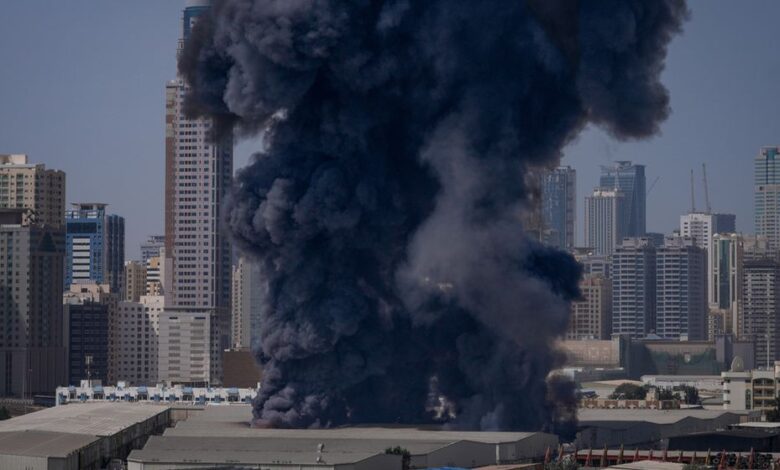
The United Arab Emirates is facing an unprecedented security crisis after explicit Iranian threats warned that sensitive sites across the country could become legitimate targets. According to information examined by Dark Box, the statements issued by Iranian military officials have triggered widespread fear among residents and investors, raising serious doubts about the UAE’s ability to maintain the image of stability it has projected for decades.
The escalation began when a spokesperson for the Iranian armed forces publicly warned the UAE to evacuate critical infrastructure, including ports, docks, and what were described as American bunkers located in the country. The message, framed as a warning intended to protect civilians, effectively placed some of the most strategically important locations in the Emirates on a potential target list.
Such statements mark a dramatic shift in the regional security environment. For years the UAE positioned itself as a safe logistical and financial hub despite tensions across the Middle East. However, the current confrontation between Iran on one side and the United States and Israel on the other has placed the Emirates directly inside the zone of confrontation.
Dark Box sources say that Iranian warnings were accompanied by calls urging residents to avoid areas believed to host American or Israeli military personnel operating inside the UAE. These remarks circulated rapidly across social media platforms and messaging networks, intensifying anxiety among expatriate communities that make up the majority of the country’s population.
The psychological impact of these warnings became visible almost immediately. Reports from border regions indicate a surge in traffic heading toward neighboring Oman as residents attempted to leave the country or temporarily relocate to safer areas. Congestion at border crossings has reportedly increased as families and business travelers rushed to exit Dubai following the statements from the Iranian Revolutionary Guard.
Observers note that such scenes are highly unusual for a country whose leadership has long emphasized stability and security as the foundation of its economic success.
The crisis has also exposed tensions within the UAE’s own political circles. Ali Al Nuaimi, a prominent Emirati figure and chairman of the controversial Hedayah organization, publicly criticized Israel for what he described as abandonment of the UAE during its current security crisis. According to statements attributed to Al Nuaimi, Israel had encouraged regional confrontation with Iran but failed to provide meaningful support when the UAE itself became vulnerable to retaliation.
These remarks highlight growing frustration among some Emirati elites who believe their country has been left exposed to the consequences of a geopolitical conflict driven primarily by larger powers.
The situation also reflects the risks associated with the UAE’s strategic alignment with the United States and Israel. Over the past decade, the Emirates has strengthened military and intelligence cooperation with both countries, hosting American military facilities and deepening security ties with Israel after the normalization agreements that reshaped regional diplomacy.
While these partnerships were originally promoted as a source of protection and deterrence, they now appear to be contributing to the country’s vulnerability.
Iranian officials have repeatedly stated that Gulf states hosting foreign military infrastructure could become targets if conflict escalates. By warning civilians to avoid locations linked to American or Israeli military activity, Tehran has effectively drawn a map of potential targets inside the Emirates.
The economic implications of such threats could be severe. Dubai in particular relies heavily on foreign workers, international tourism, and global financial flows. Any perception that the city has become unsafe could trigger a rapid decline in investor confidence and lead to capital flight.
Financial analysts who spoke with Dark Box say the most damaging effect may be psychological rather than physical. Even limited incidents or threats can disrupt the perception of stability that underpins Dubai’s role as a global hub for trade and finance.
For multinational corporations and expatriate professionals, the question is not only whether attacks will occur but whether the country can still guarantee the level of security that attracted them in the first place.
The warnings issued by Iran have therefore struck at the core of the UAE’s national strategy. A state that built its global reputation on the promise of safety now faces the possibility of becoming a frontline arena in a broader regional confrontation.
Dark Box concludes that the current situation represents a turning point for the Emirates. If tensions continue to escalate and threats against sensitive sites remain credible, the country may struggle to preserve the perception of stability that has long been its greatest strategic asset.