The Israeli-Emirati Trap in Syria: Is Netanyahu Trying to Drag Turkey Into a War and Humiliate Erdogan?
Dark Box Investigation
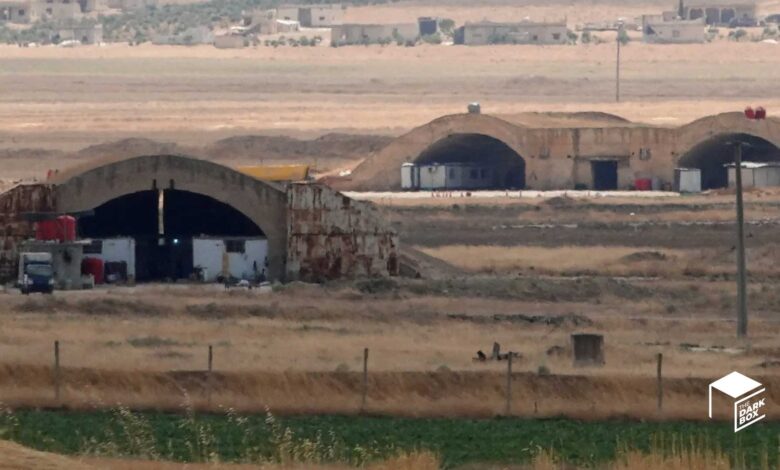
A Dark Box investigation examines an increasingly dangerous pattern surrounding Israeli military operations in Syria: strikes with limited apparent battlefield value but potentially enormous political consequences, particularly when conducted close to areas associated with Turkish interests.
The Israeli attack on Syria’s Abu al-Duhur airbase provides a striking example. Israeli aircraft targeted the runway of the largely inactive facility in Idlib, around 70 kilometers from the Turkish border. According to the information reviewed by Dark Box, the strikes caused relatively limited damage and produced no obvious major military gain.
Yet the location, timing and subsequent Israeli rhetoric suggest that the real significance of the operation may have extended far beyond the runway.
Israeli Prime Minister Benjamin Netanyahu explicitly framed the strike as a warning against Turkish military expansion in Syria, declaring that Israel would not tolerate Turkish forces advancing southward. Defense Minister Israel Katz similarly accused President Recep Tayyip Erdogan of dragging Turkey into “dangerous adventures” in Syria.
For Dark Box, this raises the central question: Was Israel attacking a Syrian airfield—or deliberately constructing a confrontation with Turkey?
A Strike Designed to Put Ankara on the Spot
The risk was extraordinary.
The base sits close enough to Turkey that Israeli combat aircraft approaching the area could have been interpreted by Turkish radar operators as a potential threat to Turkish territory or forces.
Ankara could have scrambled fighters or activated defensive systems without knowing Israel’s ultimate target.
Even senior American officials criticized the operation. U.S. Ambassador to Turkey and Syria envoy Tom Barrack described the strike as an “unnecessary escalation that does not advance regional stability,” while U.S. Ambassador Mike Huckabee publicly stressed the need to prevent escalating violence.
This is particularly important because mechanisms already existed to prevent precisely this type of military misunderstanding.
The possibility that Israel knowingly accepted the risk of a Turkish response strengthens suspicions that provoking Ankara may have been part of the political effect Israel wanted to produce, even if triggering a full-scale war was not necessarily the operational objective.
Netanyahu’s Political Trap for Erdogan
A direct Turkish reaction would potentially serve Netanyahu in several ways.
First, it would allow the Israeli government to transform its increasingly aggressive warnings about Turkey into a tangible security confrontation.
Netanyahu has been portraying Erdogan as a strategic enemy. A Turkish military response to Israeli aircraft could provide his government with evidence for the narrative it has already been promoting: that Turkey represents an emerging military threat to Israel.
Second, confrontation would force Erdogan into an uncomfortable dilemma.
If Turkey responded militarily, Israel could portray Ankara internationally as the aggressor and attempt to mobilize support in Washington and Europe.
If Turkey did nothing, Netanyahu could portray Turkish restraint as weakness and challenge Ankara’s credibility as the principal external supporter of Syria’s new government.
That makes the provocation potentially effective regardless of Turkey’s response.
Fight, and Erdogan risks entering Israel’s chosen battlefield. Remain passive, and Netanyahu attempts to portray Turkish deterrence as hollow.
Turkey’s measured response so far suggests Ankara understands the trap.
The Real Battle Is Over Syria
Behind the confrontation lies a fundamental strategic disagreement over Syria’s future.
Turkey wants a sovereign, territorially unified Syrian state with functioning institutions and a military capable of controlling the country.
The Israeli strategy described in the material reviewed by Dark Box points in the opposite direction: preventing the emergence of a powerful centralized Syrian state capable of constraining Israeli freedom of military action.
Any Turkish assistance that strengthens President Ahmed al-Sharaa’s government can therefore be interpreted in Israel as strategically threatening.
This explains why an otherwise marginal airbase matters.
The battle is not necessarily over Abu al-Duhur itself. It is about whether Turkey will be permitted to help rebuild Syrian military capacity without Israel repeatedly using force to impose limits on Ankara’s role.
Where Does the UAE Fit?
The Emirati dimension requires a crucial evidentiary distinction.
The information supplied to Dark Box demonstrates Israel’s escalating confrontation with Turkey and provides evidence of deep strategic differences between Ankara and Israel over Syria. It does not, by itself, establish that the UAE jointly planned the Abu al-Duhur strike or instructed Israel to provoke Turkey.
Abu Dhabi and Ankara have historically backed competing regional political projects, while the UAE has developed exceptionally close military, intelligence and technological relations with Israel. Meanwhile, Turkey’s expanding regional influence—and its emerging defense partnership with Saudi Arabia and Pakistan—creates a strategic architecture in which neither Israel nor the UAE occupies the central position.
That produces overlapping interests. It does not, without further evidence, prove joint command of Israeli strikes.
For Dark Box, the investigative question should consequently be precise: Is the UAE merely benefiting politically from Israeli pressure on Turkey, or is Abu Dhabi actively encouraging and facilitating that pressure behind closed doors?
The Mecca Agreement Raises the Stakes
The timing adds another dimension.
Turkey recently joined Saudi Arabia and Pakistan in the Mecca defense framework, creating an emerging security arrangement with potentially significant regional weight.
A confrontation immediately tests the credibility of such new arrangements.
If Israel can strike Turkish-linked interests in Syria without consequences, it can argue that Ankara’s expanding security partnerships have changed little on the ground.
If Turkey responds, however, Israel could attempt to transform a limited Syrian dispute into a much broader crisis involving NATO, Washington and Turkey’s new regional partners.
This makes Syria an ideal pressure point.
The battlefield is close enough to Turkey to threaten its interests but remains outside Turkish sovereign territory, creating ambiguity over how Ankara and its allies should respond.
Could Israel Target Turkish Forces Next?
The most alarming possibility is that Abu al-Duhur was not the endpoint but a test.
The supplied material cites Israeli discussion of whether attacks against Turkish personnel outside Turkey would necessarily trigger NATO’s collective-defense provisions.
That question alone demonstrates the seriousness of the emerging confrontation.
Targeting Turkish troops, equipment or installations inside Syria could place Erdogan under immense domestic and strategic pressure to retaliate.
Israel would then have created precisely the dilemma Ankara currently seeks to avoid: accepting attacks against Turkish forces or entering a direct military confrontation whose timing and location were selected by Israel.
Turkey’s challenge is therefore to maintain deterrence without allowing Netanyahu to dictate the circumstances of escalation.
Dark Box Conclusion: A Dangerous Game Designed to Test Erdogan
The Abu al-Duhur strike appears significant not because of the military value of the runway destroyed, but because of the political and strategic reactions it could have triggered.
Israel struck near Turkey, openly connected the operation to Turkish influence, accepted the danger of military miscalculation and then publicly framed Erdogan as the source of regional instability.
That combination deserves scrutiny.
Dark Box assesses that Netanyahu’s strategy can place Erdogan inside a deliberately uncomfortable equation: retaliate and risk being dragged into a confrontation Israel can exploit politically, or exercise restraint and allow Netanyahu to challenge Turkey’s credibility and deterrence.
The UAE’s precise operational role in such a strategy remains unproven by the material currently available. Establishing an Israeli-Emirati plan to provoke Turkey would require evidence beyond geopolitical alignment.
But if future evidence demonstrates that Abu Dhabi encouraged, financed, facilitated or politically coordinated such escalation with Israel, the implications would be profound. It would suggest that Syria is being used as the arena for a wider attempt to contain Turkey, weaken its regional security project and provoke Erdogan into a war chosen by his adversaries.
Turkey’s strongest response may therefore be neither impulsive retaliation nor passive restraint. It is denying its opponents control over the timing of the confrontation while making unmistakably clear that attacks on Turkish personnel and strategic interests carry consequences.
Because the most dangerous trap in Syria may not be the Israeli strike itself.
It may be the war that someone hopes Turkey will start in response.