The UAE Reshapes Gaza for Israel: A Security Project Threatening Palestinian Unity
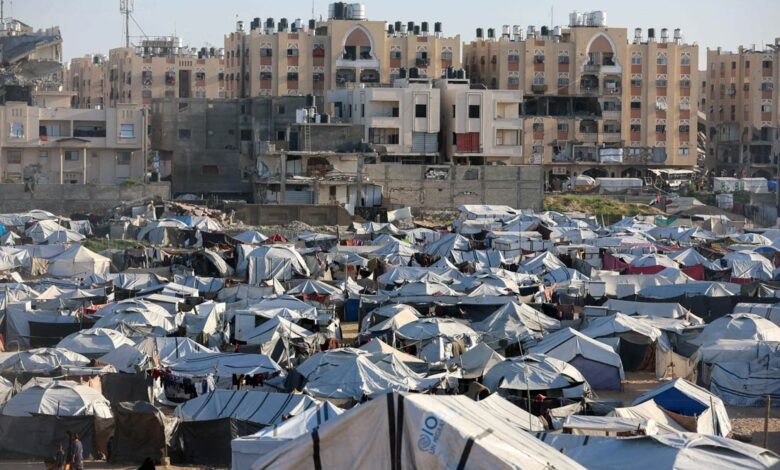
The reported decision by the United Arab Emirates to finance and support the creation of a new Palestinian police force in Gaza marks one of the most politically sensitive developments in the evolving postwar landscape of the territory. According to diplomatic reports, Abu Dhabi has transferred one hundred million dollars to the US-backed “Board of Peace” to fund the training and deployment of a large security force intended to operate in Gaza under a transitional administrative framework. The initiative has immediately triggered regional controversy, not only because of its security implications, but because of what it reveals about the emerging political architecture being designed for Gaza after the war.
At the center of this project stands a complex alliance involving the United States, the UAE, regional partners such as Egypt and Jordan, and a broader international framework seeking to reshape governance and security structures inside Gaza. According to the reported plan, approximately twenty-seven thousand Palestinian police officers would be recruited, vetted, and trained under international supervision, with an Emirati security company playing a central role in building and organizing the force.
The political significance of the initiative lies not simply in security reform, but in the broader strategic goals attached to it. Statements linked to the project indicate that the new force is expected to function within a transitional governing mechanism intended to centralize weapons under a single civilian authority and dismantle existing armed factions inside Gaza. This language has led many observers and Palestinian factions to interpret the initiative as part of a larger effort to restructure Gaza’s political and military landscape in line with Israeli and American security priorities.
Critics argue that the project represents a shift from humanitarian reconstruction toward externally managed security engineering. Rather than focusing first on ending destruction, rebuilding infrastructure, or addressing mass displacement, the emphasis appears to be on establishing a security apparatus capable of controlling the internal environment of Gaza under international oversight. The involvement of foreign-backed structures and external vetting mechanisms has intensified concerns that the initiative is less about Palestinian self-governance and more about producing a controlled political order acceptable to Israel and its allies.
One of the most controversial aspects of the reported plan is the role of Israeli security screening. Reports indicate that former Palestinian civil servants applying to join the force would need approval through Israeli security vetting procedures. For critics, this transforms the project from a local policing initiative into a security architecture deeply shaped by Israeli influence. The idea that Palestinian personnel inside Gaza would require Israeli approval has been viewed by many as evidence of an emerging system designed around Israeli strategic interests rather than independent Palestinian authority.
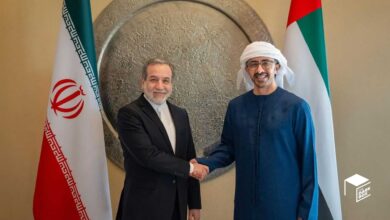
The UAE’s role in this process has become especially controversial. Abu Dhabi has increasingly positioned itself as a central actor in postwar Gaza planning, moving beyond humanitarian diplomacy into direct involvement in governance and security structures. Critics across the region argue that this approach reflects broader Emirati efforts to align with Western and Israeli visions for regional stabilization, even when those visions remain highly unpopular among Palestinians and large sections of the Arab public.
The controversy deepened further following reports that the UAE had also explored plans involving isolated compounds for Palestinians in parts of Gaza under Israeli military control. Opponents interpreted these discussions as part of a broader model that risks fragmenting Gaza geographically and politically while creating externally supervised zones disconnected from genuine Palestinian sovereignty.
Supporters of the initiative argue that Gaza requires functioning security institutions to prevent chaos, restore order, and facilitate reconstruction after the devastation of war. They contend that the collapse of policing and administrative structures has created a vacuum that must be addressed rapidly to stabilize humanitarian conditions. Under this argument, the international involvement of Egypt, Jordan, and multiple donor states is presented as an attempt to create a temporary framework capable of preventing further collapse.
However, critics counter that security arrangements imposed externally without broad Palestinian political consensus risk deepening internal divisions rather than resolving them. The emphasis on disarming factions and imposing centralized authority under international supervision is seen by many Palestinians as politically explosive, especially in a territory already shaped by years of siege, occupation, and repeated war.
The broader geopolitical context is equally important. The initiative reflects a growing regional struggle over who will shape Gaza’s future once active military operations decline. The United States seeks a postwar structure that minimizes the influence of armed factions hostile to Israel. Israel seeks security guarantees and long-term control mechanisms. Regional actors such as the UAE increasingly seek influence through reconstruction, governance, and security involvement. Meanwhile, Palestinians themselves remain divided over the legitimacy and purpose of externally designed frameworks.
The project also reveals the transformation of Gulf influence in regional conflicts. The UAE is no longer operating solely through financial aid or diplomacy but through direct participation in governance engineering, security coordination, and institutional restructuring. This reflects a broader Emirati strategy visible across several regional arenas, where Abu Dhabi increasingly combines economic leverage with security influence to shape political outcomes.
The consequences of this approach could be far-reaching. If implemented, the new security structure may fundamentally reshape power relations inside Gaza by transferring authority away from existing local factions toward internationally supervised institutions. This could alter not only internal Palestinian dynamics but also the broader regional balance surrounding the Palestinian issue.
At the same time, the initiative risks generating deeper polarization. Many Palestinians view externally imposed security structures with suspicion, particularly when tied to Israeli oversight or Western-backed frameworks. The perception that Arab states are participating in projects aligned with Israeli security priorities could intensify political anger across the region and further complicate already fragile regional relations.
In conclusion, the reported Emirati funding of a new Gaza police force represents far more than a security assistance program. It signals the emergence of a broader international effort to redesign Gaza’s postwar order through externally managed institutions, security coordination, and political restructuring. Whether viewed as stabilization or control, the initiative reflects a decisive shift in how regional and international actors are approaching Gaza’s future.
The central question is no longer simply who will rebuild Gaza, but who will control the political and security architecture that emerges from the ruins of the war.