The UAE-Israel Defense Alliance Is Reshaping the Gulf: Rapid Military Integration Deepens Regional Tensions With Saudi Arabia
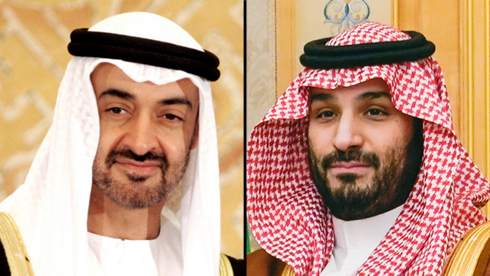
The rapid acceleration of military cooperation between the United Arab Emirates and Israel is triggering growing concern across the Gulf, particularly in Saudi Arabia, as Abu Dhabi moves beyond political normalization toward the construction of a strategic military alliance with Tel Aviv. Reports regarding the creation of a joint Emirati-Israeli defense acquisition and weapons development fund marked one of the clearest signs yet that relations between both countries are entering a far more sensitive and controversial phase centered on military integration, regional security restructuring, and long-term geopolitical coordination.
According to multiple reports circulating in regional and international media, the UAE and Israel established a joint defense framework focused on acquiring advanced weapons systems and financing the development of military technologies, including Israeli air defense capabilities. The reported agreement allegedly expanded during the period of escalating conflict involving Iran, Israel, and the United States, reflecting how wartime coordination between Abu Dhabi and Tel Aviv accelerated strategic military integration between both governments.
The significance of this development extends far beyond ordinary defense cooperation. Since the signing of normalization agreements in 2020, relations between the UAE and Israel steadily expanded across intelligence sharing, cybersecurity, surveillance systems, technology transfer, aviation security, and defense coordination. However, the establishment of a joint defense acquisition and development structure signals a qualitative transformation from diplomatic normalization into a deeper military-security alliance with long-term strategic implications for the Gulf and the wider Middle East.
This transformation is increasingly generating unease across neighboring Gulf countries, particularly Saudi Arabia.
For years, Riyadh and Abu Dhabi maintained closely coordinated regional policies across energy markets, Gulf security, and regional conflicts. Yet recent years witnessed the steady emergence of tensions between both powers over OPEC policy, relations with Iran, regional leadership, economic competition, and broader geopolitical strategy.
The Iran war accelerated these differences dramatically.
Saudi Arabia increasingly adopted a cautious strategic approach focused on preventing uncontrolled regional escalation. Riyadh understands that prolonged military confrontation threatens Vision 2030 economic projects, investment flows, tourism development, energy stability, and internal economic transformation. Saudi leadership increasingly appears focused on preserving regional stability while carefully balancing relations with competing global and regional powers.
The UAE, by contrast, appears to be moving toward a far more militarized regional posture closely integrated with Israeli and American security structures.
The creation of a joint defense fund with Israel reinforced regional perceptions that Abu Dhabi is no longer pursuing traditional Gulf balancing strategies, but instead helping construct a new military-security axis centered on shared confrontation frameworks, advanced defense integration, and strategic realignment against regional adversaries.
For Saudi Arabia, this trajectory creates multiple layers of concern.
First, the expansion of direct Emirati-Israeli military integration risks destabilizing Gulf consensus regarding regional security policy. Historically, Gulf states attempted to preserve a unified regional posture regarding sensitive geopolitical conflicts, especially involving Iran and Israel. The UAE’s increasingly independent security alignment with Tel Aviv threatens that collective framework and risks fragmenting Gulf strategic coordination.
Second, the deepening alliance intensifies fears that the Gulf itself may become increasingly entangled in broader Israeli regional confrontations. During the war involving Iran, Gulf states experienced firsthand how rapidly regional escalation could threaten aviation systems, energy infrastructure, maritime routes, tourism sectors, and financial markets.
Saudi Arabia appears increasingly reluctant to become trapped inside open-ended military-security confrontations linked directly to Israeli regional strategy. The UAE’s rapid military integration with Israel therefore raises concerns in Riyadh that Abu Dhabi may be pushing the Gulf toward greater geopolitical polarization and instability.
Third, the optics of expanding defense cooperation with Israel during the Gaza war remain politically explosive across the Arab and Muslim worlds. The Israeli military campaign in Gaza generated widespread anger throughout the region amid mounting civilian casualties and accusations regarding violations of international humanitarian law.
Against this backdrop, reports of Emirati financial and technological support linked to Israeli military capabilities generated severe criticism across Arab political circles. Critics increasingly argue that Abu Dhabi’s policies are transforming normalization from political diplomacy into active strategic military partnership at one of the most sensitive moments in modern Middle Eastern politics.
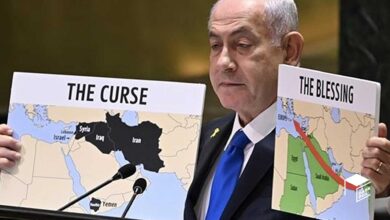
The controversy surrounding Netanyahu’s reported secret visit to the UAE intensified these sensitivities further. Israeli political circles described the visit as a major strategic breakthrough during wartime conditions, while Abu Dhabi issued unusual denials regarding aspects of the reports. The conflicting narratives reinforced perceptions that the military-security relationship between both countries had become politically sensitive even within Gulf diplomatic circles.
Regional observers increasingly view the joint defense fund as part of a broader Emirati effort to reposition itself as a central military-security actor in the Middle East through advanced defense partnerships, intelligence coordination, and regional intervention capabilities.
This strategy, however, carries enormous risks.
The more deeply the UAE becomes integrated into Israeli defense structures, the more Gulf security itself risks becoming linked directly to broader Israeli regional conflicts involving Iran, Lebanon, Gaza, and other regional theaters.
Critics across the region increasingly warn that Abu Dhabi’s strategy may ultimately undermine Gulf stability rather than strengthen it. The Gulf’s prosperity depends fundamentally on regional predictability, secure trade routes, investor confidence, and economic stability. Escalating military-security integration with Israel during periods of intense regional polarization threatens those foundations directly.
The military dimension of the relationship also intensifies broader regional arms competition. Gulf states are already engaged in major military modernization programs involving drones, missile defense systems, cyber warfare capabilities, air defense technologies, and naval expansion. The emergence of a highly integrated Emirati-Israeli defense partnership risks accelerating this regional arms race further.
Saudi Arabia now increasingly appears to be responding through alternative alliance structures and defense partnerships, including deepening strategic coordination with Pakistan and expanding its own independent military modernization efforts.
The result is a Gulf region steadily fragmenting into competing security alignments and diverging geopolitical visions.
One camp increasingly emphasizes militarized strategic integration with Israel and broader Western security structures. Another seeks a more cautious balancing approach focused on de-escalation, strategic flexibility, and preserving regional stability.
This fragmentation threatens the long-term cohesion of Gulf politics itself.
The UAE’s growing military relationship with Israel is therefore no longer merely a bilateral issue between Abu Dhabi and Tel Aviv. It is becoming a defining factor reshaping the balance of power, alliance structures, and security calculations across the entire Gulf region.
In conclusion, the establishment of a joint Emirati-Israeli defense acquisition and weapons development fund reflects a historic transformation in Middle Eastern geopolitics. The relationship between both countries is rapidly evolving from political normalization into deep military-security integration with strategic regional implications.
While Abu Dhabi presents these partnerships as necessary responses to evolving regional threats, neighboring Gulf states increasingly fear that the UAE’s aggressive alignment with Israel risks destabilizing Gulf security, intensifying regional polarization, and accelerating the fragmentation of traditional Gulf strategic unity.
What is unfolding today is not simply an expansion of defense cooperation. It is the emergence of a new regional military architecture capable of fundamentally reshaping the future security order of the Middle East itself.