Abu Dhabi Is Linking Egyptian Military Support to Sudan Negotiations Amid Expanding Gulf Power Struggles
The deployment of Egyptian military forces inside the United Arab Emirates has evolved into one of the most politically sensitive developments in the Middle East, particularly as regional observers increasingly connect the move to growing Emirati efforts to shape the future political order in Sudan. What was officially presented as part of routine Arab security coordination has instead triggered intense debate across regional political circles, where accusations are growing that Abu Dhabi is using Gulf security arrangements and military partnerships to exert political pressure in Sudan and reshape regional balances according to its own strategic agenda.
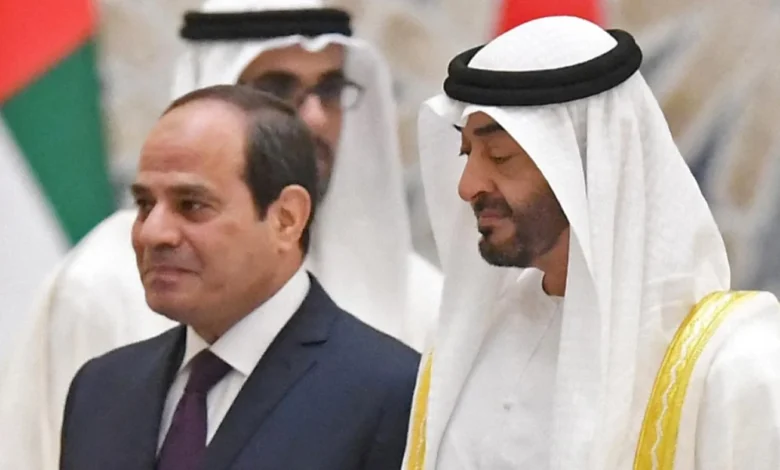
The controversy intensified following the public appearance of Egyptian President Abdel Fattah al-Sisi at Al Dhafra Air Base in the UAE, where he inspected Egyptian military personnel and fighter jets stationed on Emirati territory. Reports indicated that the Egyptian deployment includes Rafale fighter aircraft alongside air force and air defense personnel operating within a framework of military cooperation aimed at supporting Gulf security.
However, the timing of the deployment generated widespread political speculation because it coincided with renewed efforts to open dialogue channels between the Sudanese Armed Forces and the Rapid Support Forces amid growing international and regional pressure to contain the Sudan conflict.
Across the region, many analysts increasingly interpreted the overlap between these developments as evidence of a broader geopolitical bargaining process unfolding behind closed doors. While no official confirmation publicly established direct conditional arrangements linking Egyptian military support in the Gulf to Sudan negotiations, the perception itself rapidly became politically explosive because it reflected mounting distrust regarding Abu Dhabi’s expanding role in regional conflicts and political settlements.
The Sudan war remains one of the most devastating crises in the Middle East and Africa. Since fighting erupted between the Sudanese army and the Rapid Support Forces, regional and international actors have competed aggressively to influence the direction of the conflict and the shape of any future political settlement.
Egypt traditionally viewed Sudan as a core national security priority due to geographic proximity, Nile water security, Red Sea strategic interests, and longstanding military-political relations with the Sudanese state establishment. Cairo consistently appeared closer to the Sudanese army, emphasizing the importance of preserving centralized state institutions and preventing Sudan from descending into prolonged fragmentation.
The UAE, meanwhile, increasingly became one of the most controversial external actors in the Sudan file. Abu Dhabi repeatedly denied accusations regarding support for parallel armed structures inside Sudan, yet regional political discourse increasingly portrayed the UAE as pursuing an expansive influence strategy aimed at shaping Sudan’s future political and military balance.
Against this backdrop, the Egyptian military presence inside the UAE inevitably acquired wider geopolitical significance. Critics across the region increasingly argued that Abu Dhabi is transforming military-security partnerships into instruments of regional leverage, linking Gulf defense cooperation to broader political objectives across multiple conflict zones.
The issue became even more sensitive following the war involving Iran, Israel, and the United States. The conflict dramatically reshaped Gulf security calculations after Iranian missile and drone attacks exposed the vulnerability of Gulf infrastructure, aviation systems, energy facilities, and financial centers.
The UAE responded by accelerating military coordination with regional and international allies. Reports regarding deeper Emirati cooperation with Israel and the United States during the war already generated widespread concern across the Arab world. The visible Egyptian deployment inside Emirati territory therefore appeared to many observers as part of a broader militarization process unfolding across Gulf politics.
For Egypt, the situation carries enormous political and strategic sensitivity. Cairo historically attempted to balance Gulf alliances carefully while avoiding becoming directly entangled in broader regional military confrontations. Egypt’s economic dependence on Gulf investment and financial support, however, increasingly complicates that balancing strategy.
Critics warn that the deeper Egypt becomes integrated into Gulf security arrangements during periods of escalating regional confrontation, the more difficult it may become for Cairo to preserve strategic independence regarding future regional conflicts.
The Sudan dimension further intensifies these concerns because the conflict increasingly intersects with wider struggles over Red Sea influence, African geopolitics, Gulf competition, and broader regional alignments. Any perception that Sudan negotiations are being linked to military-security bargaining elsewhere in the region risks undermining confidence in mediation processes themselves.
The controversy also reflects a larger transformation underway across the Middle East. Military alliances, economic leverage, political negotiations, and regional security frameworks are becoming increasingly interconnected in ways that blur traditional boundaries between diplomacy and coercive geopolitical influence.
The UAE increasingly appears positioned at the center of this transformation. Over recent years, Abu Dhabi expanded its regional role dramatically across Yemen, Sudan, Libya, the Horn of Africa, the Red Sea, and Gulf security arrangements. Supporters portray these policies as pragmatic efforts to secure regional stability and counter emerging threats. Critics, however, increasingly describe them as part of a broader strategy aimed at consolidating Emirati influence through parallel security networks, military alliances, and political leverage.
The Egyptian deployment controversy became symbolic of these wider regional anxieties. Rather than being viewed solely as defensive coordination, the military presence quickly became associated with broader fears regarding the future militarization of Arab politics and the growing use of security arrangements to shape political outcomes across neighboring states.
The Gulf itself is also becoming increasingly fragmented. Following the Iran war, Gulf states adopted visibly different approaches toward regional security. Saudi Arabia, Qatar, Kuwait, and Oman increasingly emphasized de-escalation and strategic caution, while the UAE appeared to move closer toward a more interventionist regional doctrine built around military-security integration and geopolitical competition.
These diverging visions are reshaping the region profoundly. Instead of functioning through unified collective security frameworks, the Middle East increasingly appears divided between competing regional projects centered on influence, militarization, and strategic realignment.
In conclusion, the controversy surrounding Egypt’s military presence inside the UAE reflects far more than a routine defense arrangement between allied governments. It exposed the growing intersection between Gulf security, Sudan negotiations, regional influence struggles, and expanding military alliances following the Iran war.
Whether or not every allegation circulating across political circles is ultimately verified, the broader political message resonating across the region is already clear. Many observers increasingly fear that military cooperation, economic dependency, and political bargaining are becoming deeply intertwined in ways capable of reshaping regional conflicts and alliances far beyond their original scope.
What is unfolding today reflects a Middle East entering a more fragile and dangerous phase in which regional powers are no longer simply competing through diplomacy and economics, but increasingly through interconnected networks of military deployment, political leverage, and strategic influence stretching from the Gulf to the Red Sea and deep into Africa itself.