The Hidden Fronts of the Iran War: How the UAE Became a Platform for Israel’s Expanding Regional Military Network
A Dark Box Investigative Report
New revelations surrounding Israel’s war against Iran have exposed a far broader regional military infrastructure than previously understood, shedding light on a network of covert operational sites, intelligence facilities, and special forces deployments stretching across multiple countries. Among the most significant aspects of these disclosures is the emergence of the United Arab Emirates as one of the key platforms supporting Israel’s regional military posture during the conflict.
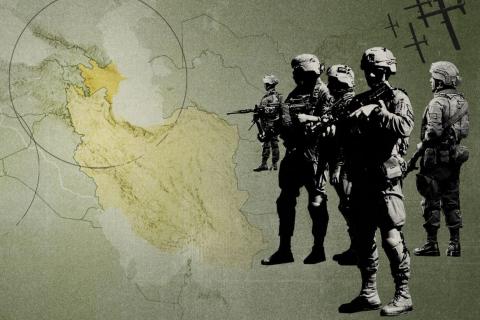
According to information reviewed by Dark Box, Israeli special forces, intelligence personnel, surveillance assets, and air defense systems were deployed across a network extending from the Caucasus to the Gulf and the Horn of Africa. The operational footprint reportedly included Azerbaijan, Iraq, Somaliland, and the UAE, reflecting an unprecedented expansion of Israeli military reach beyond its traditional areas of operation.
The disclosures provide new insight into the transformation of regional alliances that accelerated after the signing of the Abraham Accords. What began as a process publicly marketed as normalization and economic cooperation increasingly evolved into deeper security integration, intelligence coordination, and military cooperation.
The UAE occupies a central position within this transformation.
For years, Abu Dhabi presented normalization as a pathway toward regional stability, economic cooperation, and conflict reduction. However, the latest revelations suggest that the relationship expanded far beyond diplomatic engagement and commercial ties. Instead, the UAE increasingly appears to have become an important component within a broader Israeli regional security architecture.
Dark Box analysis indicates that the Iran war represented the clearest demonstration yet of this evolving reality.
Reports indicate that Israeli military personnel, air defense assets, intelligence systems, and operational capabilities were deployed inside the UAE during the conflict. The presence of such assets highlights the extent to which security cooperation between Abu Dhabi and Tel Aviv has evolved from intelligence sharing into operational coordination during active military confrontation.
This development carries significant regional implications.
The Gulf has historically been among the most sensitive security environments in the world. Any foreign military presence linked to regional conflicts immediately affects broader calculations involving maritime security, energy infrastructure, commercial trade routes, and interstate relations.
The reported Israeli deployments therefore raise questions not only about UAE-Israel relations but also about the wider consequences for Gulf security.
Perhaps most importantly, the disclosures suggest that decisions involving regional military escalation may have been taken without broader Gulf consensus.
Several Gulf states adopted cautious approaches during the Iran conflict and sought to avoid becoming direct participants in military confrontation. Yet the reported deployment of Israeli military assets inside the UAE effectively positioned the country as part of a wider operational network associated with the conflict.
Dark Box findings suggest that this development may deepen concerns regarding Abu Dhabi’s increasingly independent security policies and its willingness to pursue strategic arrangements that carry implications for neighboring states.
The issue extends beyond the UAE itself.
The reported network stretching through Azerbaijan, Iraq, Somaliland, and the Gulf reflects a larger Israeli strategy aimed at constructing multiple operational corridors surrounding Iran. Surveillance platforms, intelligence facilities, drone capabilities, and special forces units appear to have been positioned across several geographic theaters to enhance operational flexibility and intelligence collection.
The UAE’s role within this framework is particularly significant because of its economic importance, strategic location, and growing security relationship with Israel.
Unlike covert intelligence cooperation of previous decades, the emerging picture points toward a much deeper level of integration involving military planning, operational support, and strategic coordination.
This transformation also reinforces concerns regarding the future trajectory of the Abraham Accords.
Originally presented as diplomatic agreements designed to foster coexistence and economic cooperation, the accords increasingly appear linked to a broader security architecture involving military coordination, intelligence sharing, air defense cooperation, and strategic alignment.
The Iran war exposed this evolution more clearly than ever before.
The conflict demonstrated that normalization was no longer limited to political recognition or trade relations. It had become intertwined with defense planning and regional security structures.
For critics of Abu Dhabi’s regional strategy, these developments validate longstanding concerns that the UAE’s partnership with Israel was moving toward military integration rather than simple diplomatic engagement.
The timing of these revelations is also noteworthy.
They emerge at a moment when Abu Dhabi faces growing scrutiny regarding its regional policies, including its role in multiple conflicts, expanding military partnerships, and evolving relationship with Israel.
The disclosures therefore contribute to a broader debate regarding the costs and consequences of the UAE’s increasingly interventionist regional posture.
Dark Box analysis suggests that the central issue is not merely the presence of Israeli personnel or equipment.
The larger concern is the emergence of a regional security framework operating through interconnected military partnerships that increasingly bypass traditional mechanisms of regional consultation and consensus.
Such developments risk transforming local conflicts into broader regional confrontations.
They also increase the possibility that countries hosting operational infrastructure become targets during future escalations.
For the UAE, the implications are particularly significant.
By positioning itself as one of Israel’s closest regional security partners, Abu Dhabi may have gained access to advanced military cooperation and intelligence capabilities. However, it has also become more deeply entangled in the strategic rivalries shaping the region.
The Iran war demonstrated the risks associated with that choice.
What began as a conflict between regional adversaries evolved into a confrontation involving multiple countries, overlapping alliances, and expanding military networks.
The newly revealed deployments suggest that the full scope of that network was considerably larger than previously understood.
The result is a growing realization that the Middle East’s security landscape is being reshaped through alliances and military arrangements operating far beyond public view.
The UAE’s role within this evolving structure has become increasingly difficult to ignore.
What emerges from these revelations is not simply a story about Israeli deployments.
It is a story about the transformation of regional politics, the militarization of normalization, and the emergence of a new security order in which Abu Dhabi occupies a pivotal and increasingly controversial position.