Dark Box Investigation: Secret Israel Visit Raises New Questions About the UAE’s Political Strategy in Sudan
The war in Sudan has increasingly become a contest fought on multiple fronts. Beyond the battlefield, competing regional powers are accused of shaping the country’s political future through diplomacy, media influence, and international lobbying. New information cited in the source material reviewed by Dark Box adds another layer to that debate, saying that senior figures from Sudan’s “Sumud” alliance made a secret visit to Israel arranged with Emirati backing.
According to the article and the sources it cites, the visit formed part of a broader effort to promote the alliance as a civilian alternative capable of assuming power should Sudan’s current political and military balance shift. The article says that information obtained from multiple regional capitals pointed to coordination surrounding the visit and its objectives, although those claims rely on unnamed sources and are not independently verified in the source material.
The “Sumud” alliance, led by former Prime Minister Abdalla Hamdok, presents itself as a civilian movement seeking to end the war and restore civilian rule. However, according to the article, several of its leading figures have faced persistent criticism inside Sudan over their positions on the conflict, their relationships with regional actors, and their responses to reports concerning the United Arab Emirates and the Rapid Support Forces (RSF).
The article reports that Khalid Omar Yousif was among those who traveled to Israel, while the names of Babiker Faisal and Taha Osman Ishaq were also mentioned in connection with the reported contacts. It notes that the participation of some individuals could not be conclusively confirmed. According to the cited sources, one objective of the visit was to present the Sudanese Armed Forces as aligned with Islamist movements while portraying the “Sumud” alliance as a viable civilian partner for regional and international engagement.
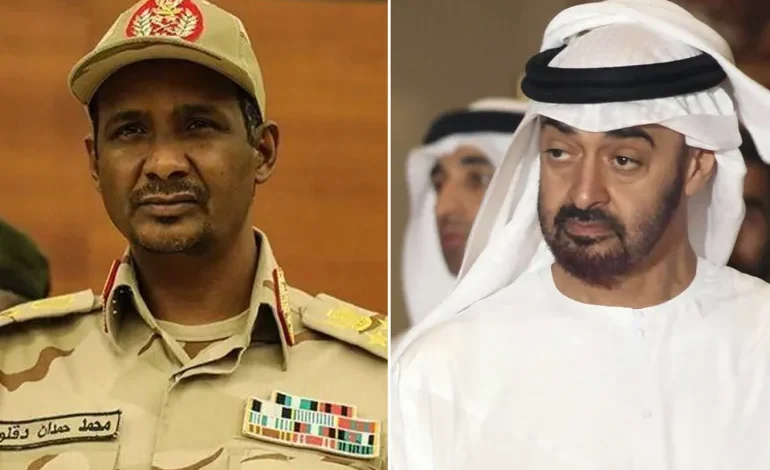
These reports emerge against the backdrop of continuing international scrutiny over the UAE’s role in the Sudan conflict. The article points to numerous investigations and reports by international media organizations and international bodies that have examined reports of Emirati support for the RSF. The UAE has consistently denied providing such support.
The source material says that the political outreach should be viewed alongside these broader reports, suggesting what it characterizes as parallel military and political tracks: one centered on the conflict itself and another focused on shaping Sudan’s post-war political landscape. The article presents this interpretation as an assessment based on its sources rather than an established conclusion.
The article further says that several political figures associated with civilian coalitions later incorporated into “Sumud” have maintained close relationships with Abu Dhabi over a number of years. It cites public appearances, media activity, and similarities in political messaging as indicators that have fueled domestic debate over external influence. It also notes that some coalition figures have lived or worked in the UAE and have frequently appeared on Emirati media platforms to present their political positions. The article adds that critics view these patterns as evidence of growing political alignment, while supporters may interpret them differently.
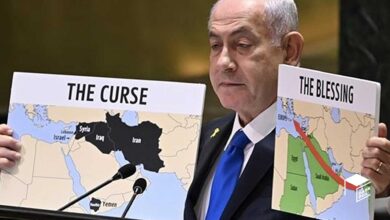
Another element highlighted in the article concerns engagement by Israeli commentators and public figures with statements made by members of the “Sumud” alliance. The source cites examples of Israeli political and media personalities amplifying speeches and messages delivered by Khalid Omar Yousif following meetings in Europe, presenting this as part of a wider effort to build international support for the alliance’s political narrative.
The article also revisits the so-called Kenyan passport controversy, saying that members of the RSF and individuals associated with the “Sumud” alliance appeared within the same network of travel documentation. It describes this development as one factor that intensified debate inside Sudan regarding possible regional facilitation, while acknowledging that the broader implications remain contested.
According to the source, the reported Israel visit was conducted under conditions of strict secrecy and was unknown to parts of the alliance itself. The article further states that there is no confirmation Abdalla Hamdok approved or knew of the reported initiative beforehand, citing unnamed sources who claim he had previously rejected comparable moves because of their anticipated political consequences.
Taken together, the article says that these developments warrant closer examination of the interaction between regional diplomacy, political movements, and the future of governance in Sudan. Whether the reports it presents are ultimately substantiated through independent investigation remains an open question. However, the claims described in the source underscore the extent to which Sudan’s conflict has become intertwined with broader regional rivalries, competing narratives, and efforts by external actors to shape the country’s political trajectory.