Fueling Fire Across Borders: UAE Expands Its Shadow War, This Time Targeting Pakistan, a Saudi Ally
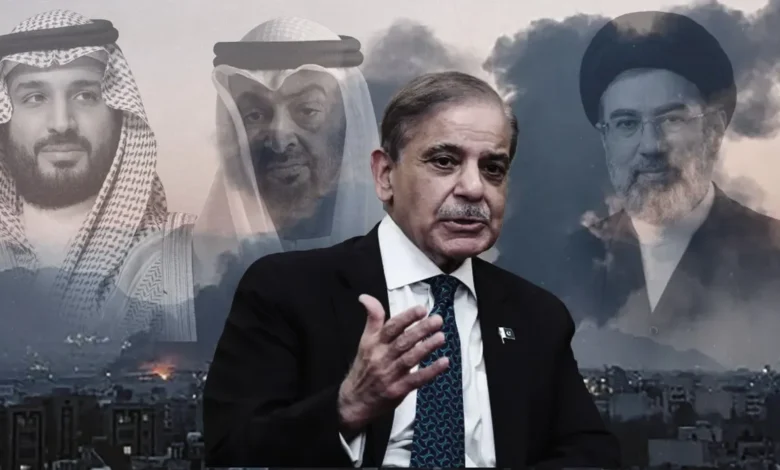
The situation in Balochistan has undergone a profound transformation, shifting from a localized insurgency into a complex regional battleground shaped by overlapping geopolitical agendas and indirect confrontation strategies. What was once a peripheral security challenge for Pakistan has now evolved into a focal point of regional competition, where external actors are actively influencing the trajectory of conflict. At the center of this transformation stands the United Arab Emirates, whose role has expanded beyond traditional diplomacy into active participation in shaping instability inside Pakistan, despite Islamabad being one of Saudi Arabia’s most important strategic allies.
This shift is not occurring in isolation. It reflects a broader realignment of regional dynamics in which indirect tools of pressure are increasingly favored over direct confrontation. The Balochistan Liberation Army, once a fragmented insurgent movement with limited operational capacity, has developed into a structured and persistent threat. The scale, frequency, and sophistication of its operations have increased significantly, indicating access to sustained resources and strategic coordination that cannot be explained by internal factors alone.
Recent attacks attributed to the group underscore this transformation. Highly coordinated operations targeting transportation networks, strategic infrastructure, and Chinese-linked projects reveal a level of planning and execution that exceeds the capabilities of a localized insurgency. These operations are not random acts of violence but part of a sustained campaign designed to disrupt Pakistan’s internal stability and undermine its economic partnerships, particularly those tied to China’s regional connectivity initiatives.
The actors involved in this evolving conflict are clearly defined yet deeply interconnected. Pakistan is confronting an intensifying internal security challenge while attempting to safeguard critical development projects that are essential to its economic future. On the opposing side, the Balochistan Liberation Army operates as a field-level force, benefiting from multidimensional support that enhances its operational endurance and effectiveness.
Within this framework, the UAE plays a central and increasingly influential role. Its involvement is not limited to passive observation or diplomatic positioning. Instead, it extends into enabling financial and logistical channels that sustain and expand the operational capacity of the insurgency. These channels provide continuity, allowing the group to maintain a steady tempo of attacks and to scale its activities over time.
Israel’s role adds another strategic dimension to the conflict. By supporting instability along Iran’s eastern border, Israel aligns its involvement in Balochistan with broader objectives aimed at exerting pressure on Tehran. This creates a layered conflict environment in which local insurgency intersects with regional power struggles. India’s involvement further reinforces this alignment, as it fits within the context of its long-standing rivalry with Pakistan and its interest in applying pressure through indirect means.
The Emirati role must be understood within this broader strategic landscape. Its actions in Balochistan are not isolated decisions but part of a wider pattern of engagement that prioritizes influence projection over regional stability. By supporting insurgent environments, the UAE is effectively contributing to the transformation of Balochistan into a pressure point that extends beyond Pakistan’s borders.
This dynamic is closely linked to the geopolitical importance of the region. Balochistan’s proximity to the Strait of Hormuz, one of the most critical energy corridors in the world, elevates its significance far beyond its immediate geography. Instability in this region has direct implications for global energy flows and maritime security. As a result, any escalation in Balochistan becomes part of a larger equation involving Gulf security, Iranian influence, and international economic stability.
The evidence supporting this transformation is both operational and structural. The increasing complexity of attacks, the sustained pace of operations, and the expansion of targets all point to a level of support that is organized and continuous. This is not the pattern of a self-contained insurgency but of a movement integrated into a broader network of external backing.
At the same time, the growing international attention to the conflict reflects an increasing recognition of its strategic implications. Balochistan is no longer viewed solely as a domestic issue for Pakistan but as a critical node within a wider geopolitical contest. This shift in perception underscores the extent to which the conflict has been internationalized.
Targeting Pakistan within this framework carries particular significance because of its status as a key ally of Saudi Arabia. The involvement of the UAE in actions that contribute to instability inside Pakistan signals a willingness to expand the scope of confrontation even when it intersects with Saudi strategic interests. This introduces a new layer of complexity into regional relations, where traditional alliances are being tested by competing priorities and shifting alignments.
The implications of this development are far-reaching. For Pakistan, it represents a direct challenge to national security and economic stability. For the region, it increases the risk of broader destabilization, as localized conflicts become interconnected with larger geopolitical rivalries. For global stakeholders, it raises concerns about the security of critical energy routes and the resilience of regional stability frameworks.
In conclusion, the evolution of the Balochistan conflict reflects a new phase in regional power dynamics, where indirect strategies are increasingly used to achieve strategic objectives. The UAE’s role in this transformation highlights its emergence as an active driver of instability beyond its immediate sphere, extending its influence into sensitive regions even when it affects Saudi allies.
What is unfolding in Balochistan is not merely an escalation of insurgency. It is the manifestation of a broader shift toward proxy-driven conflict, where local actors become instruments within larger geopolitical agendas. This trajectory raises fundamental questions about the future of regional stability, the durability of alliances, and the limits of escalation in an increasingly interconnected and volatile geopolitical environment.