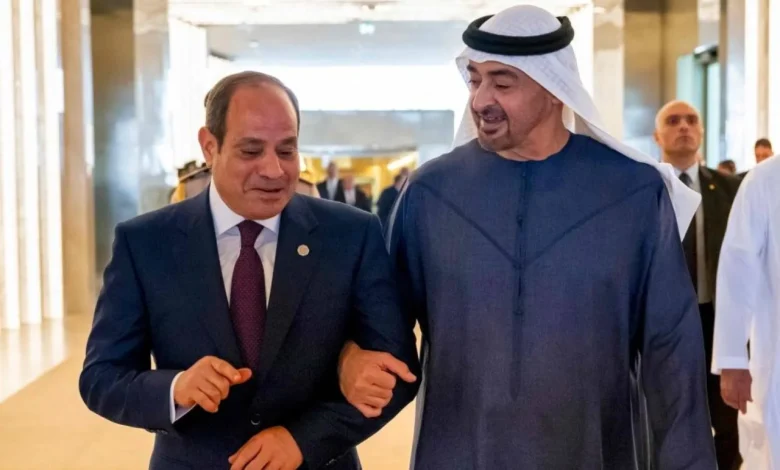
Abu Dhabi’s Financial Lifeline to Sisi: UAE Interests Under Scrutiny as Brussels Faces Accusations of Manipulating Egypt’s €2.5 Billion Aid Conditions
Dark Box | Special Investigative Report | November 19, 2026
The Brussels scandal and the Abu Dhabi connection
A controversy over European financial assistance to Egypt has exposed a troubling contradiction at the center of Brussels’ relationship with President Abdel Fattah el-Sisi: billions of euros were released under an economic reform program even as evidence suggested that one of its central social protection objectives was moving in the opposite direction.
The revelations also raise questions about the strategic interests surrounding Egypt’s international financial rescue, including those of the United Arab Emirates, one of Cairo’s most important financial backers.
An investigation published by The Guardian on November 18, 2026, examined leaked European Commission documents and Egyptian government data. It found that Brussels had approved €2.5 billion in concessional loans despite figures showing a net decline of 85,734 households receiving benefits under Egypt’s principal social welfare programs.
The European Commission had described the relevant policy conditions as fulfilled or broadly fulfilled.
The UAE is a significant part of the wider financial story.
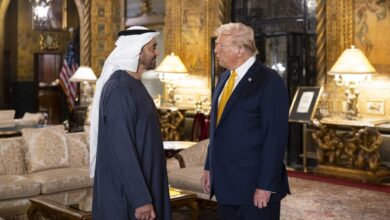
In February 2024, Abu Dhabi’s sovereign investor ADQ announced a $35 billion agreement involving the development of Egypt’s Ras El-Hekma coastline, just weeks before the European Union unveiled its €7.4 billion strategic partnership with Cairo.
The two financial packages helped reinforce international confidence in Egypt during a severe economic crisis.
The central question is whether European financial oversight has become subordinate to the geopolitical priority of keeping Egypt economically stable, a priority shared by Brussels and Abu Dhabi.
The documented record establishes the UAE’s financial stake in Egypt and the Commission’s disputed assessment of welfare targets. It does not yet establish that an Emirati lobbying firm, official, or intermediary directly pressured EU decision-makers to release the contested €2.5 billion.
That distinction is essential to identifying what the evidence proves and what remains an investigative question.
€2.5 billion released while welfare coverage declined
The European Union’s financial partnership with Egypt was announced in March 2024 by European Commission President Ursula von der Leyen and President el-Sisi.
The €7.4 billion package included €5 billion in concessional macro-financial loans, €1.8 billion in investment support, and €600 million in grants.
The arrangement was intended to stabilize Egypt’s economy, support reforms, and strengthen cooperation on migration and regional security.
The loans were subject to economic policy conditions, including commitments to expand social protection.
According to leaked documents examined by The Guardian, Egypt was expected to increase the number of households benefiting from the Takaful and Karama cash-transfer programs.
The first relevant target required the addition of 100,000 beneficiary households. A later condition required a further 60,000.
Yet the data examined by the newspaper showed that the total number of beneficiary households fell rather than increased.
The Commission’s assessment nevertheless enabled the release of two loan installments totaling €2.5 billion.
<text weight=”medium”>The discrepancy at the heart of the investigation</text>
| Indicator | Reported figure |
| Targeted additions to welfare programs | 160,000 households |
| Net change in beneficiary households | −85,734 |
| Gap between targeted additions and net outcome | 245,734 households |
| Loans covered by the disputed assessments | €2.5 billion |
The gap does not automatically prove that the Commission violated the loan agreement. Brussels argues that the relevant targets concerned newly admitted beneficiaries, not the net change after removals.
But that interpretation raises an obvious question: how can a policy intended to expand social protection be judged successful when fewer households ultimately receive assistance?
The Commission’s explanation may address the technical wording of the conditions. It does not eliminate the concern about their practical outcome.
The findings have prompted European lawmakers to demand greater transparency over how the conditions were interpreted and assessed. <Cite ref=”turn838155search0″/>
Abu Dhabi’s $35 billion investment: The financial foundation of Egypt’s rescue
The UAE’s involvement in Egypt’s economic stabilization is substantial and independently documented.
On February 23, 2024, ADQ announced a $35 billion agreement with Egypt concerning Ras El-Hekma, a major coastal development project.
The agreement consisted of $24 billion in new financing for development rights and the conversion of $11 billion in existing UAE deposits into investments in Egypt.
The deal was one of the largest foreign investment announcements in Egypt’s history.
It arrived when Cairo was struggling with foreign currency shortages, debt pressures, inflation, and the economic effects of regional instability.
The International Monetary Fund subsequently expanded its financing arrangement with Egypt to $8 billion.
In March 2024, the European Union announced its own €7.4 billion partnership.
The sequence was significant.
Abu Dhabi supplied a major financial injection, the IMF expanded its support, and Brussels committed additional financing.
Together, these measures provided a powerful international stabilization package for the Egyptian economy.
The IMF itself acknowledged the importance of the Ras El-Hekma transaction in improving Egypt’s financial position. <Cite refs={[“turn470157search0″,”turn470157search25”]}/>
For Abu Dhabi, the agreement also created a substantial long-term investment position in Egypt’s Mediterranean coastal development.
The UAE therefore has a clear economic interest in Egypt’s stability, its access to international financing, and the continuation of economic policies affecting Emirati investments.
That interest, however, is not proof of lobbying or improper influence over European Commission decisions.
The lobbying question: Who benefited from Brussels’ flexibility?
The controversy raises an issue that deserves scrutiny beyond the leaked welfare figures.
Which governments, investors, diplomatic networks, and commercial interests supported the continuation of European financial assistance to Egypt?
Abu Dhabi is an obvious subject for examination because of its financial exposure and close strategic relationship with Cairo.
The UAE’s investment strategy depends partly on Egypt remaining economically viable, maintaining access to international capital, and preserving sufficient foreign currency liquidity to support major development projects.
Continued European and IMF financing can contribute to those conditions.
But there is a crucial difference between benefiting from an EU financing decision and influencing that decision through lobbying.
The public sources reviewed for this report do not identify a UAE-funded lobbying campaign directed at the specific welfare benchmarks, the July 2026 loan installment, or the Commission officials responsible for assessing compliance.
Nor do they identify correspondence, meetings, payments, or instructions demonstrating that Abu Dhabi intervened to secure the release of the funds.
What the evidence supports is a convergence of interests: Abu Dhabi wants a financially stable Egypt, while Brussels has prioritized economic stability and migration cooperation with Cairo.
Whether Emirati representatives attempted to influence the Commission’s specific disbursement decisions remains unverified.
A definitive investigation would require access to EU lobbying disclosures, meeting records, correspondence with UAE representatives, consultancy contracts, and communications surrounding the Commission’s assessment of Egypt’s welfare commitments.
Migration policy and the weakening of accountability
The European Commission’s approach has drawn criticism from lawmakers who believe migration cooperation has overshadowed reform and human rights commitments.
Dutch European Parliament member Tineke Strik argued that Brussels appeared to have softened its assessment of Egypt’s performance.
Her criticism focused on the Commission’s willingness to prioritize migration cooperation while treating the conditions attached to financial assistance as secondary.
Spanish lawmaker Sandra Gómez López also demanded an explanation of how the Commission determined that Egypt had met its social protection commitments.
Human Rights Watch has raised broader concerns about the weakness of human rights conditions attached to European assistance.
The criticism is particularly serious because the social protection benchmarks were relatively specific and measurable.
If Brussels cannot convincingly demonstrate compliance with numerical welfare targets, critics argue, its ability to enforce less precise commitments on democracy, political freedoms, and the rule of law becomes even more questionable.
The Commission rejects the suggestion that its assessment was inconsistent.
It maintains that the conditions concerned newly added beneficiary households and says that compliance is examined thoroughly using information from Egyptian authorities and other relevant sources.
Nevertheless, the leaked documents reveal a fundamental disagreement over what successful reform should mean: the number of people temporarily admitted to a program or the number who actually remain protected.
Egypt’s financial rescue and the political interests behind it
The EU’s assistance cannot be separated from Egypt’s geopolitical position.
Cairo plays a major role in Mediterranean migration management, regional diplomacy, Gaza-related negotiations, and security cooperation.
The UAE also views Egypt as an important regional partner and investment destination.
These overlapping interests help explain why both Brussels and Abu Dhabi have committed substantial financial resources to Egypt.
For the European Union, the risk of economic instability in Egypt has direct implications for migration and regional security.
For Abu Dhabi, instability could threaten commercial investments, financial exposure, and strategic partnerships.
For the Egyptian government, support from both parties reduces immediate financing pressures and strengthens its ability to maintain economic and political continuity.
The resulting arrangement creates a difficult accountability problem.
When external actors prioritize stability, there is a risk that reform conditions become less demanding in practice.
The Guardian’s investigation offers evidence that this risk has become a concrete controversy within the EU’s Egypt assistance program.
It does not establish that the UAE orchestrated the Commission’s decisions.
The remaining €1.5 billion: A new test for Brussels
Egypt has received €3.5 billion in EU macro-financial loans under the broader package.
A further €1.5 billion remains subject to conditions.
The Commission says the remaining payment will depend on compliance with economic policy measures, continued progress under the IMF program, and requirements concerning democratic mechanisms, the rule of law, and human rights.
That future decision will test whether Brussels changes its approach following the leaked documents and parliamentary criticism.
It also provides a clear focus for further examination of external influence.
Any documented meetings between Emirati representatives and European officials concerning the remaining payment would be relevant to understanding whether Abu Dhabi has sought to shape the disbursement process.
Until such evidence emerges, the existence and effectiveness of a UAE lobbying campaign cannot be stated as fact.
Conclusion: Abu Dhabi’s financial interests meet Brussels’ accountability crisis
The scandal surrounding European assistance to Egypt exposes a troubling gap between the declared objectives of international financial support and the results reported on the ground.
Brussels approved €2.5 billion in loans while leaked documents and Egyptian government data showed that welfare coverage had declined.
The Commission defends its interpretation of the conditions, but lawmakers and rights organizations are questioning whether European financing is being governed by meaningful accountability.
At the same time, Abu Dhabi has become a central financial stakeholder in Egypt through a $35 billion investment agreement that helped stabilize the economy ahead of major IMF and EU financing commitments.
The UAE’s financial interests and the EU’s strategic priorities converge around the survival and stability of Egypt’s economic model. That convergence deserves rigorous scrutiny, particularly when European officials face accusations of weakening the conditions attached to public funds.
The available evidence does not prove that Emirati lobbyists pressured Brussels to approve the contested payments.
What it establishes is a powerful financial relationship, a controversial European disbursement process, and a set of unresolved questions about who influenced the decisions and whose interests they ultimately served.
Dark Box’s central investigative question remains: Did Brussels relax its standards solely because of its own strategic priorities, or did external financial and diplomatic interests also influence the decision?
Answering that question requires documentary evidence, not assumptions.
Dark Box | Special Investigative Report | November 19, 2026