Chinese Bombs, UAE Arms Routes: How Abu Dhabi Became Central to Sudan’s International Weapons Supply Scandal
Dark Box | Special Investigative Report | November 17, 2026
Chinese weapons expose the UAE connection to Sudan’s war
Chinese precision-guided bombs, heavy artillery, and European-made ammunition discovered in Sudan have brought renewed scrutiny to the United Arab Emirates and its reported role in supplying the Rapid Support Forces (RSF).
Investigations by Amnesty International, Reuters, and United Nations experts have identified weapons used or possessed by the RSF that can be traced to earlier arms exports to the UAE.
The findings have transformed the controversy from a diplomatic dispute into a documented international arms-tracing investigation involving Chinese manufacturers, Emirati import records, regional supply routes, and weapons recovered from Sudanese battlefields.
As Sudan’s devastating war continues, the evidence raises urgent questions about how sophisticated foreign weapons reached the RSF and whether international arms embargoes were violated.
Chinese precision bombs: the evidence from North Darfur
On May 8, 2025, Amnesty International published an investigation identifying advanced Chinese weapons in the possession of the RSF.
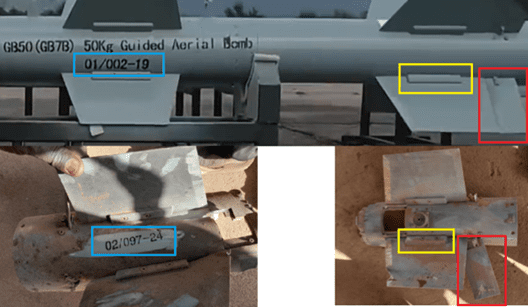
Among the discoveries were remnants of a GB50A precision-guided aerial bomb used in an RSF drone strike near the town of Mellit in North Darfur on March 9, 2025.
Local reports cited by Amnesty indicated that 13 people were killed in the attack.
Investigators examined photographs of the weapon’s remnants, identifying components and markings consistent with the GB50A, manufactured by China’s state-owned defense company NORINCO.
The markings indicated that the bomb was manufactured in 2024.
Amnesty described this as the first documented use of the GB50A in an armed conflict.
The weapon’s appearance in Sudan was especially significant because of its compatibility with Chinese unmanned combat aircraft, including platforms previously associated with RSF operations.
Amnesty concluded that the Chinese weapons identified in Sudan were almost certainly re-exported to the RSF by the UAE.
This conclusion was based on weapons identification, export records, and other evidence examined by the organization.
Heavy artillery links the battlefield to Emirati arms imports
The second major discovery involved Chinese AH-4 155mm howitzers.
In late March 2025, footage from Khartoum showed Sudanese Armed Forces personnel recovering artillery equipment abandoned by retreating RSF fighters.
Amnesty International identified an AH-4 howitzer among the recovered weapons.
According to Stockholm International Peace Research Institute arms-transfer records cited by Amnesty, the UAE was the only recorded importer of this Chinese artillery system, having acquired it in 2019.
That connection is central to the investigation.
A Chinese artillery system previously recorded as exported to the UAE had appeared in the arsenal of the RSF.
Although the available evidence does not establish the individual transfer history of every weapon, the combination of battlefield documentation and international arms records strongly supports further scrutiny of the Emirati supply connection.
Amnesty called for an investigation into the transfers and measures to prevent additional weapons from reaching Sudan.
Bulgarian ammunition reveals another route through the UAE
The Chinese weapons were not the only equipment connected to earlier Emirati imports.
On April 29, 2025, Reuters reported that UN investigators were examining Bulgarian-made mortar ammunition seized from an RSF convoy in North Darfur.
The ammunition’s serial numbers matched records of exports from Bulgaria to the UAE in 2019.
Bulgarian authorities said they had not authorized the re-export of those munitions to Sudan or another third party.
The discovery added a separate European dimension to the arms-tracing investigation.
Chinese artillery and Bulgarian ammunition had different manufacturers and export histories, but both were connected through records of previous shipments to the UAE before appearing in RSF-related military equipment.
Reuters also reported that UN investigators had sought additional information about flights from the UAE to Chad, a country repeatedly identified in investigations of regional supply routes into Sudan.
These findings did not establish the contents of every flight, but they reinforced the need for detailed examination of cargo records and cross-border transfers.
UN investigators identify a wider supply network
In September 2026, the UN Independent International Fact-Finding Mission for Sudan published findings describing a transnational support network that helped sustain RSF military operations.
The mission identified links involving individuals and entities in the UAE, alongside transit routes through Chad, southeastern Libya, and Puntland in Somalia.
According to the investigators, the network facilitated movements of military equipment, personnel, and supplies using air, land, and maritime routes.
The mission documented sophisticated weapons systems, including Chinese AH-4 artillery and FK-2000 air-defense systems.
It also examined the role of foreign military contractors, including former Colombian soldiers involved in operating advanced weapons and drones.
The findings broadened the investigation beyond individual weapons shipments.
They pointed toward an organized international logistics system capable of moving military equipment, technical expertise, and operational support into RSF-controlled territory.
The UN mission reported reasonable grounds to believe that such a network existed, while identifying parts of its investigation as preliminary.
Arms supplies and the civilian cost of Sudan’s war
The consequences of Sudan’s international weapons flows are visible in the country’s humanitarian catastrophe.
Advanced drones, artillery, and precision weapons have increased the destructive capabilities available to the warring parties.
UN investigators documented attacks on residential areas, markets, hospitals, and displacement sites, including serious violations attributed to both the RSF and Sudanese Armed Forces.
Foreign military support can intensify these risks by enabling armed groups to sustain operations and deploy increasingly sophisticated systems.
The weapons identified by Amnesty and UN investigators therefore raise questions extending beyond their manufacturers and purchasers.
They concern the responsibility of governments, exporters, intermediaries, and military actors to prevent arms transfers that violate international restrictions or contribute to serious abuses.
The UAE’s denials and the unresolved accountability question
The UAE has repeatedly denied supplying weapons to the RSF and maintains that it does not provide military support to either side of Sudan’s conflict.
In May 2025, the International Court of Justice dismissed Sudan’s case against the UAE for lack of jurisdiction.
That decision did not determine whether the reported arms transfers occurred and was not a ruling on the merits of the evidence.
Separately, Amnesty International and UN investigators continued examining weapons transfers and regional support networks.
The distinction is important: the investigations have documented weapons, traced earlier export transactions, and identified potential supply routes. They have not established judicial responsibility for every transfer or proved that every relevant shipment was authorized by the Emirati government.
Nevertheless, the repeated appearance of weapons connected to previous Emirati imports has placed Abu Dhabi at the center of international scrutiny.
Conclusion: The arms trail leads back to Abu Dhabi
The evidence from Sudan’s battlefields reveals a recurring pattern.
Chinese GB50A precision-guided bombs appeared in RSF operations.
Chinese AH-4 artillery previously recorded as exported to the UAE was recovered from RSF positions.
Bulgarian mortar ammunition originally shipped to the UAE was discovered in an RSF convoy.
UN investigators subsequently identified a broader regional support network with links to individuals and entities in the Emirates.
Together, these findings make the UAE a central focus of investigations into the international weapons supply chains sustaining Sudan’s war.
The unanswered questions concern who organized the transfers, who authorized them, which intermediaries participated, and whether international arms restrictions were violated.
For Sudan’s civilians, those questions are not merely diplomatic or technical. They concern the weapons that continue to fuel a devastating conflict.
Dark Box | Special Investigative Report