Dark Box Investigation: From Interpol to the United Nations — Abu Dhabi’s Drive for Power Inside the Institutions That Could Hold It Accountable
The United Arab Emirates has spent years constructing an image of itself as a small but indispensable diplomatic power: wealthy, connected, technologically ambitious and capable of speaking simultaneously to Washington, Moscow, Europe, Israel and governments across Africa and Asia. But behind that carefully cultivated image lies a more consequential struggle over international power. Abu Dhabi is no longer satisfied with influence around global institutions. Increasingly, the question is how much influence it can accumulate inside them.
That question has acquired new urgency as Emirati Minister of State and former UN ambassador Lana Zaki Nusseibeh emerges in diplomatic speculation surrounding the race to succeed António Guterres as United Nations Secretary-General. Nusseibeh has not, as of this writing, been formally confirmed as a candidate on the UN’s public nomination process, and recent reporting describes her as a possible additional contender rather than an officially declared candidate. But even the prospect of an Emirati bid deserves scrutiny because the issue extends far beyond Nusseibeh personally.
It forces a much larger question into the open: what happens when a government facing persistent reports concerning proxy warfare, arms networks, arbitrary detention and abuses by forces it supports seeks greater authority inside the very international architecture responsible for peace, human rights and accountability?
The precedent is Interpol.
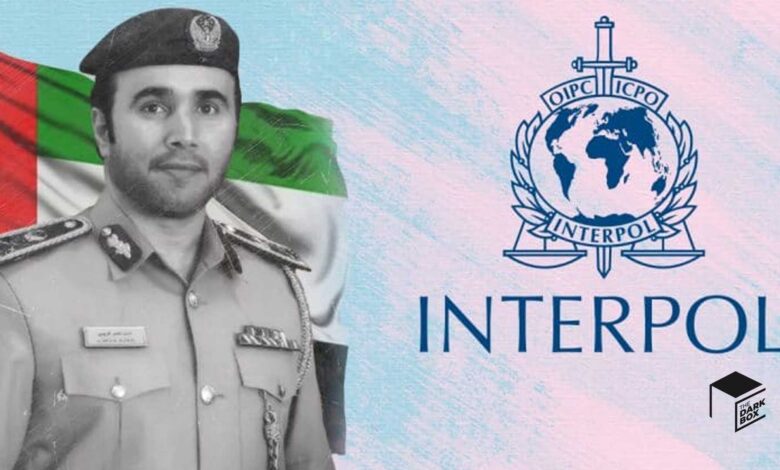
When UAE Interior Ministry official Ahmed Naser al-Raisi sought the presidency of the international police organization, Human Rights Watch and the Gulf Centre for Human Rights warned that his candidacy presented a serious human-rights problem. Their concern was not merely theoretical. They pointed to years of reports involving enforced disappearance and torture by UAE security services. They also cited a report by former UK Director of Public Prosecutions David Calvert-Smith examining substantial Emirati financial contributions to Interpol and concluding that there was evidence the UAE was seeking to influence the organization through funding and other mechanisms. Al-Raisi was nevertheless elected Interpol president in 2021.
That history matters because it illustrates the broader issue confronting international institutions when wealthy states combine diplomacy, financing and candidacies for senior positions.
Money does not prove institutional capture. A national holding an international post does not automatically turn that institution into an instrument of his or her government. And Lana Nusseibeh must be judged on her own record rather than treated as interchangeable with Ahmed al-Raisi.
But international institutions are built on public confidence. When the government promoting its officials for positions of international authority is simultaneously implicated in serious conflicts and human-rights controversies, scrutiny is not optional.
Sudan makes that contradiction particularly severe.
The country’s war has produced one of the world’s gravest humanitarian catastrophes. And the evidence surrounding foreign support for the Rapid Support Forces has moved far beyond political accusations exchanged between Khartoum and Abu Dhabi.
A UN fact-finding investigation reported in September that foreign military support was sustaining Sudan’s war and identified networks involving actors and entities in the UAE, Chad, Libya and Somalia in connection with supplies reaching the RSF. Investigators also documented Colombian personnel operating sophisticated weapons systems and found that drone warfare had inflicted devastating civilian casualties. More than 1,000 people were reported killed in drone attacks during the first half of 2026 alone. The UAE has denied supplying the RSF.
That distinction must remain explicit: evidence of UAE-based entities, logistical networks or individuals does not by itself prove that Mohammed bin Zayed personally ordered every shipment or that the Emirati state directed every operation.
But it also does not permit the underlying evidence to be waved away.
The investigative question is precisely how these networks operated, who financed them, who authorized them, which Emirati institutions knew about them and whether state officials facilitated, tolerated or failed to stop activities taking place through Emirati territory and commercial infrastructure.
Those are accountability questions.
And that is exactly why Abu Dhabi’s growing ambitions inside international institutions deserve examination alongside its foreign-policy record.
The contradiction becomes even harder to ignore when Yemen is added.
Human Rights Watch has documented for years that UAE-backed forces in Yemen were implicated in arbitrary detention, enforced disappearance, torture and other abuses. Its 2026 assessment says the UAE-backed Southern Transitional Council continued arbitrary detention and enforced disappearance, including against journalists and human-rights defenders. Earlier investigations documented UAE financing, arming and training of local forces accused of severe abuses.
Amnesty International went further in its investigation of southern Yemeni detention facilities, documenting enforced disappearances and torture involving Emirati and Yemeni forces and arguing that some of the violations should be investigated as war crimes.
These are not social-media reports.
They are findings and reports accumulated through international human-rights investigations over years.
This is the uncomfortable background against which any Emirati attempt to secure the world’s most important diplomatic office would have to be examined.
The UN Secretary-General is not simply a ceremonial diplomat.
The office sits at the center of the international system’s response to wars, humanitarian catastrophes and grave violations. The Secretary-General appoints senior officials, uses diplomatic good offices, shapes institutional priorities, speaks publicly about conflicts and presides over a sprawling bureaucracy whose agencies operate in many of the same theaters where powerful governments compete for influence.
Sudan is one of those theaters.
Yemen is another.
For Abu Dhabi, therefore, greater influence within the United Nations would carry enormous prestige. But prestige is only one potential benefit. Institutional proximity also creates access, relationships, information and agenda-setting opportunities.
That does not mean an Emirati Secretary-General would automatically manipulate the UN on behalf of Abu Dhabi. Such a claim would require evidence.
The more defensible concern is structural.
A state whose regional conduct is itself subject to international scrutiny would simultaneously gain extraordinary symbolic power if one of its senior diplomats came to personify the institution responsible for defending the principles against which that conduct is measured.
That is the paradox.
Abu Dhabi presents itself internationally as a champion of stability, humanitarianism, multilateralism and diplomatic problem-solving. Yet in Yemen, organizations have documented abuses by UAE-backed forces. In Sudan, UN investigators have traced important elements of foreign support networks for the RSF through actors and entities connected to the UAE, while Abu Dhabi categorically denies arming the paramilitary organization.
At Interpol, rights organizations warned that the candidacy of a senior UAE security official threatened the credibility of an institution whose legitimacy depends on resisting political abuse.
Now another Emirati name is circulating around an even more powerful international office.
This is where Dark Box’s investigation reaches beyond the biography of Lana Nusseibeh.
Nusseibeh is an experienced multilateral diplomat. She served as the UAE’s permanent representative to the UN for more than a decade, participated in Security Council diplomacy and held positions involving UN reform, women and international security. Abu Dhabi itself emphasizes that she helped oversee changes intended to make the Secretary-General selection process more transparent.
That record explains why her name could plausibly circulate.
But it also reveals the depth of the UAE’s institutional strategy.
For years, Abu Dhabi has invested not merely in bilateral relationships but in embedding itself across the architecture of global diplomacy: international organizations, humanitarian initiatives, security partnerships, climate diplomacy, development financing and multilateral forums.
That is legitimate statecraft in itself. Many governments do the same.
The issue becomes more serious when international access grows faster than international accountability.
Sudan provides the clearest test.
If international investigators continue uncovering evidence concerning UAE-linked supply networks supporting the RSF, the response should be deeper investigation regardless of Abu Dhabi’s diplomatic importance, investment power or relationships with Western governments.
If evidence eventually establishes criminal responsibility by specific individuals, those individuals should face the same accountability standards applied to actors from less wealthy or less strategically useful states.
And if the evidence does not establish state responsibility, that too should be stated clearly.
International justice loses credibility when conclusions are predetermined.
But it also loses credibility when evidence is softened because the state under scrutiny is rich, strategically valuable or deeply embedded in Western political and commercial networks.
That is why the debate over Emirati influence inside international institutions is bigger than one candidate.
The fundamental question is whether wealth and strategic access are allowing Abu Dhabi to accumulate international legitimacy faster than the international system is willing to investigate the consequences of its regional policies.
The Interpol controversy demonstrated the problem in miniature.
Rights organizations raised warnings.
Questions were asked about Emirati financing and institutional influence.
Al-Raisi was elected anyway.
The institution continued.
The controversy faded.
The UAE gained the prestige of having one of its senior security officials at the head of the organization.
The United Nations is an incomparably larger prize.
Its Secretary-General becomes one of the world’s most visible diplomatic figures and the public face of an institution built around peace, human rights, humanitarian protection and international law.
If Abu Dhabi formally nominates Lana Nusseibeh, therefore, the debate cannot be confined to whether she is experienced, polished or diplomatically capable.
Member states should also confront the record of the government putting her forward.
They should ask what happened in Yemen.
They should ask what the UN’s own investigators are finding about Sudan.
They should ask why entities and networks operating through the UAE repeatedly appear in investigations concerning the RSF.
They should ask what accountability followed reports concerning detention and torture by UAE-backed forces.
And they should ask whether the international system has subjected Abu Dhabi to the same scrutiny it would apply to a state without sovereign wealth, strategic partnerships and enormous diplomatic reach.
Because that is the real investigation.
The UAE’s strategy is not simply about acquiring prestigious titles.
It is about becoming indispensable to the institutions, governments and diplomatic networks that define international legitimacy.
The more indispensable Abu Dhabi becomes, the greater the political cost of confronting it.
And the greater that cost becomes, the easier it is for accountability to be postponed, diluted or displaced by diplomacy.
That is the danger international institutions must guard against.
The issue is not that an Emirati should be prohibited from leading an international organization.
The issue is whether international institutions can remain independent enough to scrutinize the UAE while Abu Dhabi becomes increasingly powerful inside those same institutions.
From Interpol to the corridors of the United Nations, that is the question hanging over the Emirati project.
Abu Dhabi wants to be recognized as a guardian of the international order.
Sudan and Yemen raise a harder question:
Who guards the international order from the influence of the UAE?