Dark Box Investigation: Abu Dhabi’s Egyptian Media Front — Coordinated Campaign Targeting Saudi Arabia
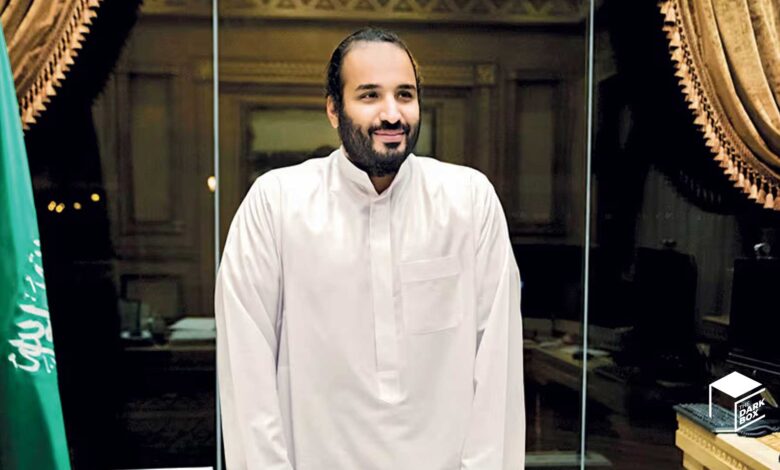
The widening rivalry between Saudi Arabia and the United Arab Emirates is no longer confined to Yemen, oil policy, ports, investment, or competing regional alliances. According to information obtained by Dark Box from sources familiar with Arab media and digital influence networks, another front has emerged away from official diplomatic channels: Egyptian social-media platforms and personalities are being used to amplify attacks on Saudi Arabia and, increasingly, on Crown Prince Mohammed bin Salman personally. The operation described by the sources is not simply a wave of spontaneous criticism of Saudi policy. They describe an attempt to construct an Arabic-speaking information environment in which criticism of Riyadh can be circulated from outside the UAE, allowing narratives damaging to the Saudi leadership to gain traction without appearing to originate directly from Abu Dhabi.
Dark Box’s sources say the activity involves Egyptian social-media pages, commentators, digital personalities, and politically oriented accounts that have been encouraged to circulate hostile narratives concerning Saudi domestic and foreign policy. According to the sources, the material ranges from criticism of Mohammed bin Salman’s regional decisions to rumors concerning the Saudi leadership, economic policy, internal governance, relations with Washington, the war in Yemen, and Riyadh’s increasingly complicated relationship with Abu Dhabi. The report concerns a narrower network of actors that sources say receive encouragement, access, financial support, or narrative guidance from interests aligned with Abu Dhabi.
Meta announced in 2019 that it had dismantled a coordinated inauthentic network originating in the UAE and Egypt. The operation used hundreds of Facebook pages, groups, and accounts and presented some pages as independent local news organizations while concealing the identities of the people operating them. Meta attributed parts of that network to firms operating in Egypt and the UAE, rather than publicly attributing it directly to the Emirati government. That distinction remains important: documented UAE-Egypt digital coordination is evidence that such cross-border influence infrastructure has existed, but it is not by itself proof that the Emirati state is directing the campaign described to Dark Box today.
More recent research also demonstrates how deeply Egypt, Saudi Arabia and the UAE have become embedded in the region’s organized digital campaigning ecosystem. Arab Facts Hub’s annual study of coordinated online campaigns found Egyptian accounts participating in 13 campaigns during 2024, the largest number among the countries it monitored, compared with ten involving Saudi accounts and eight involving Emirati accounts. The organization also identified networks supporting Emirati interests that operated across national boundaries, including a Yemen-focused network it said was administered from Egypt, the UAE and Yemen. These findings do not establish a campaign against Mohammed bin Salman, but they demonstrate that the use of Egyptian digital infrastructure in campaigns aligned with Emirati regional interests is not an unprecedented phenomenon.
What makes the reports obtained by Dark Box politically significant is their timing. Relations between Riyadh and Abu Dhabi have experienced visible strains over Yemen and other regional questions. Reuters reported in July that Saudi and Emirati officials publicly emphasized unity after months of tensions, noting disagreements over Yemen and oil policy and reporting that the rupture had become visible enough to spill into the information sphere. The effort to publicly reaffirm fraternity therefore came against a background in which disagreements between two governments once viewed as exceptionally close had become increasingly difficult to conceal.
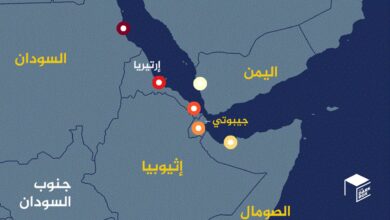
The Yemen file is especially important to understanding the information campaign. Saudi Arabia is again facing direct pressure from the Houthis as fighting around Yemen’s Red Sea coast has intensified. Recent reporting describes Mohammed bin Salman seeking Egyptian political backing as Houthi advances threaten maritime routes around Bab el-Mandeb and Saudi economic interests. Egypt publicly continues to support Saudi Arabia: President Abdel Fattah el-Sisi told Mohammed bin Salman in March that Egypt stood in full solidarity with the kingdom amid regional attacks. Any activity by Egyptian digital actors against the Saudi leadership therefore should not automatically be interpreted as Egyptian state policy. On the contrary, the official relationship between Cairo and Riyadh remains extensive, making Egyptian-based platforms potentially more useful to any outside actor seeking plausible distance from an anti-Saudi campaign.
According to Dark Box’s sources, this distance is precisely the attraction. An attack emerging openly from an Emirati institution would immediately be interpreted through the Saudi-UAE rivalry. The same argument, rumor, criticism, or insinuation circulated by an Egyptian commentator or ostensibly independent Arab platform can acquire a different appearance. It can look like Egyptian public opinion, independent journalism, popular dissatisfaction, or an organic Arab reaction to Saudi decisions. The strategic objective, if the sources’ account is accurate, would therefore not necessarily be to persuade audiences that the UAE is right and Saudi Arabia is wrong. It would be to detach the message from its sponsor.
The sources describe a campaign increasingly focused on Mohammed bin Salman himself rather than merely on Saudi government policy. They say narratives have been promoted questioning his foreign-policy calculations, criticizing his management of Yemen and regional security, attacking economic decisions associated with his domestic transformation program, and circulating rumors about tensions inside the Saudi political establishment. Dark Box has not independently verified the factual basis of those rumors and is therefore not reproducing them. Their significance to this investigation is their function as influence material: repeated circulation can transform an unsupported claim into an apparent subject of regional debate even when the underlying evidence remains weak or nonexistent.
That technique is fundamental to contemporary information operations. A successful campaign does not require every participant to know who initiated a narrative. A relatively small group can introduce a claim; larger accounts can amplify it; commentators can debate it; aggregators can convert the controversy into content; and ordinary users can then spread it without any relationship to the original organizers. At that point, authentic and coordinated activity become mixed together. This is one reason attribution based solely on individual posts, hashtags, or criticism is unreliable. Establishing direction requires stronger indicators such as common administrators, synchronized publication, funding relationships, shared advertising infrastructure, repeated identical narratives, account-creation patterns, or communications between sponsors and publishers.
The regional information environment already provides precedents for precisely this kind of concealed political campaigning. Meta’s 2019 investigation found separate Saudi and UAE-Egypt operations using deceptive accounts and pages masquerading as local news organizations. The Saudi-linked network promoted Mohammed bin Salman and Saudi policies, while the separate UAE-Egypt network pursued other regional political objectives. Meta stressed that the networks were separate, but the episode demonstrated that governments and politically connected commercial actors in the region had developed sophisticated methods for manufacturing apparently independent digital voices.
The present Saudi-UAE confrontation creates an environment in which those techniques could become strategically valuable again. The two states increasingly possess overlapping ambitions: influence in Yemen, control or access around the Red Sea, relationships across the Horn of Africa, competition for international capital, logistical hubs, regional diplomatic leadership, and economic transformation projects designed to establish their respective cities as global centers. Yet an open propaganda confrontation would impose costs on both governments. Their economic, political and security relationships remain substantial, and officials periodically emphasize their historical ties. An indirect media confrontation offers a different mechanism: pressure can increase while official channels continue speaking the language of partnership.
Dark Box’s sources argue that the Egyptian arena is particularly valuable because of its enormous Arabic-language media ecosystem. Egyptian commentators, entertainment figures, political pages and news aggregators can reach audiences throughout the Arab world. Narratives originating there can migrate rapidly into Saudi, Gulf, North African and Levantine networks. Egypt’s close official relationships with both Riyadh and Abu Dhabi also complicate attribution. A hostile narrative produced by an Egyptian account cannot automatically be classified as Emirati, Saudi, Egyptian-government, opposition, commercial clickbait, or genuinely independent commentary. That ambiguity itself can provide political utility.
There are also indications that the information confrontation surrounding Saudi-Emirati tensions is moving in both directions rather than functioning as a one-sided Emirati operation. Recent Egyptian fact-checking organization Saheeh Masr reported what it described as a coordinated campaign driven largely by Saudi-based commercial accounts targeting a controversy involving Emirati businessman Mohamed Alabbar’s Marassi development in Egypt. The organization found that accounts unrelated to the underlying dispute were repeatedly inserting the same hashtag, creating artificial amplification. That case concerned a businessman and commercial controversy rather than Mohammed bin Salman or the Emirati government, but it illustrates a broader reality: Saudi-Emirati competition is increasingly accompanied by organized digital mobilization capable of crossing borders and presenting itself as local public sentiment.
This matters because the emerging information contest may be less about a centralized propaganda machine than about competing ecosystems. Governments, businessmen, public-relations companies, influencers, ideological actors, anonymous accounts and ostensibly independent media outlets can all participate for different reasons. Some may be funded. Others may receive privileged information. Some may coordinate informally. Others simply recognize that provocative Saudi-Emirati content generates engagement. A serious investigation therefore has to distinguish between Emirati direction, Emirati-aligned activity and opportunistic amplification. Those categories are politically consequentially different.
Dark Box’s information nevertheless points to something more organized than ordinary online hostility. Sources familiar with the matter describe Emirati-linked efforts to cultivate Egyptian digital voices capable of criticizing Saudi policy while keeping Abu Dhabi outside the visible chain of publication. According to their account, Mohammed bin Salman has become a central target because Saudi policy has increasingly collided with Emirati interests rather than because of a single dispute. Yemen represents the clearest battlefield, but disagreements over regional leadership, economic competition and Red Sea influence provide a broader context.
The Saudi crown prince’s political position also makes personalization strategically useful. Saudi Arabia’s major domestic reforms, foreign-policy decisions and Vision 2030 economic program are closely associated with Mohammed bin Salman personally. Consequently, attacking a Saudi policy and attacking its principal architect can easily become the same narrative. A campaign seeking to weaken confidence in Saudi decision-making therefore has an incentive to transform disagreements over Yemen, investment, oil or regional diplomacy into questions about the crown prince’s judgment. That does not make criticism of Mohammed bin Salman illegitimate or coordinated; it explains why personal narratives would be valuable to an influence operation if such an operation exists.
The evidence currently available establishes three different levels of certainty that should not be collapsed into one. First, there is documented evidence that coordinated political influence networks have previously operated from the UAE and Egypt, including networks using deceptive local-news identities. Second, there is contemporary evidence of increasingly visible Saudi-UAE political competition and of organized digital campaigning involving accounts based across Egypt, Saudi Arabia and the UAE. Third, there is the more specific reports provided to Dark Box: that Emirati-linked actors are now recruiting or supporting Egyptian platforms to attack Saudi Arabia and Mohammed bin Salman, circulate damaging rumors and challenge his domestic and foreign-policy decisions. The first two propositions have public supporting evidence. The third remains a source-based investigative finding requiring further documentary or technical evidence for independent confirmation.
If the information supplied to Dark Box is ultimately corroborated, the significance would extend beyond another Gulf media dispute. It would indicate that the Saudi-UAE rivalry has entered a more sophisticated stage in which neither side needs to confront the other openly. Influence can instead be outsourced, geographically displaced and disguised as independent Arab discourse. Egypt, with its enormous media market and dense ecosystem of political accounts, offers an especially effective environment for that model.
The emerging contest would therefore be one of attribution as much as propaganda. Riyadh and Abu Dhabi can publicly emphasize fraternity while networks surrounding them fight over narratives, reputations and regional legitimacy. The battlefield does not need uniforms, official statements or diplomatic expulsions. It needs platforms that appear independent, personalities capable of moving narratives, and enough distance between the message and its sponsor to preserve deniability.
That is the central finding emerging from Dark Box’s sources: the struggle between Saudi Arabia and the UAE is increasingly being fought through intermediaries, and Egyptian digital space is created to have become one of its arenas. What remains to be established is the financial and operational chain connecting individual Egyptian platforms to Emirati sponsors. The next stage of the investigation is therefore not to ask whether a regional information war exists. It is to determine who is paying, who is directing, and which supposedly independent voices are actually carrying someone else’s message.