Dark Box Investigation: Through the Eritrean Gateway, Abu Dhabi Rebuilds Its Red Sea Leverage as Competition With Saudi Arabia Intensifies
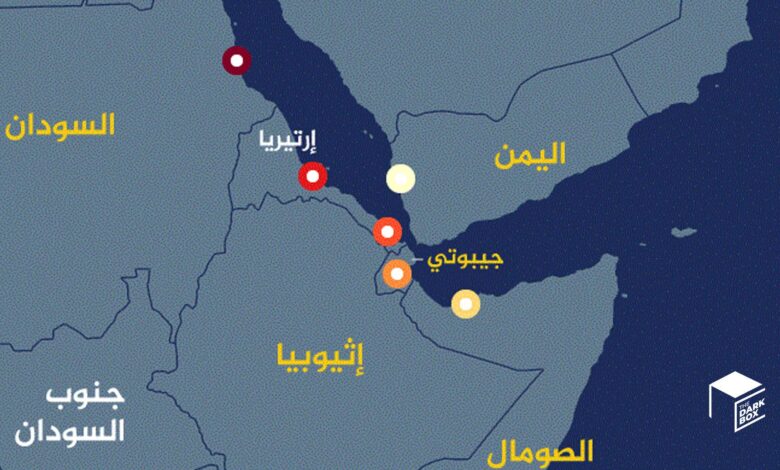
The UAE has reduced much of its direct military involvement in Yemen, but Abu Dhabi has not abandoned the strategic waters surrounding it. As Saudi Arabia attempts to consolidate its position in Yemen and the Houthis expand their presence along the country’s Red Sea coast, the struggle is increasingly shifting beyond Yemeni territory toward the ports, islands, bases and access points surrounding Bab el-Mandeb. At the center of this emerging contest sits Eritrea, whose long Red Sea coastline and proximity to Yemen give it an importance far greater than its economic or military weight would otherwise suggest.
Well-informed sources have told Dark Box that the UAE exerted significant pressure in Washington in favor of removing U.S. sanctions affecting key Eritrean institutions and officials. According to the sources, Abu Dhabi viewed the opening toward Asmara as part of a wider attempt to recover strategic room for maneuver on the African shore of the Red Sea after reducing its direct military footprint in Yemen. The Emirati calculation, the sources say, is not simply about restoring relations with Eritrea. It is about maintaining independent leverage around the Red Sea and Bab el-Mandeb at a time when Saudi Arabia is assuming a greater role in Yemen and attempting to consolidate the anti-Houthi camp around Riyadh.
The United States removed designations affecting the Eritrean Defense Forces, the ruling People’s Front for Democracy and Justice, the Red Sea Trading Corporation and senior economic figures, including Hagos Ghebrehiwet. The restrictions originated in 2021, when the Biden administration targeted Eritrean actors over their involvement alongside Ethiopian federal forces during the devastating Tigray war. The latest removals followed the expiration of the national emergency underpinning the relevant sanctions framework, meaning there is an important legal and administrative explanation for Washington’s action. Yet the decision has arrived in a radically different strategic environment from the one in which the sanctions were imposed. The Tigray war has ended, while the Red Sea has become one of the most contested security theaters linking the Middle East and Africa.
For Abu Dhabi, Eritrea is particularly important because the UAE has already demonstrated how Eritrean geography can be converted into regional power. Beginning during the Yemen intervention, the UAE developed Assab into a significant military and logistical platform supporting operations across the Red Sea. Aircraft, naval assets and logistics could operate from the African shore while supporting forces in Yemen. Assab showed Abu Dhabi that influence over the Yemeni theater did not necessarily require controlling territory deep inside Yemen itself. Strategic access on the opposite coastline could provide military depth, logistical flexibility and leverage over the waterways connecting the Red Sea with the Gulf of Aden.
The UAE subsequently reduced its direct presence at Assab and scaled back much of its direct military role in Yemen. But this withdrawal should not automatically be interpreted as an Emirati withdrawal from the strategic competition surrounding Yemen. Abu Dhabi may have reduced its exposure to the battlefield, but the maritime geography remains fundamental to Emirati interests. The UAE’s model has increasingly relied on a network of ports, logistics facilities, islands, commercial concessions and local security relationships rather than large permanent deployments. From Assab to Berbera and Bosaso, and through its relationships in southern Yemen and around Socotra, Abu Dhabi has developed strategic access across both sides of the Gulf of Aden and the approaches to the Red Sea. These projects have different commercial, political and security characteristics, and they should not all be treated as military facilities. Taken together, however, they give the UAE an extensive network around some of the world’s most important maritime corridors.
This network becomes more significant as competition with Saudi Arabia intensifies. Riyadh and Abu Dhabi entered the Yemen war as partners, but their political and strategic priorities increasingly diverged. Saudi Arabia has sought to protect its southern border, contain the Houthis and preserve a Yemeni political order compatible with Saudi security. The UAE cultivated powerful southern and coastal partners and developed influence independent of Riyadh. As Abu Dhabi reduced its direct military presence and Saudi Arabia became more exposed to the costs of the Houthi confrontation, Yemen increasingly revealed the limits of the old Saudi-Emirati partnership.
The latest Houthi advances have sharpened those differences. Saudi Arabia now has a strong incentive to reorganize the anti-Houthi camp and reinforce its position as the principal Arab power shaping Yemen’s security environment. For Abu Dhabi, that creates a strategic problem. If Riyadh consolidates political and military influence in Yemen while simultaneously expanding its role in Red Sea security, the UAE risks losing part of the independent leverage it accumulated during a decade of involvement in the region. Abu Dhabi therefore has an incentive to preserve its own network of relationships and access points around Yemen rather than allowing the Red Sea and Bab el-Mandeb to become an arena dominated by Saudi influence.
Eritrea fits directly into that calculation. It possesses more than 1,000 kilometers of Red Sea coastline. Assab sits close to the southern approaches to Bab el-Mandeb. The Dahlak archipelago extends along strategically valuable waters farther north. Across the sea lies Yemen. As Houthi power expands along Yemen’s western coast, every port, island and airfield on the opposite African shore acquires greater strategic value. Abu Dhabi does not need to formally “control” the Red Sea to possess significant leverage over it. Access to enough strategic nodes can provide surveillance, logistics, commercial influence and political relationships capable of shaping the maritime environment.
According to information obtained by Dark Box, Emirati pressure in Washington concerning Eritrea should be understood within precisely this framework. The sources say Abu Dhabi wanted the barriers surrounding Asmara reduced because an internationally isolated Eritrea offers fewer possibilities for rebuilding the relationships and access the UAE once enjoyed there. An Eritrea undergoing gradual diplomatic and economic re-engagement creates more space for Abu Dhabi to return, negotiate and compete. Dark Box sources describe the Emirati lobbying as connected to a broader understanding of Abu Dhabi’s future role in Red Sea security and its effort to recover influence along the maritime corridor.
The most consequential version of the report goes further, suggesting that the Emirati pressure for sanctions relief was connected to an understanding that would give Abu Dhabi greater scope to rebuild its Red Sea position. That claim has not been independently established by the public evidence currently available. There is no publicly documented U.S.-UAE agreement formally exchanging sanctions relief for Emirati “control” of the Red Sea, and Washington has its own strategic and legal reasons for changing its approach to Eritrea.
What is visible, however, is that the American opening occurs at a moment when Eritrean geography has become increasingly valuable to Washington, Abu Dhabi and other regional powers.
There is also a major obstacle for the UAE: Eritrea no longer appears to trust its former partner. Eritrean Foreign Minister Osman Saleh has accused Abu Dhabi of pursuing what he called “port imperialism” across Africa, challenging the idea that the UAE’s expanding network of port interests is purely commercial. Eritrean officials have also alleged that Asmara rejected an Emirati proposal involving a military facility on the Dahlak islands for shared use with Israel. That claim remains Eritrea’s account rather than an independently established agreement, but it demonstrates how Asmara now views Abu Dhabi’s maritime ambitions. The country that once provided the UAE with one of its most valuable military platforms in the region has become openly suspicious of Emirati intentions.
This creates a striking contradiction. Abu Dhabi needs Eritrea’s geography at precisely the moment its political relationship with Asmara has deteriorated. The worsening security environment around Bab el-Mandeb increases the value of Assab and the Eritrean coastline, but returning to the relationship that existed during the early years of the Yemen war is unlikely to be straightforward. Easing Eritrea’s international isolation could therefore create a diplomatic environment in which Abu Dhabi has more opportunities to rebuild influence, even if Asmara remains determined to avoid becoming dependent on any external power.
Saudi Arabia is an essential part of this equation. Riyadh and Abu Dhabi share an interest in secure navigation and preventing hostile forces from threatening the Red Sea, but they do not necessarily share the same vision of who should shape Yemen or the surrounding maritime order. Saudi Arabia possesses far greater territory, population and conventional strategic depth. The UAE has compensated for its smaller size through networks: ports, islands, logistics corridors, commercial operators, security partnerships and relationships with local actors. Rather than competing with Saudi Arabia symmetrically, Abu Dhabi can preserve leverage by maintaining independent access at strategically valuable points surrounding the theater in which Saudi power is expanding.
The Red Sea is consequently becoming the battlefield around the battlefield. The Houthis have demonstrated that control of coastlines, islands, missile positions and maritime approaches can affect international trade far beyond Yemen. Saudi Arabia must think not only about its border but about energy infrastructure, shipping routes and Bab el-Mandeb. Egypt views Red Sea security through the Suez Canal. Israel has its own concerns regarding shipping and access to Eilat. Ethiopia continues to seek greater maritime access. Turkey has expanded its presence in the Horn of Africa. Against this crowded strategic map, Abu Dhabi’s long investment in ports and access points gives it instruments through which it can remain influential even after reducing its direct participation in Yemen’s war.
Washington, meanwhile, has reasons of its own for seeking greater flexibility toward Eritrea. The deterioration of Red Sea security has increased the strategic value of Asmara, while the expiration of the U.S. sanctions framework provided an administrative path for removing the relevant designations. It would therefore be misleading to attribute Washington’s decision exclusively to Emirati pressure. The more significant finding from Dark Box sources is that Abu Dhabi recognized the opportunity and pressed for an outcome consistent with its own maritime strategy.
The larger picture is therefore not one of the UAE simply leaving Yemen. It is one of strategic transformation. Direct military intervention carries enormous financial, political and security costs. Network power is less visible and potentially more sustainable. Ports can replace some functions once performed by military deployments. Logistics facilities can provide access without territorial occupation. Local partnerships can generate influence without large Emirati troop deployments. Islands and coastal infrastructure can provide strategic depth without requiring Abu Dhabi to control the interior of Yemen.
This is why Eritrea matters again. It is not merely an African country emerging from an American sanctions regime. It is a long coastline opposite Yemen, a former Emirati military platform, a gateway toward Bab el-Mandeb and a potentially decisive piece in the evolving balance between Gulf powers competing for influence around the Red Sea.
Dark Box’s information points to significant Emirati pressure in Washington aimed at creating greater space for renewed engagement with Eritrea. The claim that this pressure formed part of a formal bargain granting Abu Dhabi control over the Red Sea remains unproven in the public record and requires further corroboration. But the strategic direction is easier to identify: the UAE has reduced its direct military footprint in Yemen without abandoning its ambition to remain an influential maritime actor around Yemen.
As Saudi Arabia attempts to consolidate its leadership in the Yemeni theater, Abu Dhabi has strong strategic incentives to preserve independent leverage on the opposite shore. Eritrea provides precisely the kind of geography that can serve that purpose. The next phase of Saudi-Emirati competition may therefore be determined less by who deploys the most troops inside Yemen and more by who maintains the strongest network of ports, islands, security relationships and strategic access surrounding it.
The UAE may have withdrawn from significant parts of the Yemeni battlefield, but it has not withdrawn from the contest over the Red Sea. Through the Eritrean gateway, Abu Dhabi is seeking to preserve a place in the maritime order emerging around Bab el-Mandeb, even as Saudi Arabia attempts to strengthen its own regional position. The struggle has moved from the battlefield to the coastline, from armies to access, and from direct intervention to network power. Eritrea now sits at the center of that contest.