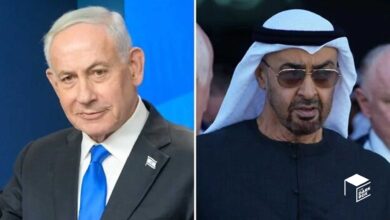
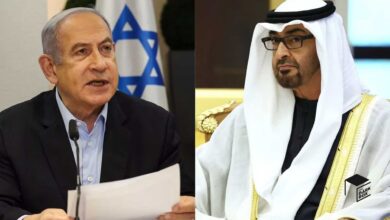
Dark Box Investigation: Abu Dhabi’s Lobbying Offensive — UAE Networks Move in Washington and Europe to Undermine the Mecca Defense Pact Before It Takes Root
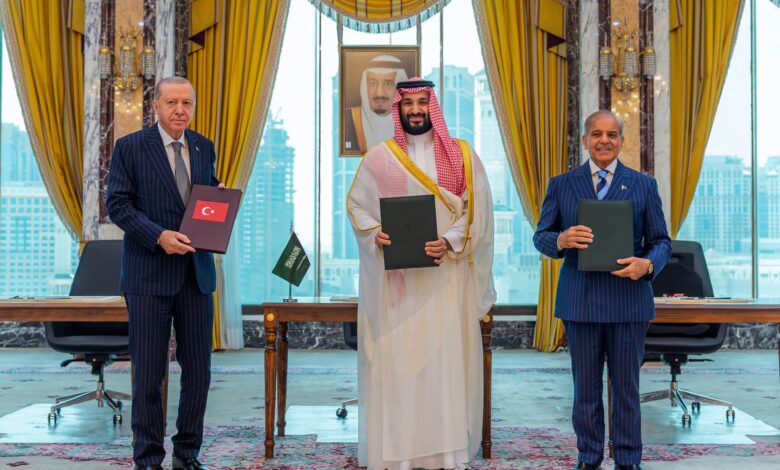
The battle over the Mecca Joint Defence Agreement is moving beyond the Middle East. According to Dark Box sources, Emirati-linked lobbying and influence networks have begun working within political and policy circles in the United States and Europe to fuel skepticism toward the Saudi–Turkish–Pakistani defense framework, question its credibility, and weaken international confidence in it before the agreement has time to develop into an operational security architecture.
The report represents a significant escalation in the political contest surrounding the agreement.. But the sources describe a clear objective: prevent the Mecca pact from acquiring international legitimacy, additional members, and institutional momentum capable of challenging Abu Dhabi’s preferred regional security architecture and its increasingly deep military partnership with Israel.
Taking the Fight to Washington and Europe
According to Dark Box sources, the Emirati response is not confined to hostile commentary in Gulf media or social-media exchanges.
The sources describe efforts to shape discussions inside American and European political, diplomatic, and policy forums, where questions are already being raised about the meaning and durability of the new agreement.
The messaging, according to the sources, emphasizes several vulnerabilities: differing Saudi, Turkish, and Pakistani perceptions of Iran; questions over military interoperability; Pakistan’s reliance on Chinese weapons; Turkey’s sometimes difficult relationship with Western partners; and uncertainty over exactly what would trigger the pact’s collective-defense provisions.
These are legitimate analytical questions.
According to Dark Box sources, Emirati-linked networks are seeking to weaponize those uncertainties politically, turning the inevitable weaknesses of a newly established agreement into an argument that Western governments should regard the entire project as unreliable, destabilizing, or strategically unnecessary.
In other words, the objective described by the sources is not simply to criticize Mecca.
It is to shape how Mecca is understood in Washington, European capitals, and the Western policy establishment before Riyadh, Ankara, and Islamabad can define the agreement themselves.
The European Channel
The material supplied to Dark Box provides an important window into the environment in which this influence battle is taking place.
This summer, senior UAE diplomat Lana Nusseibeh held consultations with officials from a US-allied European state. One European official who participated reportedly emerged with an unequivocal assessment of Abu Dhabi’s strategic orientation: “The UAE is totally aligned with Israel. It’s crystal clear that the partnership has no limits.”
That episode does not itself establish lobbying against the Mecca agreement.
It does, however, demonstrate the depth of the conversations Abu Dhabi is conducting with Western political establishments about regional security—and the clarity with which at least some European officials perceive the UAE–Israel relationship.
Dark Box sources said that these established channels now provide Abu Dhabi with an important advantage in the contest over the Mecca pact.
The UAE does not need to create access to Western decision-makers from scratch. It has spent years cultivating political, commercial, security, diplomatic, and policy relationships across Washington and European capitals.
The battle can therefore be fought inside rooms to which Abu Dhabi already has access.
Why Abu Dhabi Wants Mecca Stopped Early
Dark Box sources said that timing is central to the campaign.
The Mecca agreement is currently vulnerable precisely because it is new.
Saudi Arabia, Turkey, and Pakistan have declared that an armed attack against one will be regarded as an attack against all, but significant operational questions remain unanswered. Their militaries are not yet deeply integrated, their equipment comes from different suppliers, and their threat perceptions are not identical.
If Abu Dhabi wants to undermine the arrangement, the cheapest moment to do so is before those weaknesses are addressed.
Once regular joint exercises begin, defense industries become interconnected, command structures emerge, intelligence cooperation expands, and other states consider membership, attacking the pact becomes considerably more difficult.
The lobbying described by Dark Box sources is therefore characterized as preemptive.
The objective is to undermine the political credibility necessary for military integration before that integration becomes irreversible.
The Israeli Dimension
The UAE’s reaction also cannot be separated from its relationship with Israel.
Abu Dhabi and Tel Aviv already possess something the Mecca countries are still trying to build: relatively mature military and intelligence cooperation.
Their relationship has been developing for years and became public through the Abraham Accords in 2020. The war with Iran reportedly deepened that cooperation further.
The material examined by Dark Box describes Israeli air-defense assistance to the UAE and a joint UAE–Israel mechanism for defense acquisitions.
The two countries also benefit from considerable technological compatibility because the UAE relies heavily on American military systems while Israel is deeply embedded in the US defense architecture.
But this operational advantage comes with a political weakness.
The UAE–Israel partnership remains deeply controversial across much of the Arab and Muslim world.
The Mecca agreement presents almost the reverse proposition.
It is less integrated militarily but potentially far more powerful politically.
A Muslim Defense Framework Abu Dhabi Cannot Easily Control
Saudi Arabia brings financial power, religious influence, and the weight of the Arab world’s only G20 economy.
Turkey brings NATO’s second-largest military and an increasingly sophisticated indigenous defense industry.
Pakistan brings a huge military establishment, weapons-manufacturing capabilities, and the Muslim world’s only nuclear arsenal.
More importantly, none carries the political burden associated with Israel’s participation in an Arab regional security architecture.
That gives the Mecca framework expansion potential.
It could remain a trilateral pact. But it could also become the nucleus of a wider defense arrangement capable of attracting other Muslim states.
For Abu Dhabi, this possibility is strategically uncomfortable.
The UAE has spent years building influence through flexible bilateral networks: Washington, Israel, India, parts of Africa, and other regional relationships.
A Saudi-centered collective framework could shift the center of gravity away from that model.
Selling “Interoperability” as Mecca’s Fatal Weakness
Dark Box sources say one of the themes being amplified in Western policy discussions concerns interoperability.
There is substance behind the argument.
Pakistan depends heavily on Chinese weapons. Turkey combines NATO equipment with an increasingly autonomous domestic defense industry. Saudi Arabia remains heavily dependent on American systems.
Integrating those military ecosystems would be difficult.
The UAE–Israel relationship has a considerable head start because both countries operate within a predominantly American-linked technological architecture.
But Dark Box’s sources argue that Emirati-linked lobbying seeks to transform a technical challenge into a political verdict.
Military alliances do not become interoperable the day treaties are signed. Interoperability is produced through exercises, common communications standards, joint procurement, command integration, intelligence sharing, and years of institutional cooperation.
If the Mecca states are denied political space to develop those mechanisms, however, the technical weakness can become self-fulfilling.
That, according to Dark Box sources, is precisely why the battle over Western perceptions is occurring now.
Abu Dhabi’s Advantage in Washington
Washington represents an especially important arena.
The UAE has invested heavily in its relationship with the United States and has become closely connected to American security policy in the Gulf.
Its normalization with Israel under the Abraham Accords further strengthened its standing among influential American constituencies supportive of Israeli–Arab security integration.
The Mecca agreement introduces a more complicated model.
Pakistan’s defense relationship with China creates obvious sensitivities in Washington. Turkey’s relationship with the United States has repeatedly experienced tensions. Saudi Arabia, meanwhile, has increasingly sought greater strategic autonomy.
Those vulnerabilities provide multiple pressure points through which skepticism can be encouraged.
According to Dark Box sources, Emirati lobbying is exploiting precisely this environment, presenting the UAE–Israel model as tested, interoperable, and compatible with Western security interests while portraying the Mecca framework as uncertain and potentially problematic.
Incitement Beyond Quiet Diplomacy
The campaign described by Dark Box sources also has a public dimension.
Prominent Emirati commentator Abdulkhaleq Abdulla, a former adviser to UAE President Mohamed bin Zayed, publicly questioned the logic of the agreement and argued that strengthening Gulf cooperation was more important than investing in new regional arrangements.
His interventions generated unusually sharp Saudi reactions.
Saudi Prince Abdulrahman bin Musaid defended the kingdom’s sovereign right to choose its partners. Other Saudi voices explicitly invoked Abu Dhabi’s own security relationship with Israel, questioning why the UAE could establish far-reaching partnerships outside the Gulf framework while objecting when Riyadh did the same.
These exchanges do not prove coordination with lobbying activity in Washington or Europe.
They do, however, demonstrate that resistance to the Mecca agreement exists within influential Emirati circles and that Saudi figures increasingly interpret that criticism through the prism of Abu Dhabi’s own external alliances.
The Real Competition: UAE–Israel Versus Mecca?
This is the strategic contest at the heart of the dispute.
The UAE–Israel axis has agility.
It possesses advanced intelligence cooperation, compatible military technology, established relationships with Washington, and fewer bureaucratic obstacles because the partnership is concentrated between two highly centralized states.
Mecca potentially possesses depth.
Its members have vastly greater combined demographic and military resources. Turkey and Pakistan possess substantial domestic defense industries. Saudi Arabia possesses the financial resources to accelerate procurement and industrial cooperation.
And unlike the UAE–Israel partnership, the Mecca framework could plausibly expand without confronting the political hostility that Israel faces across much of the Muslim world.
This explains why Abu Dhabi is seeking to contest the pact politically before it becomes militarily consequential.
Foiling the Agreement Before It Starts
The report emerging from Dark Box sources is therefore more specific than simple Emirati opposition.
They describe a strategy of preemptive political containment.
First, amplify doubts over whether Turkey and Pakistan would actually defend Saudi Arabia.
Second, emphasize the incompatibility of their military systems.
Third, highlight their differing relationships with Iran.
Fourth, inject those arguments into American and European policy discussions where the pact’s meaning is still being assessed.
Finally, reinforce the proposition that the existing UAE–Israel–US-linked security architecture is more dependable than an emerging Saudi-led alternative.
The intended outcome, according to the sources, is to prevent Mecca from gaining momentum before its institutions exist.
Dark Box cannot independently establish that these activities constitute a centrally directed Emirati government operation. Documentary evidence would be required to prove such coordination. But the pattern described by the sources provides a framework for examining Emirati reactions that otherwise appear disconnected.
Conclusion: The Battle to Define Mecca Has Already Begun
The Mecca Joint Defence Agreement may have been signed in Saudi Arabia, but the political battle over its future is increasingly being fought in Washington and European capitals.
According to Dark Box sources, Emirati-linked lobbying networks are working to ensure that Western decision-makers see the pact through the prism of its weaknesses before Saudi Arabia, Turkey, and Pakistan have the opportunity to demonstrate its strengths.
The timing is crucial.
Today, Mecca is a declaration of collective defense with limited interoperability and unanswered operational questions.
Tomorrow, it could include joint exercises, integrated defense production, intelligence cooperation, standardized military planning, and potentially additional members.
The objective, in their assessment, is not to defeat an established alliance. It is to prevent one from being born.
And behind that struggle lies a deeper regional contest. The UAE has tied an important part of its security architecture to an increasingly sophisticated partnership with Israel. Saudi Arabia is now testing a different model—one rooted in strategic cooperation with Turkey and Pakistan and capable, at least theoretically, of expanding further.
The Mecca agreement threatens neither the UAE’s territory nor its formal sovereignty. What it potentially threatens is Abu Dhabi’s influence over the direction of regional security.
That is why the most consequential Emirati response may not occur on a battlefield in the Gulf, but through lobbying, political pressure, narrative-building, and influence operations inside the Western capitals whose judgment can either strengthen a new security architecture—or help suffocate it before it takes its first steps.